Ian Dowbiggin: The mysterious Chinese-linked secretive cult that's taking over P.E.I. Canada
Allegations of foreign interference and money laundering have been building for years. Now, politicians and law enforcement are finally paying attention

Early in 2025, the final report from Judge Marie-Josée Hogue’s Public Inquiry Into Foreign Interference in Federal Electoral Processes and Democratic Institutions revealed that foreign actors, notably the People’s Republic of China, pose an “existential threat” to Canadian democracy.
What the report did not say was that nowhere in Canada is that threat more glaring than on Prince Edward Island, Canada’s smallest province. P.E.I. provides a glimpse into how the controversy over the presence of Chinese Communist Party (CCP)-directed organizations warrants transparency and accountability, features that have been conspicuously missing in Anne of Green Gables land
While the meeting’s participants talked about the broad national security threats that Beijing poses to Canada, they also spent considerable time discussing the alarming body of evidence suggesting that P.E.I. is the site of money-laundering, illegal land purchases and “elite capture,” all traced back to China’s Communist government. Easter, along with former CSIS intelligence officer Michel Juneau-Katsuya and former RCMP investigator Garry Clement, warned that P.E.I. could be used as a “forward operating base” for the CCP.
The consensus at the Ottawa meeting was that, with Canada’s national security at stake, only a national inquiry could uncover the true scale of Beijing’s presence on the island. The story starts in eastern P.E.I. with five sprawling buildings and controlled-access compounds housing Buddhist monks and nuns belonging to a group called Bliss and Wisdom. Canada Revenue Agency filings show the two main monasteries have accumulated very close to $500 million in assets.
The first monks arrived around 2008, but now there are hundreds of monks and nuns, under the spiritual leadership of Zhen-Ru, an unordained layperson who, Radio-Canada reports, has links to Beijing. Although Zhen-Ru claims to follow Tibet’s Buddhist tradition, Tibet’s spiritual leader, the Dalai Lama, does not recognize her.
Despite pressure from Islanders such as blogger and historian David Weale, the provincial government, media elites and other stakeholders have given every indication that they want nothing to do with the Bliss and Wisdom file.
But the story has become too big to ignore. In February, after extensive pressure from citizens’ groups, P.E.I.’s government announced it was launching an investigation into the Buddhists’ land purchases. The government also ordered the regulatory commission in charge of land transactions to release the results of an investigation said to have been concluded in 2018.
But a bombshell hit on Oct. 8. When faced with a subpoena issued by a committee of the P.E.I. legislature, the regulatory commission confessed that no report was produced by the 2018 investigation into Buddhist land purchases, despite previous assurances that such a report existed.
In the wake of this startling news, P.E.I. Premier Rob Lantz asked the RCMP to launch a full investigation into what he called “allegations of foreign interference and money laundering” in the province, saying that Islanders “deserve answers.”
Days later, yet another bombshell: the RCMP announced that it had already conducted investigations into allegations of money laundering and foreign interference on P.E.I., but that so far, “all investigations were concluded as unfounded.”
The RCMP says that because of new information, it will review its past findings, but the statement has mystified many Islanders. For example, why has there been no announcement of these RCMP investigations in the past? And why were key witnesses and experts on the topic of Bliss and Wisdom seemingly not interviewed over the course of these investigations?
A thick atmosphere of mystery and suspicion surrounds the story and there’s no clear resolution in sight. But with politicians of all stripes now calling for a federal inquiry, the genie is out of the bottle. Premier Lantz is right that Islanders deserve answers. So do all Canadians.
From Sidewinder to P.E.I.: Are Canada’s Political Elites Benefiting from Beijing’s Real Estate Reach?
Garry Clement: 
This column by Garry Clement analyzes a deeply reported investigation into the land acquisitions and foreign affiliations of the Bliss and Wisdom Buddhist group in Prince Edward Island. Clement argues that the federal government, law enforcement, and Canadian officials have failed to confront what he sees as a growing national security risk—including strategically significant purchases of critical agricultural land.
His warning is underscored by a recent CBC/Radio-Canada investigation, which examined Bliss and Wisdom’s extensive land holdings, financial networks, and reported ties to the Chinese Communist Party’s United Front Work Department—allegations the religious group denies.
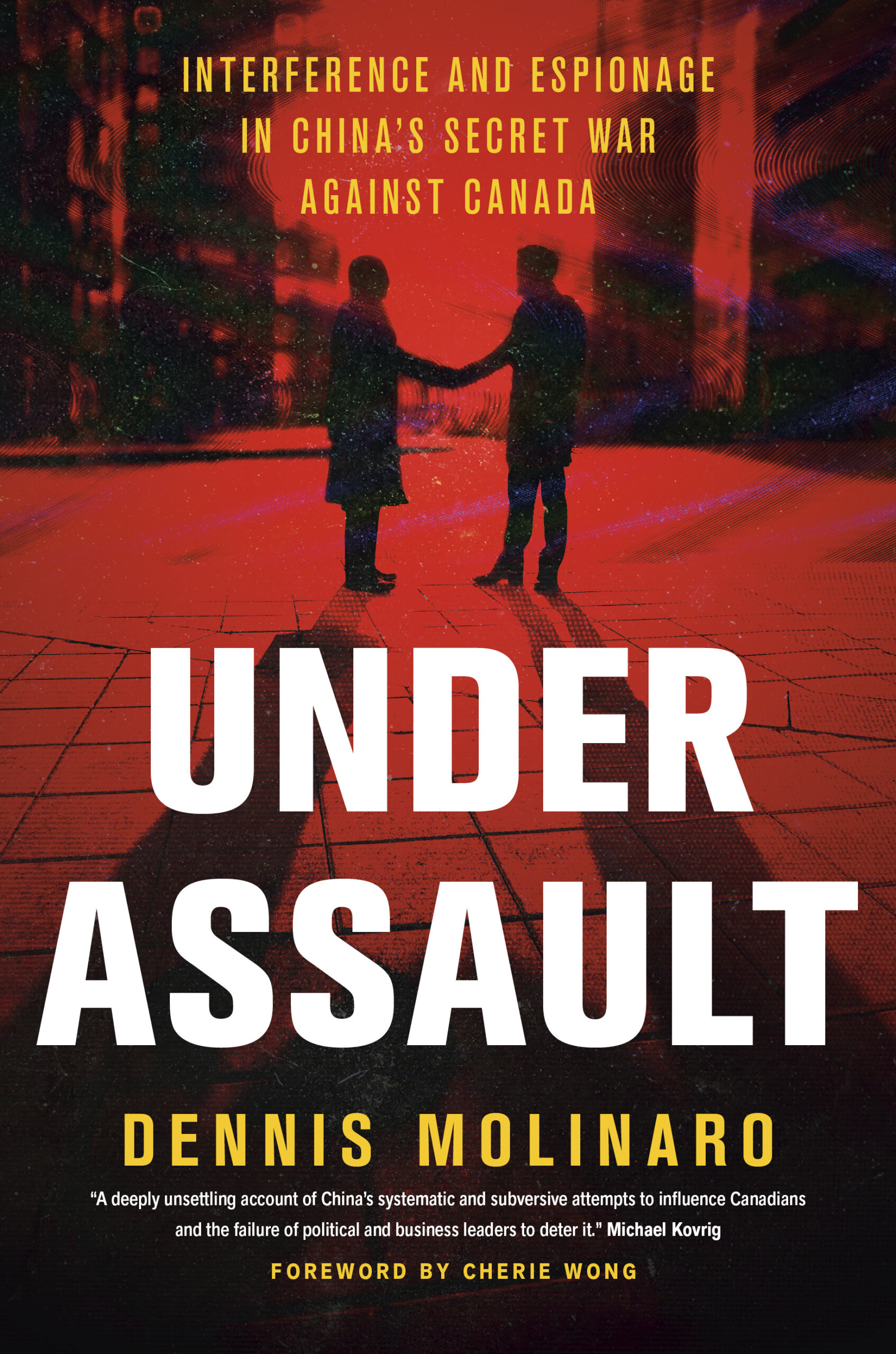
That probe featured findings from Clement, former CSIS officer Michel Juneau-Katsuya, and publisher Dean Baxendale—all co-authors of the forthcoming book Canada Under Siege, which devotes entire chapters to these Prince Edward Island land dealings.
Readers should understand a crucial piece of context: Clement, a former senior RCMP officer, and Michel Juneau-Katsuya were central figures in the joint RCMP-CSIS Sidewinder investigation of the 1990s. That probe examined how the Chinese Communist Party was infiltrating Canada’s economy—most notably through massive and suspicious real estate acquisitions in Vancouver and Toronto. Parallel investigations, including the RCMP’s Project Sunset, examined Beijing’s growing influence over Vancouver’s ports and critical infrastructure. Yet despite their explosive findings, these intelligence probes were buried or gutted. Now, more than two decades later, the same warning signs are surfacing in pastoral Prince Edward Island—and once again, the threat is being ignored.
OTTAWA — When our investigative team began looking into the Bliss and Wisdom Buddhist organization’s activities on Prince Edward Island, we expected a quiet story of land development and foreign investment. What we uncovered instead was a chilling portrait of political complacency, potential foreign influence, and the fragility of democratic accountability in Canada.
Over the course of our work, we tracked millions of dollars in unexplained cash inflows from Taiwan and mainland China, funneled through Canadian banks and into real estate and development projects across PEI. These were not obscure transactions—they were significant and frequent enough to raise alarms in any functioning system of democratic oversight.
And yet, those alarms never sounded.
Neither local politicians nor federal leaders lifted a finger. Some even appeared to benefit from the relationships cultivated with Chinese officials and members of the Bliss and Wisdom organization, whose quiet influence grew in tandem with land purchases and political access. The very leaders entrusted to safeguard transparency and public interest were, at best, disengaged, and at worst, complicit.
What made this investigation even more revealing was the contrast between institutional inaction and the commitment of ordinary citizens. Residents of PEI, concerned about unchecked land acquisitions, foreign influence, and environmental stewardship, were the first to sound the alarm. They provided testimony, documents, and moral courage. They believed that Canada’s democratic institutions should still function as intended—on behalf of the public, not in service to silence or convenience.
In a time when democratic erosion often feels like a faraway problem, PEI is a case study of how it happens at home: not through coups or grand conspiracies, but through the quiet neglect of responsibility, the normalization of secrecy, and the sidelining of civic duty.
Our investigative team did what governments refused to do. We followed the money. We asked hard questions. We connected the dots. And while we do not claim to have all the answers, we believe this is precisely the kind of work that institutions—law enforcement, media, elected officials—should have done long ago.
Democracy doesn’t collapse overnight. It erodes when those in power forget who they serve. But it also endures, stubbornly, through the vigilance of citizens who refuse to look away.
It is time for accountability—not just from those involved with Bliss and Wisdom, but from the public servants who allowed this to happen under their watch.
Former CSIS, RCMP investigators call for inquiry into Buddhist monks, nuns' CCP/Chinese connections
June 16, 2025

About 250 people packed into the P.E.I Convention Centre in Charlottetown Sunday to hear questions about Buddhist monks and nuns living in the eastern part of the province — with many there calling for a public inquiry into the groups' possible connections to the Chinese government.
About 700 monks of the Great Enlightenment Buddhist Institute Society (GEBIS) and about 600 nuns from the Great Wisdom Buddhist Institute (GWBI) call the Island home.
Michel Juneau-Katsuya, a former CSIS intelligence officer, is one of the authors of the book Canada Under Siege: How P.E.I. became a forward operating base for the Chinese Communist Party. The book is co-authored by Garry Clement, who is a former national director of the RCMP's proceeds of crime program.

Juneau-Katsuya says it's time, based on their investigation, for the federal or provincial government to call a public inquiry. He also wants to see the RCMP launch an investigation.
"If you have honest MLAs, they cannot deny that there is something that has been going on for decades," Juneau-Katsuya said in an interview with CBC News.
'Identify what needs to be fixed'
"The public inquiry will exactly identify what needs to be fixed," said Juneau-Katsuya. "There's a myriad of things that can be done by establishing policy, rules, regulations, how the cabinet functions, how people are vetting during the procurement process, how people coming from abroad to establish themselves here will be sort of vetted."
Four Buddhist monks sat at the back of the room, closely watching the documentary Game of Shadows — which follows Juneau-Katsuya and Clement from Ottawa to Washington and from P.E.I. to Taipei.
By times, the monks leaned forward, eyes glued to the two big screens in the front of the room, watching intently.
Eli Kingston, one of the monks in attendance, said he didn't hear anything in the documentary that he hasn't heard before — and added that anyone who suspects illegal activity should reach out to the RCMP.
'Nothing to raise any suspicion'
"I've been in the monastery for over a decade now, 12 years. I'm in charge for quite a lot of matters with the monastery, and in every meeting, every board meeting, anything like that I've been involved with, I have nothing to raise any suspicion," said Kingston, who was born and raised in P.E.I.
"No one's ever come to me and asked me to do things that are outside of my comfort zone ... I personally have not seen anything to prove that these claims are true."
Joe Donahoe, who lives in Uigg near the Buddhist nuns, was at the book and documentary launch Sunday.
Donahoe also wants a public inquiry and is urging the P.E.I. government to put a halt to all land sales to the Buddhists until that investigation is complete.
'It has to have some teeth'
"A lot of the properties, the prices are driven sky-high and I can never see any of my children returning to the Island to own property in the Town of Three Rivers for sure, because they can't afford it," Donahoe said.
Russell Compton of Belfast, who is featured in the documentary, echoed the call for a public inquiry.
"If we have an inquiry, it has to have some teeth, it really does," said Compton, the husband of Darlene Compton, who's the Progressive Conservative MLA for Belfast-Murray River.


No comments:
Post a Comment
Comments always welcome!