CCP's Interference of the Aboriginals of BC/very concerning for Canada


Feb 14 2026
Reports from Canadian intelligence and media investigations indicate that the Chinese Communist Party (CCP) is actively targeting Indigenous communities and leaders in British Columbia and across Canada as part of a broader strategy to influence Canadian natural resources and politics. These activities are viewed as a serious national security concern, with intelligence indicating efforts to cultivate relationships with First Nations leaders to secure access to critical minerals, land, and energy projects.
Evidence shows that the People's Republic of China (PRC) has targeted Canadian natural resources and subnational governments—including in British Columbia—through influence operations that seek to cultivate relationships with Indigenous leaders.
- Targeting Indigenous Leadership: A 2019 National Security and Intelligence Committee of Parliamentarians (NSICOP) report, cited in the Hogue Commission evidence, indicates that Beijing seeks to build relationships with Indigenous leaders under false pretenses. The goal is to control or gain access to strategic natural resources in areas of increasing geopolitical importance, such as northern Canada.
- Methodology of Influence: Intelligence suggests that agents of the Chinese Communist Party (CCP) leverage "united front" operations—organizations designed to influence foreign actors—to approach Indigenous officials and leaders.
- Soft Targets Strategy: CSIS has identified subnational governments, including provincial, municipal, and Indigenous levels, as "soft targets" for foreign interference. These levels of government are targeted because they often have fewer resources to detect interference compared to federal agencies.
- Broader Interference Context: These actions are part of a larger, systemic effort by China to meddle in Canadian affairs, which includes influencing municipal elections in BC (such as in Vancouver) and targeting diaspora communities for intimidation.
- Supply Chain Concerns: There have been reports linking Xinjiang forced labor to Canadian fishery and solar supply chains, which are relevant to BC's economic activities.
Public Enquiry in the Political Interference [PDF]
The Report: https://foreigninterferencecommission.ca/fileadmin/foreign_interference_commission/Documents/Submissions/Final_Submissions/2024-11-04_-_Concern_Group.pdf
Foreign interference: CSIS told B.C. premier it can’t share intelligence, documents show
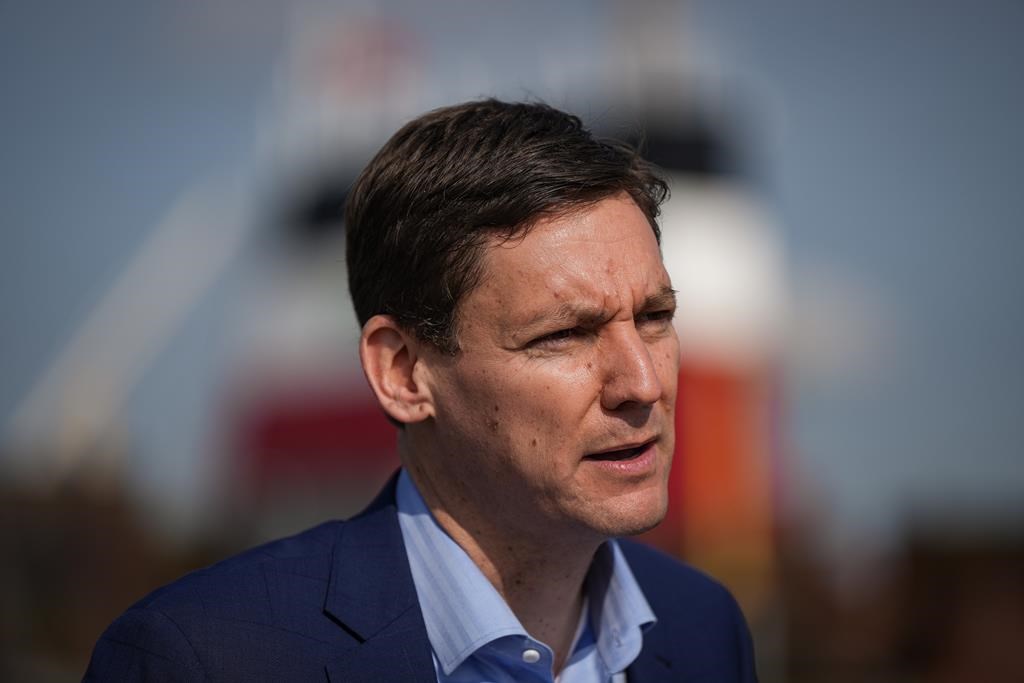
Canada’s intelligence service told B.C. Premier David Eby during a briefing on Chinese foreign interference in March that it will not share secret information, according to notes of the meeting obtained by Global News. Trust was at issue with Eby.

The hour-long March 28 meeting between the premier and the regional director general of the Canadian Security Intelligence Service [CSIS] followed a news report that China had meddled in Vancouver’s 2022 mayoral election.
The notes of the meeting show that while the premier wanted to know more so his government could respond with policies and legislation, the CSIS official explained his agency reported only to “one client”: the federal government.
Otherwise, CSIS was prohibited by law from disclosing classified intelligence, the official said. “The province doesn’t know what the province doesn’t know,” the official added, according to notes taken by the premier’s staff.
The meeting highlighted what some see as a critical weakness in Canada’s fight against foreign interference: although provincial and municipal governments are key targets of China, they are not in the intelligence loop.
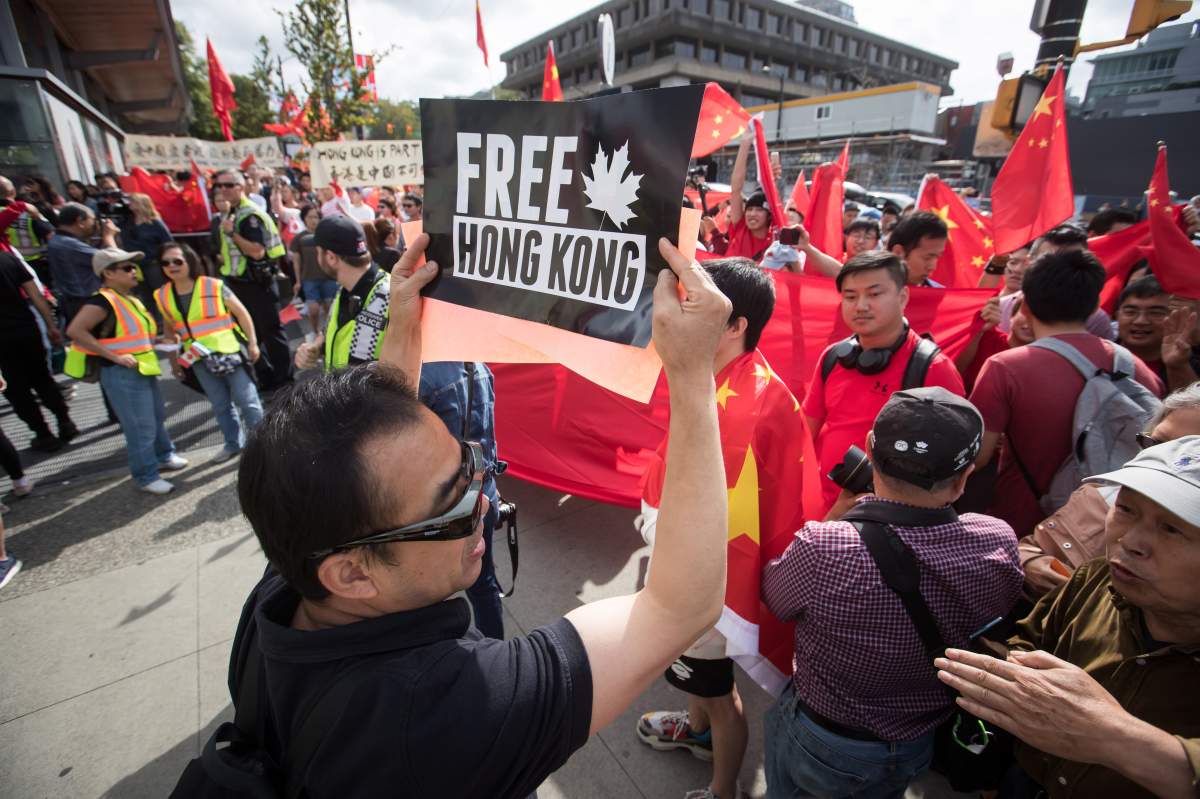
With their control of strategic natural resources and significant Chinese Canadian communities, B.C. and Ontario in particular are at the front lines of China’s efforts to remake Canada as a more pro-Beijing dominion.
But as Prime Minister Justin Trudeau’s special rapporteur on foreign interference, David Johnston, wrote in his first report, the provinces do not receive classified intelligence.
“Intelligence about foreign interference is gathered at the federal level and disseminated at the federal level, but is not disseminated to provincial or lower levels of government,” he wrote.
He called for the gap to be “robustly addressed” because Canada’s adversaries recognized that politicians outside Ottawa had significant powers and climbed from provincial and local government to federal politics.
Johnston’s report was controversial due to his long-standing relationship with the Trudeau family and his resignation in June, but his view is in line with experts who spoke to Global News.
The CSIS meeting
At his meeting with the CSIS official, Eby raised the lack of intelligence sharing, according to the notes. He said one of the top “challenges” was that “you may get info” about B.C. elections.
Another concern was money service businesses, which have been widely linked to money laundering in the province. “Everyone knew except us. How do we id. that info so we can act on it?”
He said he needed information so the province could respond to threats.
“How do we find out what type of info you’re sharing and what tools we need to address it,” according to the hand-written notes, released under B.C.’s freedom of information law.

The notes quoted the CSIS official as having said the agency was “figuring out a mechanism” for having national security conversations with “a well-placed individual or team in B.C.”
He told the premier that Ontario had a provincial security advisor’s office that worked with federal agencies on national security issues. Eby’s office did not respond when asked whether one was being considered for B.C.
The premier said he would “designate someone on our side,” and asked to meet CSIS director David Vigneault. The CSIS official responded that the director “will come out and speak to you,” but his answers “won’t be different.”
CSIS Act needs to change, expert says
In a statement to Global News, CSIS said that although it was not authorized to disclose classified intelligence outside the government of Canada, it was trying to help politicians at other levels defend against foreign interference.
“We have provided personal security briefings and general threat briefings to elected officials across Canada and in 2022 alone, CSIS briefed 26 elected provincial officials about the foreign interference threat,” said spokesperson Lindsay Sloane.
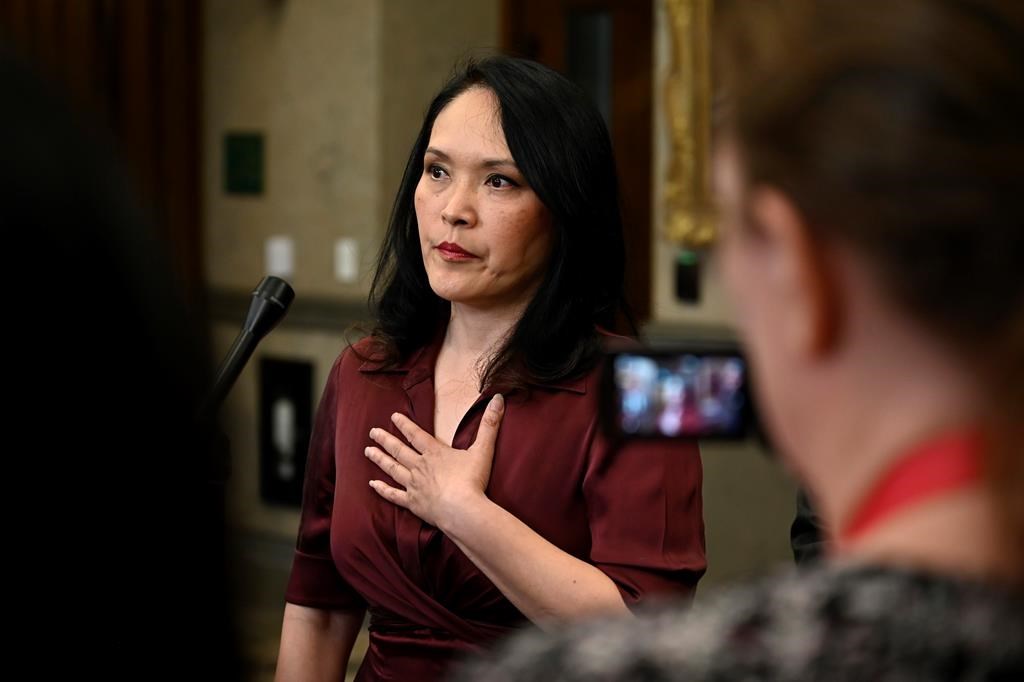
But Prof. Dennis Molinaro, an intelligence expert at Ontario Tech University in Oshawa, said briefings can be vague and give advice on only general or broad threats.
“Sometimes they may offer some specifics but no details, which doesn’t really help the receiver of the information decide what they need to do to mitigate a threat,” Molinaro said.
Currently, intelligence can be shared only with federal or law enforcement agencies, he said, adding that the CSIS Act needed to be amended so the intelligence service could share what it knows more broadly.
The provinces will also have to make changes. If they haven’t already done so, they will need to build secure communications systems so they can receive classified intelligence.
Until then, without knowing specifics, provincial politicians may struggle to understand how China is attempting to manipulate Canada to its advantage, and what they should do about it.
They may also not take CSIS warnings as seriously as they might, were they better informed.
Are “people working for you or against you,” the notes of Eby’s meeting with the CSIS official recorded the premier as saying, under the heading Politician. “Most don’t know.”

Asked about the matter, Eby said in a statement to Global News: “I appreciate the discussion that I had with the regional director of CSIS where I was able to express the obvious need for the provincial government to receive important and relevant information regarding events taking place in our province.”
“I look forward to the federal government considering an approach that can achieve this while maintaining the confidentiality of intelligence-based materials.”
Provincial governments are targets
While federal elections have dominated the recent debate over foreign interference, provincial and local officials have also found themselves in the crosshairs of the Chinese Communist Party.
Politicians from all levels of government have been spotted at events hosted by organizations suspected of fronting for Beijing, including some linked to the so-called police stations China operated in Vancouver, Toronto and Montreal.


Ontario Premier Doug Ford said CSIS briefed his office about the matter but that the agency was “very secretive” and “they don’t give you a proper briefing in my opinion.”
“With CSIS, everything’s a big secret,” he said.
Deputy Markham Mayor Michael Chan’s meetings with Chinese officials have also caught the attention of CSIS, Global News and the Globe and Mail have reported.


The former Ontario Liberal cabinet minister and federal Liberal fundraiser has denied any wrongdoing and is suing CSIS and two reporters, alleging he is a victim of racism.
B.C.’s ‘outsized’ relationship with China
B.C. is likewise considered vulnerable to foreign interference, owing partly to what a de-classified document released by the province called its “outsized relationship with China compared to other provinces.”
The document, “BC Engagement with China and Taiwan,” noted that the province had a significant volume of exports as well as “diverse Chinese diaspora communities (over 500,000).”
The province also has strong ties with Taiwan, with 43 per cent of Canada’s exports to the island nation originating in B.C., making it the province’s sixth largest export market, the document said.
China considers Taiwan to be a breakaway republic and wants to bring it under Beijing’s control. Pushing that view outside China is one of the goals of the PRC’s foreign interference campaign.

Premier Eby met with CSIS after the Globe and Mail reported on March 16 that a Chinese diplomat based in Vancouver had tried to sway the city’s 2022 municipal election.
The newspaper article was sourced to a CSIS report that reportedly said the then-consul general, Tong Xiaoling, had groomed Beijing-friendly Chinese Canadians to run for office in Vancouver.

On the day the article was published, B.C. Deputy Solicitor General Douglas Scott wrote in an email that the issue was “not naturally part of our mandate, however, we are looking into it.”

“Further to this,” he added two hours later, “the director of policing will be in touch with the BC RCMP commander and let him know this issue is of real concern to the province.”
He said “our team” would meet with CSIS to “relay the same message.”
Conservative MP urges Ottawa to ban Chinese state broadcaster from airwaves
CGTN is spreading 'disinformation, propaganda' in Canada, says Michael Chong

A Conservative MP is renewing calls for the federal government to ban authoritarian state broadcasters, including the China Global Television Network.
"CGTN, China's authoritarian state-controlled broadcaster, is still operating here, spreading disinformation, propaganda and violating international human rights laws," said Michael Chong, the Conservative foreign affairs critic, during a parliamentary committee hearing Monday night.
As the Toronto Star has reported, the international human rights organization Safeguard Defenders lodged a complaint with the Canadian Radio-television and Telecommunications Commission (CRTC) back in 2019 against China Global Television Network (CGTN) and China Central Television's Chinese-language international channel CCTV-4.
Safeguard Defenders alleges the two networks have aired the forced confessions of 60 people who were detained by Chinese authorities — including the organization's director, Peter Dahlin.

During Monday's committee hearing, Chong asked Public Safety Minister Marco Mendicino why the federal government hasn't issued an order under section seven of the Broadcasting Act, which permits the government to issue general policy directions to the CRTC.
Mendicino said that while he shares Chong's "profound concerns about the distribution of any kind of disinformation," the CRTC is an independent body.
Chong pointed out that the government asked the CRTC to review the licence of the state-controlled Russian television network RT just last year.The regulator later removed RT (formerly known as Russia Today) and RT France from its list of non-Canadian programming services and stations that are allowed to broadcast in this country.
"I would hope it doesn't take a war for the government to change its position on state-controlled authoritarian broadcasters on public, Crown-owned airwaves," Chong said.
When asked if the government would consider Chong's request, a spokesperson for Heritage Minster Pablo Rodriguez again stated that the CRTC is meant to be independent.
"It is not, and should never be, up to the government to decide which channel is authorized and which is not," said Laura Scaffidi.
"It is up to the independent regulator, the CRTC, to consult with Canadians and make those decisions in Canada's best interest."
'There's no excuse'
Chong told CBC News the government's response has been "baffling."
He said he wants to see the CRTC adopt a general policy of denying broadcast applications from authoritarian state media entities.
"We're calling on the government to direct the CRTC to a new broadcasting policy of general application that authoritarian state controlled broadcasters, which spread propaganda and disinformation and which violate international human rights law, should not be on the list," said Chong. "There's no excuse."
Chong said that while he knows RT's reports are still available online — and CGTN's content would be as well if the CRTC banned it from broadcasting — the government is under no obligation to give these outlets a public platform.
CRTC needs a 'backbone,' says rights group
Dahlin of Safeguard Defenders said the organization fears its complaint to the CRTC is going nowhere.
"It is our view that the best way to deal with CCTV, CGTN and other similar abusive TV broadcasters is to let CRTC do their job, according to established procedures," he said.
"But that, of course, requires a regulator with both will, determination and a backbone, and soon one might suspect that CRTC are lacking in that department.
"There is seemingly something holding CRTC back, but as outsiders, we do not know what that may be."
A spokesperson for the CRTC said the regulator is still working on Safeguard Defenders' complaint.
"Given the file is still open, we cannot comment further at this time," said Frédéric Lamaute.
CBC News has requested comment from CGTN but has not received a response.
U.K. regulator suspended CGTN's licence
Britain's broadcasting and telecommunications regulator Ofcom suspended CGTN's broadcast licence in 2021 after it concluded the news network was controlled by the Chinese Communist party, a violation of U.K. broadcasting laws.
A few months later, it fined Star China Media Limited — which owned the U.K. licence for CGTN — £200,000 (about $349,000 Cdn) for unfair treatment of individuals on its programmes following two separate complaints.
Ofcom concluded that airing the forced confession of Simon Cheng, a former official at the British consulate in Hong Kong, was a serious breach of the U.K.'s licensing code.
Chinese police claimed the Hong Kong citizen had been detained for "soliciting prostitutes" and aired an alleged confession.

Cheng said he was beaten, blindfolded, deprived of sleep, chained spread-eagle and repeatedly interrogated by the Chinese secret police about the U.K.'s supposed role in Hong Kong's protests.
The daughter of Gui Minhai, a Hong Kong bookseller who holds Swedish citizenship, filed the other successful complaint.


In 2020, Gui was sentenced to 10 years in jail for "illegally providing intelligence overseas." CGTN aired footage of Gui appearing to express regret for his actions.
In 2020, the Canadian Security Intelligence Service (CSIS) warned Prime Minister Justin Trudeau that China's efforts to distort the news and influence media outlets in Canada "have become normalized."
"Chinese-language media outlets operating in Canada and members of the Chinese-Canadian community are primary targets of PRC-directed foreign influenced activities," says a briefing note obtained through an access to information request.
As of Jan. 1, 2022, four CCTV channels were on the CRTC's authorized non-Canadian programming list: CCTV 9 Documentary, CCTV English News, CCTV Entertainment Channel, CCTV-4 and CCTV-Français.

No comments:
Post a Comment
Comments always welcome!