Thursday, August 30, 2018

Trump: ‘All of the Fools’ Focused on Russia Should Start Looking at China, Too

Trump: ‘All of the Fools’ Focused on Russia Should Start Looking at China, Too

Tyranny/Fascism alive and well in China


Now here's a shocker, credit cards are made in China folks!

Cardszgroup


Cardzgroup: Based in China , formed by previous members of Gemalto UK. Cardzgroup produces the complete card product range, from Mifare/SLE to high end JCOP dual interface products into PVC Cards, Contact Smartcards, Contactless Smartcards, Scratch Cards, SIM Cards, and Banking Cards (Visa & MasterCard) using...

What about the Chinese, "Data Mining" we ask!!! Is anyone listening out there/

Thai Buffet w/ Greedy Chinese Tourists ...Pandemonium!

..and this in Vietnam
more!!! LOL
then this...Whoa!

Wednesday, August 29, 2018

REVEALED: Chinese Govt. Killed and Imprisoned 18-20 CIA Spies After Penetrating Hillary Clinton’s Private Server

REVEALED: Chinese Govt. Killed and Imprisoned 18-20 CIA Spies After Penetrating Hillary Clinton’s Private Server

Hillary’s carelessness and criminal actions may have led to the deaths of 20 CIA operatives in China.

The Chinese government killed or imprisoned 18 to 20 CIA operatives in China from 2010 to 2012.
At the same time a Chinese-owned company operating in the Washington, D.C., area hacked Hillary Clinton’s private server throughout her term as secretary of state.
The Chinese government was obtaining Hillary Clinton’s emails in real time.

Her criminal behavior severely damaged US foreign policy.

And the FBI refused to act.

The Chinese government murdered or imprisoned 18-20 CIA sources from 2010 to 2012 while Feinstein had a Chinese spy as her office manager.

Business Insider reported:
China killed or imprisoned 18 to 20 CIA sources from 2010 to 2012, hobbling U.S. spying operations in a massive intelligence breach whose origin has not been identified, the New York Times reported on Saturday.
Investigators remain divided over whether there was a spy within the Central Intelligence Agency who betrayed the sources or whether the Chinese hacked the CIA’s covert communications system, the newspaper reported, citing current and former U.S. officials.
The Chinese killed at least a dozen people providing information to the CIA from 2010 through 2012, dismantling a network that was years in the making, the newspaper reported.
One was shot and killed in front of a government building in China, three officials told the Times, saying that was designed as a message to others about working with Washington.
The breach was considered particularly damaging, with the number of assets lost rivaling those in the Soviet Union and Russia who perished after information passed to Moscow by spies Aldrich Ames and Robert Hanssen, the report said. Ames was active as a spy in the 1980s and Hanssen from 1979 to 2001.
The CIA declined to comment when asked about the Times report on Saturday.


China has a bigger problem than the trade war — a 'mountain of debt'

China has a bigger problem than the trade war — a 'mountain of debt'

It's been a few weeks since Donald Trump fired the opening salvo in a trade war with China, slapping tariffs on a range of Chinese-made goods.
Beijing retaliated with tariffs of its own — and since then, the rhetoric on both sides has been unrepentant.
Much of the focus has been on nervous financial markets, and how the war could affect the fortunes of US farmers and manufacturers — but how do things look from China's side?
Is the trade war the biggest threat to China's economy, or does the country have more pressing problems — like its massive debt?
Media player: "Space" to play, "M" to mute, "left" and "right" to seek.
AUDIO: Listen to Dinny McMahon talk about China's view on the trade war (Late Night Live)
Dinny McMahon, who spent a decade covering China for the Wall Street Journal, says while Beijing obviously isn't welcoming the trade war, it's also unlikely to be crippled by it.
That's because China's economy is no longer driven by exports.
"In 2007, net exports contributed about 9 per cent to China's GDP. Last year we were down to 2 per cent," McMahon says.
"Exports aren't the be all and end all for the Chinese economy, as they once were."
On top of that, he says, the US only accounted for about 19 per cent of China's exports last year.
"So the ... trade conflict with China isn't perhaps the bludgeon that Donald Trump believes that it is, and certainly once would have been," McMahon says.
The big problem for China, he says, is that the trade war isn't happening in isolation.

Massive debt and ghost cities

China is also dealing with a "mountain of debt" racked up at a massive pace over the past decade, as it raced to catch up with the "rich world".
"Since 2008 China has been on this massive debt-fuelled binge," McMahon says.
"It has been fuelled by debt at every step of the way, to a point where now Chinese debt levels are in excess of those in the United States."
The biggest problem isn't the overall levels of debt, McMahon says, but the pace at which it's been accumulated.
He says that around a decade ago, China's debt levels were about 160 per cent of the size of its GDP.
"Now it's somewhere between 280 and 300 per cent," he says.
When other countries have accumulated debt that quickly, they have "almost invariably experienced a financial crisis", McMahon says.
"That's like the United States before the sub-prime crisis, or Thailand before the Asian financial crisis," he says.
A lot of the money China borrowed from state banks was invested in infrastructure. Some of the construction was useful, but the non-stop building boom also created 'ghost cities'.
They were essentially built from scratch to accommodate people moving from the countryside into the cities in the future — but that was "nothing more than a fig leaf at the end of the day".
Hardly anyone actually turned up to live in them.
"They do have people living in them but it's almost a skeleton population relative to what they were built for," McMahon says.
He says local government officials were driving the construction boom.
"Their success and their ability to get promoted onwards and upwards is primarily based on their ability to generate economic growth," he says.
"They are invariably in these positions for very short periods of time.
"If you only have three years to prove your ability as a proven economic manager, somebody who can deliver growth, then the easiest way to do that is to borrow a whole lot of money and build something big very, very quickly.
"After three years you'll have the city, or you'll at least have a city in progress, to show everything you've managed to generate.
"But when the debt comes to you, you will be somewhere else, and it will be your successor that has to deal with the fallout."
McMahon, who has recently released a book titled China's Great Wall of Debt, says Beijing is now trying to unwind its debt problem.
But that's making its economy "a lot more fragile that it has been in a very long time".
"It has all these variables which it's trying to manage at the same time, and certainly the trade war is not making things any easier for them," he says.

What could come next in the trade war?

So what could China's next move in the trade war be?
Ratcheting up its own tariffs could be one option.
"But the big problem here is that China exports to the United States far more than the United States exports to China," McMahon says.
"So Donald Trump can keep saying we are going to impose more and more tariffs, and China will hit its limits of what it can impose tariffs on before the US gets to its upper limit."
These limits already appear evident: the latest tit-for-tat manoeuvring saw the US impose tariffs on $US200 billion of Chinese exports, and China respond with tariffs on $US60 billion of US exports.
Another approach China could take involves making it more difficult for US companies to operate in the country.
McMahon uses the example of a company like Starbucks, which doesn't really contribute to trade flows between the US and China, but operates thousands of cafes there.
"It's a great source of revenue for an American company. You could have a situation where China then starts to make life economically difficult for these sorts of companies," he says.
That could involve "the imposition of bureaucratic rules", or alternatively "the courts might make life more difficult for them".
And what about the US?
McMahon says Mr Trump's tariffs would hit harder if he teamed up with other countries and regions, such as the European Union and Japan.
"The combined trade clout that those regions have with China could have a really meaningful impact on China's exports," he says.

Tuesday, August 28, 2018

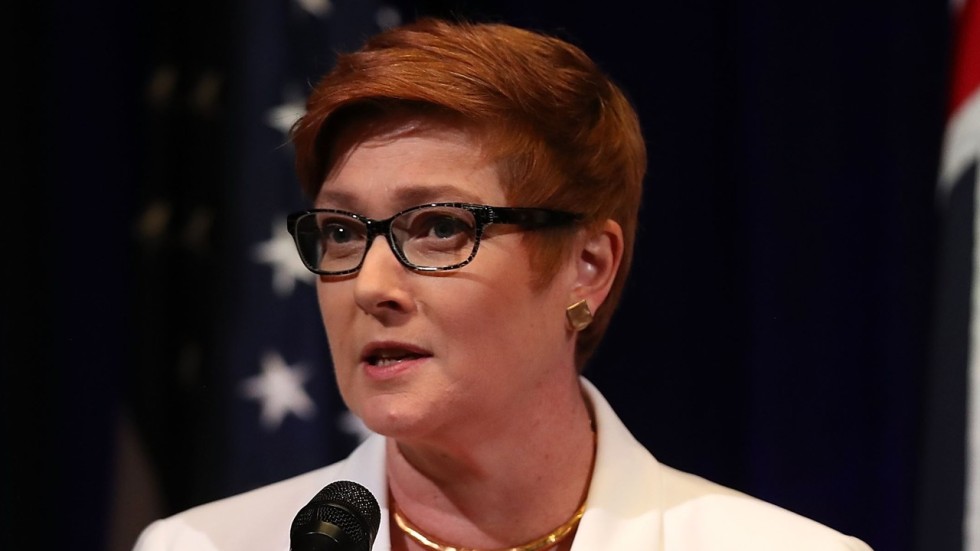
Australia’s new foreign minister Marise Payne supports blocking Chinese telcos from 5G network, citing national security

Australia’s new foreign minister Marise Payne supports blocking Chinese telcos from 5G network, citing national security

Image result for Huawei blocked in Australia
Image result for Australia̢۪s new foreign minister Marise Payne supports blocking Chinese telcos from 5G network, citing national security
There are significant fears that Huawei and other Chinese telcos could be forced by Chinese security services to help with intelligence gathering under new laws passed last year
PUBLISHED : Monday, 27 August, 2018
Australia’s new foreign affairs minister, Marise Payne, has defended a decision that shut Chinese telecommunications giants out of Australia’s 5G network, saying it was necessary to protect national security.
The decision to bar Huawei and ZTE from supplying equipment to Australia’s 5G network was made amid the Liberals’ leadership ructions late last week, meaning it was largely overshadowed by the political turmoil.
But the decision did not go unnoticed abroad. It angered the Chinese government, which labelled it wrong and said it would compromise business relationships.
“The Australian government has made the wrong decision and it will have a negative impact to the business interests of China and Australia companies,” China’s commerce ministry said in a statement on its website.
The Australian government has made the wrong decision and it will have a negative impact
CHINA’S COMMERCE MINISTRY
Payne, who will soon be sworn in as foreign affairs minister, on Monday defended the decision, saying it was not targeted specifically at Huawei and ZTE. She said it applied to any company that had obligations that clashes with Australia’s national security.
“It’s targeted and aimed at solely protecting Australia’s national interests, and the protection of Australia’s national security. That is our first responsibility as a government, it’s our first responsibility as a national security committee,” she told Sky News on Monday.
There are significant fears that Huawei and other Chinese telcos could be forced by Chinese security services to help with intelligence gathering under new laws passed last year. The national intelligence law requires all organisations and citizens to assist the country’s spy network.
Those fears were alluded to in the statement released last week by then treasurer and acting home affairs minister, Scott Morrison, who has since become prime minister.
Morrison’s statement said there was a risk from companies who were “likely to be subject to extrajudicial directions from a foreign government that conflict with Australian law”, though he did not name Huawei or ZTE specifically.
Payne on Monday acknowledged concerns about the Chinese government forcing such companies had played a role in the decision.
“That is part of the legal system in which they work, so yes that is a concern,” she said, adding that it had been a “well-considered” decision consistent with others made across the world.
A statement from Huawei, however, said the decision was “politically motivated” and “not the result of a fact-based, transparent, or equitable decision-making process”. It added that the move was not in the best interests of the Australian people.
It’s targeted and aimed at solely protecting Australia’s national interests, and the protection of Australia’s national security
MARISE PAYNE
The company said that “interpreting Chinese law should be left to qualified and impartial legal experts” and said the national intelligence law could not be used to compel telcos to install back doors, listening devices, or compromise the telecommunications equipment of other nations.
“A mistaken and narrow understanding of Chinese law should not serve as the basis for concerns about Huawei’s business,” the company said. “Huawei has never been asked to engage in intelligence work on behalf of any government.”
Chinese state media has roundly condemned Australia’s decision. It was described as a stab “in the back” to Huawei, and “disappointing and poisonous” to bilateral cooperation.
Huawei has struggled to make good on recent expansion plans. Its attempts to expand into the United States were dealt a blow when the Pentagon raised security concerns about Huawei phones and ordered retail outlets on US military bases to stop selling them.
In the United Kingdom, a government report found the company’s broadband and mobile infrastructure equipment provided only “limited assurance” that it posed no threat to national security.