Wednesday, March 30, 2016

Pollution In China Reaches Canada and The USA-Daily

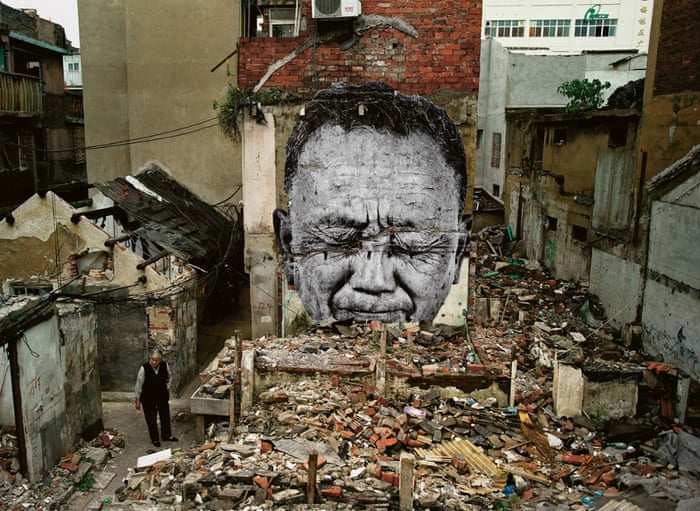
After Building Collapses Due To Poor Concrete Revealing Street Art.


Zhai Zhixin, Shanghai, 2010
Zhai Zhixin, Shanghai, China, 2010 by JR

Why Earthquakes in China Are So Damaging

Why Earthquakes in China Are So Damaging

In the aftermath of another major tremor, lax enforcement of building codes remains a serious problem in the country.


chinaearthquakebanner.jpg
An injured woman receives treatment at a hospital after a 6.6 magnitude earthquake hit Minxian county, Dingxi, Gansu province July 23, 2013.
China's unfortunate streak of major earthquakes has continued. On Monday, a tremor measuring 6.6 on the Richter scale struck near the city of Dingxi, a mid-sized city (by Chinese standards -- it still has 2.7 million people) in impoverished Gansu Province. As of this writing, 94 people have lost their lives in the quake, and more than 1,000 are injured. The quake has affected over 120,000 people and will undoubtedly cost millions of dollars in reconstruction fees.
Devastating earthquakes are a global phenomenon, as anyone in Indonesia, Haiti, or Japan can tell you. But China has experienced more than its fair share of earthquake tragedy; according to this list of the world's 10 deadliest earthquakes, the two highest-casualty ones of all time -- and three overall -- happened in China. Given the immutable laws of plate tectonics, the chances that an earthquake will again inflict China in the near future is high. What, then, are the reasons for China's high number of fatalities -- and, more importantly, what does the government have to do to minimize this number in the future?

The first reason has to with some simple, irreversible facts: China has a lot of people -- and a lot of earthquakes.  But in addition to being the most populous country in the world, China also is extremely dense -- at least 90 percent of the country's 1.3 billion people live in the eastern half of the country, and the coastal provinces are especially crowded.


popdensitypost.jpg
Wikimedia Commons

Fortunately for China, the area of most seismic activity overlaps with a less populous part of the country: the southwest. This map plots Asian earthquakes, by magnitude, since 1964, and shows a concentration of mega-quakes in Sichuan, Yunnan, Gansu, Qinghai, Tibet, and Xinjiang: none ranking among China's most crowded provinces.


seismicmap.jpg
California Institute of Technology

The flip side, however, is this: The areas of heightened seismic activity also overlap with remote, mountainous parts of China, where poor transportation infrastructure makes recovery efforts difficult. For this challenge, at least, China is well-equipped: According to Kit Miyamoto, the president and CEO of the earthquake research firm Miyamoto International, China's dispatch of almost 100,000 well-organized soldiers to Beichuan within hours of the 2008 Sichuan earthquake was "highly impressive given the challenging conditions." Beijing received considerable praise for its recovery effort, especially in respect to how badly the government botched a quake that struck the city of Tangshan in 1976, a calamity that killed a quarter of a million people while China refused offers for assistance.

Yet for China's skill in implementing rescue and recovery operations, its record in pre-empting excess casualties is more problematic. 

Much of the infrastructure damage in earthquakes is simply unavoidable, and in hilly areas landslides cause tremendous loss of life long after the earth stops shaking. But in China, the prevalence of low-quality buildings -- many constructed in violation of building codes -- has exacerbated the damage and caused a political headache in Beijing.  Following the 2008 Sichuan quake, relatives of the victims wondered aloud why the town's schools had collapsed while the sturdier government buildings remained standing. The uproar -- soon squelched by the government -- touched upon a number of broader controversies in China: government privilege, official corruption, and the yawning gap between rich and poor.

Prior to the onset of economic reforms, the quality of Chinese construction was poor; as in many rural, developing countries, most structures were made from adobe or watered-down concrete and thus were ill-equipped to survive earthquakes. But in the years since, China's improvement in this regard has been striking: major cities boast modern, steel high-rises, and a far higher percentage of the population lives in earthquake-proof structures. Building codes in China are well-defined and up to international standard. 

Enforcement of these codes, though, is a problem. As Miyamoto told me, "You need more than just good building codes. You also need good engineers to implement the code, and good contractors to implement the engineers' vision." And along the way, a lot can go wrong: Contractors feel pressure to complete projects ahead of schedule and cut corners. Builders substitute cheap materials in order to cut costs. And then, you have the omnipresent specter of bribery and corruption.

As a result, for a country whose defining structure is an enormous ancient wall, modern Chinese structures have an surprisingly short half-life. New buildings in the country are expected to stand for 25 to 30 years -- a far cry from the U.S. expectation of 70 to 75 years. This difference is partly explained through economics -- China's binge in fixed-asset investment encourages major construction projects, least of all to keep workers employed, and one by-product of all this construction is a huge raise in living standards. But from an earthquake prevention standpoint, the new buildings remain worrisome.

After the 2008 quake devastated the town of Beichuan, local authorities resettled approximately 40,000 people into a new city called Yongchang located 10 or so miles from the epicenter. The new town is clean and picturesque and is, at first glance, a worthy tribute to the victims of the earthquake. But, as this piece by NPR's Louisa Lim describes, there's trouble in paradise: Cracks have appeared in the brand new homes, and a local official has been detained for accepting bribes. Residents have complained of corruption, and when one man attempted to organize them, he was arrested and thrown in jail.

The subject of earthquake damage prevention symbolizes one of the central challenges of contemporary Chinese governance. At the federal level, China has good building codes, the willingness to invest in safe housing, and the means to respond quickly and effectively when tragedy strikes. But at the local level, where the country's population actually interacts with its government, difficulties with corruption and law enforcement mean that subsequent earthquakes will be more tragic than necessary.

China Destined To Collapse With poor Quality Concrete

Poor-quality Chinese

 concrete could lead to 

skyscrapers collapsing

BUSINESS 21.03.2013 

A sand scandal is brewing in China, with concerns that low-quality concrete has been used in the construction of many of the country's largest buildings -- putting them at risk of collapse.

The recipe to make concrete is pretty simple -- cement, aggregate and water -- but the strength of the final batch can vary wildly depending on the kinds of aggregate and cement used and the proportions they're mixed in. Commonly the aggregate used in many modern buildings projects consists of crushed gravel or other rock, including sand, and that's the cause of so much distress in the Chinese construction industry at the moment. Inspections by state officials have found raw, unprocessed sea sand in at least 15 buildings under construction in Shenzhen, including a building which, when finished, was set to become China's tallest.

The Ping'An Finance Centre is planned to top out at 660m, making it not only China's tallest building but the second-tallest building in the world after the Burj Dubai. 80m has been built so far, but construction has been halted in the wake of the revelation from Shenzhen's Housing and Construction Bureau that substandard sea sand concrete had been used in its construction. According to a notice on the Bureau's website posted on 16 March, 31 companies had had their licenses to work revoked for at least six months.

Many of the companies named in the notice took heavy hits to their share prices on the Hong Kong stock exchange. Bloomberg reports that the financial incentive to use illegal sea sand, which is far cheaper than legal river sand, is the likely reason for the problem. Untreated sea sand is unsuitable for construction because it still contains chlorine and salt, which corrodes steel -- river sand from freshwater channels doesn't have that problem.

It can take only a few decades for a building to become dangerously unsafe if untreated sea sand is used in its concrete -- including the possibility of collapse. While this scandal has been confined only to Shenzhen thus far, the possibility of it spreading to other Chinese cities is worrying. The country currently has nine of the 20 tallest buildings in the world that are under construction, while there were reportedly so many skyscrapers under construction in 2011 that it worked out as a new one being topped out every five days right through into 2014.

The Ping'An Finance Centre is one of several very tall skyscrapers under construction in China, but it might not have the title of the country's tallest for too long even if construction resumes.. The highly-publicised plan by Broad Sustainable Building to build the world's tallest building, Sky City One, in only 90 days in Changsha, attracted sceptical responses from engineers who felt it was completely unrealistic -- the head of the company behind construction of London's Shard even

joked that he'd retire if Broad pulled off the stunt. However, he can rest easy, as the skyscraper has yet to break ground, as it continues to be delayed.

Poor-quality Chinese concrete could lead to skyscrapers collapsing

Poor-quality Chinese concrete could lead to skyscrapers collapsing

A sand scandal is brewing in China, with concerns that low-quality concrete has been used in the construction of many of the country's largest buildings -- putting them at risk of collapse.
The recipe to make concrete is pretty simple -- cement, aggregate and water -- but the strength of the final batch can vary wildly depending on the kinds of aggregate and cement used and the proportions they're mixed in. Commonly the aggregate used in many modern buildings projects consists of crushed gravel or other rock, including sand, and that's the cause of so much distress in the Chinese construction industry at the moment. Inspections by state officials have found raw, unprocessed sea sand in at least 15 buildings under construction in Shenzhen, including a building which, when finished, was set to become China's tallest.
The Ping'An Finance Centre is planned to top out at 660m, making it not only China's tallest building but the second-tallest building in the world after the Burj Dubai. 80m has been built so far, but construction has been halted in the wake of the revelation from Shenzhen's Housing and Construction Bureau that substandard sea sand concrete had been used in its construction. According to a notice on the Bureau's website posted on 16 March, 31 companies had had their licenses to work revoked for at least six months.
Many of the companies named in the notice took heavy hits to their share prices on the Hong Kong stock exchange. Bloombergreports that the financial incentive to use illegal sea sand, which is far cheaper than legal river sand, is the likely reason for the problem. Untreated sea sand is unsuitable for construction because it still contains chlorine and salt, which corrodes steel -- river sand from freshwater channels doesn't have that problem.
It can take only a few decades for a building to become dangerously unsafe if untreated sea sand is used in its concrete -- including the possibility of collapse. While this scandal has been confined only to Shenzhen thus far, the possibility of it spreading to other Chinese cities is worrying. The country currently has nine of the 20 tallest buildings in the world that are under construction, while there were reportedly so many skyscrapers under construction in 2011 that it worked out as a new one being topped out every five days right through into 2014.
The Ping'An Finance Centre is one of several very tall skyscrapers under construction in China, but it might not have the title of the country's tallest for too long even if construction resumes.. The highly-publicised plan by Broad Sustainable Building to build the world's tallest building, Sky City One,  in only 90 days in Changsha, attracted sceptical responses from engineers who felt it was completely unrealistic -- the head of the company behind construction of London's Shard even jokedthat he'd retire if Broad pulled off the stunt. However, he can rest easy, as the skyscraper has yet to break ground, as it continues to be delayed.

"Made Out Of Sand" - A Dramatic Look Inside A Newly Built Chinese Apartment

"Made Out Of Sand" -


 A Dramatic Look Inside

 A Newly Built Chinese

 Apartment

Tyler Durden's picture

While real estate is all about "location, location, location," it appears there are sometimes more prescient factors that any prospective buyer should pay attention to. Amid yet another government-fueled housing bubble, it seems in their haste to fulfil a rapacious demand for property in which to gamble their hard-grafted assets, Chinese construction companies have cut a few corners. As the following stunning video shows, a "newly constructed apartment" crumbles before the owners' eyes as the 'concrete' walls turn to sand...
LiveLeak exposes, in the following video, just how poor the standards can be of so-called “new” properties. LiveLeak footage shows two men in a supposedly “new apartment building” in China where the concrete walls crumble like sand.
China is currently in the midst of a huge property bubble...


And the country is full of “ghost cities” and new apartment blocks waiting to be filled. Which is no surprise considering that China used about 6.4 gigatons of cement during their construction boom between 2011 and 2013, which is more than what the US used during the entire 20th century.However, those housing properties in China are frequently not built to stand the test of time: In 2010, officials revealed that many homes had a lifespan of just 20 years.
Just like buying worthless companies in the stock market bubble ended very badly, it appears buying 'worthless' homes is set for the same outcome...

Quick, back into stocks

4.82143
Your rating: None Average: 4.8 (28 votes)


Tue, 03/29/2016 - 14:30 | 7377514Takeaction2
Takeaction2's picture
At least it will stop a bullet.....maybe.  That video is awesome.

Tue, 03/29/2016 - 14:33 | 7377529HedgeAccordingly
HedgeAccordingly's picture
It's hard to stop a train! Tier 3 down payment on a sand castle is what 60-%
http://hedgeaccordingly.com/2016/03/shenzhen-raises-purchase-down-paymen...

Tue, 03/29/2016 - 14:35 | 7377546

nuubee

nuubee's picture
"China used about 6.4 gigatons of cement during their construction boom between 2011 and 2013"


Tue, 03/29/2016 - 14:37 | 7377558
carbonmutant's picture
Hey cement's expensive. Can't make a profit using that
 stuff...

Tue, 03/29/2016 - 14:42 | 7377586nuubee
nuubee's picture
It makes you fear for anyone downstream of the three gorges dam

Tue, 03/29/2016 - 14:49 | 7377614Manthong
Manthong's picture
Way back in the day, I lived in a Med coastal town for a few years.
The homes were high sand content concrete and the walls were solid and poured into forms.
The window installers would chip out holes for the windows and the electricians would chisel out grooves and holes for the 240V ac service and then finish the job with the same high sand content concrete.
It was a hoot to watch.
You could scratch a groove in the walls with a good set of finger nails.

Tuesday, March 29, 2016

China warns Taiwan over new law governing cross-strait relations

China warns Taiwan over new law governing cross-strait relations

Wed Mar 30, 2016 12:55am 


Taiwan president Tsai Ing-wen speaks during a news conference in Taipei, Taiwan March 15, 2016. REUTERS/Tyrone Siu
1 of 1Full Size
BEIJING (Reuters) - The Chinese government warned Taiwan on Wednesday that the passage of a proposed new law governing relations between the two could seriously damage the basis for talks, and that Beijing opposed any obstacles to developing ties.
China has looked on with suspicion at Taiwan since Tsai Ing-wen and her pro-independence Democratic Progressive Party (DPP) won presidential and parliamentary elections in January on the back of a wave of anti-China sentiment.
In 2014, hundreds of students occupied Taiwan's parliament for weeks in protests nicknamed the Sunflower Movement, demanding more transparency and fearful of China's growing economic and political influence on the democratic island.
The protests over the 2013 Cross-Strait Service Trade Agreement, which aimed to open up investment from both sides in industries such as banking, healthcare, and tourism, were the largest display of anti-China sentiment in Taiwan in years.
The DPP is proposing Taiwan's parliament first passes a so-called cross-Taiwan Strait supervision law before it will consider agreeing to the trade pact.
China is worried that the law would stymie future agreements with Taiwan.
Asked about the law, a spokesman for China's Taiwan Affairs Office said the basis for talks between the two sides should not be damaged.
"Anything that damages the basis for consultations and negotiations between the two sides of the strait, interferes in or impedes relevant progress or puts up man-made blocks on the development of ties, we will resolutely oppose," spokesman An Fengshan said at a regular briefing.
He did not elaborate.
The trade deal has stalled in Taiwan's parliament, although the manner in which the self-ruled island moves forward in the current February-to-May session will be seen as a sign of how Tsai will steer Taiwan-China ties.
China's trade minister last month urged Taiwan to pass the trade pact.
China considers Taiwan a wayward province, to be brought under its control by force if necessary. Defeated Nationalist forces fled to the island in 1949 after the Chinese civil war.

Chinese National Cops Plea in Defense Secrets Case

Chinese National Cops Plea in Defense Secrets Case


By John P. Mello Jr.
Mar 29, 2016 5:00 AM PT
chinese-hacker
A Chinese aviation and aerospace businessman last week pleaded guilty to participating in a conspiracy to steal sensitive military and export-controlled data from major U.S. defense contractors and send the information to China, according to the U.S. Department of Justice.
Su Bin, also known as Stephen Su and Stephen Subin, a resident of the People's Republic of China, entered the plea before Judge Christina A. Snyder of the Central District of California.
An indictment was issued against Su in 2014, alleging he was part of a criminal conspiracy to steal military technical data, including data relating to the C-17 strategic transport aircraft and other fighter jets produced for the U.S. military.
Su was arrested in Canada in 2014 and was transported to the United States, after waiving extradition, in February.
"This plea sends a strong message that stealing from the United States and our companies has a significant cost; we can and will find these criminals and bring them to justice," said John P. Carlin, assistant attorney general for national security.

Stealing Secrets

In his plea agreement, 50-year-old Su admitted to conspiring with two people in China from October 2008 to March 2014 to intrude into protected computer networks in the United States, including computers belonging to Boeing in Orange County, California, to obtain sensitive military information and export it from the United States to China.
Through email, Su would let his conspirators know who and what to target after penetrating a computer network, the DoJ said.
The co-conspirators would then send Su lists of files and folders that were accessed during an intrusion, and he would tell them which files and folders they should steal.
Su translated stolen files and folders from English to Chinese. Along with his co-conspirators, he would write reports about the stolen data, including its value to its final beneficiaries.

No State Connection

While the United States has criticized China for sponsoring cyberespionage to obtain national security data, there was no mention of Su and his co-conspirators working for Beijing.
"The plea agreement steers clear of accusing China of being behind it, even though Su Bin was working with two members of the military," said Richard Stiennon, chief research analyst with IT-Harvest.
"The two co-conspirators were identified as Chinese military officers, but it seems like these guys were moonlighting," said Jeffrey Carr, CEO of Taia Global.
"This was not a PLA [People's Liberation Army] operation. If it was, they wouldn't have needed Su Bin," he told TechNewsWorld.
"Neither would one of the co-conspirators be trying to buy malware on the dark Web," Carr added. "The PLA doesn't have to buy malware on the dark Web to attack a targeted company."

Inside Man

From a threat perspective, the use of Su, a businessman with knowledge of aeronautics, was a diversion from the norm, Stiennon told TechNewsWorld.
"Hackers are focused computer people, and they really know how to look for stuff about computers, but they don't have the first clue about design data of an aircraft," he said.
What U.S. law enforcement uncovered in this case is part of a much larger problem, observed Mark Graff, CEO of Tellagraff and former CISO of Nasdaq and Lawrence Livermore Lab.
"This is just a glimmer of the massive amounts of intellectual property, especially with military focus, moving from the U.S. to China," he told TechNewsWorld.

Lenient Sentence?

Su will be sentenced in July. He faces a maximum five years in prison and a fine of $250,000 or twice the gross gain or loss from the offense, whichever is greatest.
"Five years is pretty light," Taia Global's Carr said.
"Five years would be light for military espionage, but they're treating this like industrial espionage," IT-Harvest's Stiennon noted.
Su should receive a five-year sentence, according to Graff. "If the judge doesn't take that maximum opportunity, that would be even more disappointing." 

Chinese military-run commercial services to end in next three years

Chinese military-run commercial services to end in next three years

Posted Sun at 8:59pm
China's military will end so-called paid for services within the next three years, state media says, the latest move to modernise the armed forces.
The reform will mean non-core activities such as military-run hospitals and hotels open to the public will be ditched.

Key points:

  • Military cannot sign new contracts for non-core activities
  • Social security services to continue
  • Military undergoing anti-corruption campaign
The military was banned from overt commercial activities in 1998, but allowed some exceptions.
According to a circular issued by the Central Military Commission, headed by President Xi Jinping, the armed forces cannot sign any new contracts for paid services and allow existing contracts to expire.
The notice appeared on the front page of the People's Liberation Army Daily.
Services that fulfil an important social security function will be allowed to be included under a new "civil-military integration" scheme, the notice said — a program the government has given few details about.
China's official Xinhua news agency said the change had been introduced "to reduce corruption in the army".
The military is reeling from an anti-corruption campaign the president launched three years ago, which has seen dozens of officers investigated, including two former vice chairmen of the Central Military Commission.
Xu Caihou died of cancer last year before he went on trial and Guo Boxiong has yet to face a court.
Gong Fangbin, a professor at the PLA's National Defence University, told the state-run Global Times newspaper the end of paid-for services would help the military modernise.
"Paid services can sometimes encourage corruption and the military should focus on national defence," he said.

Military focus 'to fight'

The People's Liberation Army Daily said in an editorial the military's real focus should be on how to win wars, and seeking profits would only distract them.
"The military's basic function is to fight, and deviating from that core activity will bring endless disaster," it said.
Mr Xi's push to reform the military coincides with China becoming more assertive in its territorial disputes in the East and South China Seas.
Its navy is investing in submarines and aircraft carriers and its air force is developing stealth fighters.
The armed forces are also losing 300,000 members, following a surprise announcement by Mr Xi in September.
The reforms have been controversial, and the military's newspaper has published commentaries warning of opposition to the changes and concern about jobs.