Tuesday, November 6, 2012

China Japan Conflict Continues Amid Elections

Clinton Warned of Conflict Risk in China-Japan Islands Dispute
A Taiwan fishing boat, right, is blocked by a Japan Coast Guard vessel, left, near the disputed Diaoyu / Senkaku islands in the East China Sea on September 25, 2012. Photographer: Sam Yeh/AFP via Getty Images

Bloomberg News

Clinton Warned of Military Danger in China-Japan Dispute

By John Walcott and Indira A.R. Lakshmanan on November 02, 2012
The festering dispute between China and Japan over five uninhabited islands could spin out of control unless the countries improve their communication with each other, according to a confidential report submitted to Secretary of State Hillary Clinton this week by a delegation of former U.S. officials.
The bipartisan four-person delegation met last week with Japan’s prime minister and China’s vice premier, who is expected to take over as prime minister, and both countries’ foreign ministers. The U.S. group warns Clinton in its written report that, while neither side wants a confrontation, a mistake or miscalculation could escalate into a military face-off.
Members of the delegation described their findings on the condition of anonymity because their meetings and report are confidential.
Clinton dispatched the mission in an effort to assess ways to reduce mounting tensions in light of Japan’s nationwide elections next year, an imminent leadership change in China and rising nationalist rhetoric in both Asian countries over the islands in the East China Sea. The five islands are called Senkaku in Japanese and Diaoyu in Chinese. Taiwan, which calls them Diaoyutai, also claims the chain, which is surrounded by undersea oil and natural gas fields.

‘Consultative Role’

The members of the delegation, all former national security officials, were Democrats Joseph Nye and James Steinberg and Republicans Richard Armitage and Stephen Hadley. Clinton sent a bipartisan delegation to signal to China and Japan that both political parties support the U.S. position on the islands so its report would carry weight with whomever wins the U.S. presidential and congressional elections, according to members of the group.
“While the State Department supported and facilitated their travel, they acted in a consultative role for the United States government,” said John Echard, a State Department spokesman. “The individuals were not traveling to mediate regional security issues, but rather listened to perspectives of each side.”
The former U.S. officials met last week with Chinese Vice Premier Li Keqiang, Japanese Prime Minister Yoshihiko Noda and other officials, and are scheduled to meet with Clinton on Nov. 8.

Poor Communication

They plan to report to Clinton that surprisingly poor communications and serious misunderstandings between China and Japan increase the risk that the territorial dispute could escalate if their ships collide or there’s some other mishap, delegation members said. Their report says China and Japan need to improve communication at a variety of levels, from heads of state down to the local coast guard commanders whose vessels are patrolling in the vicinity of the islands.
Japan issued a protest this week when four Chinese patrol boats entered the waters near the disputed islands after officials of the two countries met last week in Shanghai in an attempt to improve relations.
In their meetings in both nations, the U.S. delegation members said, they encountered differing reactions from officials and from analysts affiliated with the government toward the American effort to help defuse the dispute.
There also were differing reactions, the members said, to the delegation’s message that the U.S. recognizes Japan’s administrative control of the islands, so it’s bound by Article V of the Japan-U.S. security treaty to consult with Japan “whenever the security of Japan or international peace and security in the Far East is threatened.” Both Clinton and U.S. Defense Secretary Leon Panetta also have made that point.

Going Sightseeing

While some Chinese officials grumbled, Chinese analysts had harsher reactions, with some accusing Japan and the U.S. of trying to overturn the outcome of World War II, according to two of the U.S. members. That, said one delegate, was echoed by what he called rude remarks by Chinese Lieutenant General Ren Hiaquan in Australia this week.
Addressing a high-level military conference in Melbourne, Ren, vice president of the People’s Liberation Army Academy of Military Science, called Japan a former fascist nation that had bombed the northern Australian city of Darwin and said territorial disputes could trigger open war, according to The Australian newspaper and two attendees at the meeting. Further, the Chinese delegation went sightseeing the next day instead of returning to the conference, said one of the attendees.

Japanese Politics

Two delegation members said the Chinese seemed to be responding in part to a rightward turn in Japanese politics. That includes the failed attempt to buy three of the disputed islands this spring by Tokyo Governor Shintaro Ishihara, a Japanese nationalist who has started a new political party and once denied that invading Japanese troops had slaughtered Chinese civilians in Nanjing in 1937. He also wanted to locate Japanese on the island or stage protests there, which would’ve been a provocation to China.
Noda’s national government attempted to defuse Ishihara’s provocation by buying the islands in September so that it could prevent nationalist settlers or protesters from going there. China didn’t accept the Japanese government’s explanation and responded by sending two surveillance ships into Japanese territorial waters to underscore its claim to the islands.
Geng Yansheng, a Chinese defense ministry spokesman, explained the move in a September 11 statement, saying: “The determination and the will of the Chinese government and military to safeguard their territorial integrity are firm. We are closely monitoring the situation and reserve the right to take necessary measures.”

‘Not Constructive’

Noda is expected to discuss the issue again during a two- day meeting of Asian and European leaders next week in Vientiane, the capital of Laos. The Chinese Foreign Ministry on October 29 said there are no plans for officials of the two nations to meet during the summit. A Japan expert at the Chinese Academy of Social Science told the China Daily that “most of Japan’s proposals that have been made public so far are not constructive, and it has just glossed over things without due sincerity.”
In the short run, one member of the U.S. delegation said, there’s little the U.S. can do to resolve the dispute. The best the U.S. can hope for is to ease tensions, and that’s not guaranteed to avert any skirmish, he said.
Still, another member said that strong diplomacy in person by U.S. officials based in the region, as well as high-level statements made by Clinton and Panetta, does make a difference and reduces the risks of military conflict.

U.S. Diplomacy

Assistant Secretary of State Kurt Campbell, the State Department’s top East Asia official, discussed the islands on Oct. 23 with Chinese Vice Foreign Minister Cui Tiankai at a conference in San Francisco. Two days later, he discussed it with Japanese officials in Tokyo.
Of the four delegation members, Steinberg served as Clinton’s deputy secretary of state and is now dean of the Maxwell School at Syracuse University in Syracuse, New York. Nye was an assistant secretary of defense and chairman of the National Intelligence Council in the Clinton administration and is former dean of the Kennedy School of Government at Harvard University in Cambridge, Massachusetts.
Hadley was national security adviser in President George W. Bush’s second term and is now a principal at RiceHadleyGates LLC, an international business consultancy based in Washington and San Francisco. Armitage served as deputy secretary of state during Bush’s first term and now heads Armitage International L.C., an international consultancy based in Arlington, Virginia.
To contact the reporters on this story: John Walcott in Washington at jwalcott9@bloomberg.net; Indira A.R. Lakshmanan in Washington at ilakshmanan@bloomberg.net.
To contact the editor responsible for this story: John Walcott at jwalcott9@bloomberg.net

Reader Discussion Showing 11 Comment now

Email alerts RSS Real-time paused. (Resume)
  • Walmart (WalMarx?) is financing china's military with its china imports.
    show more show less
  • China captured Tibet and is now terrorizing all its non-nuclear neighbors. In the 1960s communist red china, governed by Mao-Tze-Tung claimed large swaths of USSR (formerly composed of Russia and other nations). USSR President Khrushchev tested Neutron bomb near china border and subsequently those land claims were forgotten.
    show more show less

Perspective On US And China Historic Elections

Young Chinese focus on CPC congress, U.S. election

English.news.cn   2012-11-06 21:50:40           

by Xinhua writers Ji Shaoting, Hai Mingwei and Xu Xiaoqing

BEIJING, Nov. 6 (Xinhua) -- Delegates of the 18th National Congress of the Communist Party of China (CPC) have arrived in Beijing as of Tuesday, when the world is awaiting the result of another big event -- the U.S. presidential race.
The U.S. election attracts the attention of young Chinese people who regard the election and the CPC National Congress, to open on Thursday, as two major events that will determine the future of the world.
"China and the U.S. will finally find the beauty of co-existence after a long time of competition," said Chen Qiufan, a 31-year-old science fiction writer.
The writer who works at Google, a leading Internet company based in the United States, has been following the two events and believed the relationship between the two countries will have great impact on the world. He also predicted closer bilateral relations in the future.
Chen said that working at an international company has made him focus more on China's issues, which he writes about in his novels. "Sci-fi is an exoteric realism. I believe it is a direct way to discuss the reality instead of pure fantasy.
"My novels mainly express my thoughts on China's realities, including living conditions of marginalized groups, changes in society triggered by the deteriorating environment and the alienation of humans in technology developments," he said.
"I write about the pains in the country because I want it to be better," Chen added.
Economist Tang Jiqiang told Xinhua it is good that the young people are concerned about domestic and international issues as well.
"Young people have better access to information and different education background from the older generations. Globalization and informatization raises new challenges to the ruling party," Tang said.
As the director of the development planning bureau of Hi-tech Development Zone in Chengdu, capital of southwest China's Sichuan Province, Tang has concerns about the two events, especially the CPC congress.
The political event will be critical to China's future, and together with the American election, it will influence the future direction of the world, he said.
Tang, who is also a researcher at the financial research center of Southwestern University of Finance and Economics, said, "Although there appear to be some uncertain elements in China-U.S. relations, the world is more willing to see a healthy and friendly bilateral relationship. I think leaders of the two countries will have enough wisdom to make 'clever' decisions."
Tang said he expected the congress to implement a series of solutions to the challenges that have emerged during three decades of fast development after the reform and opening up policy, such as corruption, uneven income distribution, and the wealth gap.
The economist also expressed his concerns on the new slogan in the American election. "The re-industrialization. The U.S. wants to stimulate industries after its introspection on the virtual economy. The action will definitely influence China. We need to research future industrial relations between the two countries," he said.
Tang pointed out that another challenge for the ruling party in China lies in its external relations.
"China has become the world's second biggest economy, which requires it have deeper and more communication with other nations to increase mutual trust," he said.
Cai Qing, a post-graduate at the Cross-Culture Research Center of Shanghai Jiaotong University who has returned from a communication project in Seattle, told Xinhua that young Chinese people are more curious about the U.S. than American young people are about China.
"Many U.S. experts study China, mainly focusing on the rise of the country. They are interested in the secrets of China's economic growth. Some American teachers and students told me that they are also worried that such a big country with a large population may do some unexpected things," she said.
Cai believed the coming CPC congress will answer some of their questions. It is true that there are misunderstandings between China and the United States, but such misunderstandings can be reduced with more exchanges between young people of the two countries.

Saturday, November 3, 2012

Harper Digging His Way Out Of The Sole Sourced Chinese Market

Harper takes off for India, Philippines and Hong Kong

 
Carleton University's Elliot Tepper looks at the significance of the Canadian PM’s week-long trip to improve the country's relations with India.
 
Photos
The Canadian Press
Published Saturday, Nov. 3, 2012 3:20PM EDT
 
OTTAWA, Ont. -- Boosting trade and investment ties will be on the top of the prime minister's agenda this week as he begins a longer-than-usual six-day visit to India.
Harper, his wife Laureen, Trade Minister Ed Fast and junior ministers Bal Gosal and Tim Uppal left Ottawa Saturday afternoon.
The group is scheduled to land in Agra, where it will get an exclusive tour around the Taj Majal on Monday.
Harper will also visit other historic monuments around the country, includes sites important to the Sikh religion in and around Chandigarh in the Punjab region.
But most of Harper's visit will centre around trade -- Canada is still in negotiations with India for a free-trade and a foreign investment agreement.
He will deliver an opening address at the World Economic Forum's special event in India later in the week, and will visit the buzzing information technology hub of Bangalore.
India's booming economy is continuing to grow at nearly six per cent, and the country has a huge appetite for energy to fuel its development.
The two governments would also like to start seeing Canada ship uranium to India, but they haven't been able to settle on the final conditions.
Following his trip to India, Harper will stop in the Philippines and finally mark Remembrance Day in Hong Kong.


Read more: http://www.ctvnews.ca/politics/harper-takes-off-for-india-philippines-and-hong-kong-1.1023314#ixzz2BD6xXXpy

Richard Fadden/CSIS: Canadian Politicians /Treason

May: CSIS Should Have A Say In FIPPA

May says she'd like CSIS to weigh in on new treaty with China

 
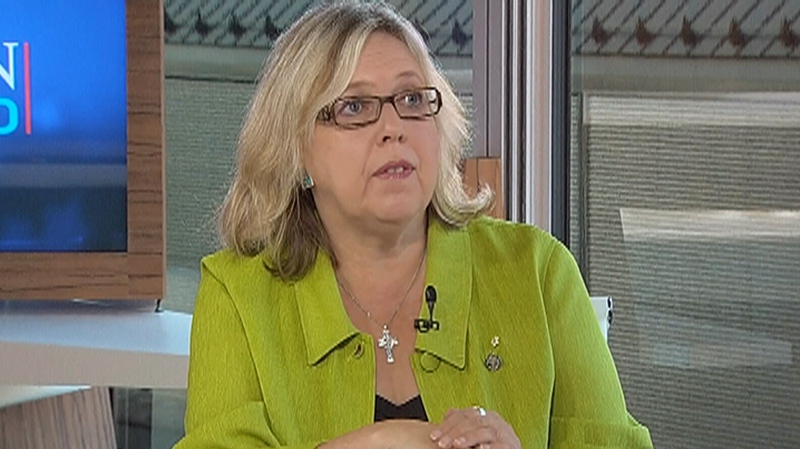
Green Party Leader Elizabeth May discusses the issues with the China-Canada treaty and why it needs to be re-examined.
 
 
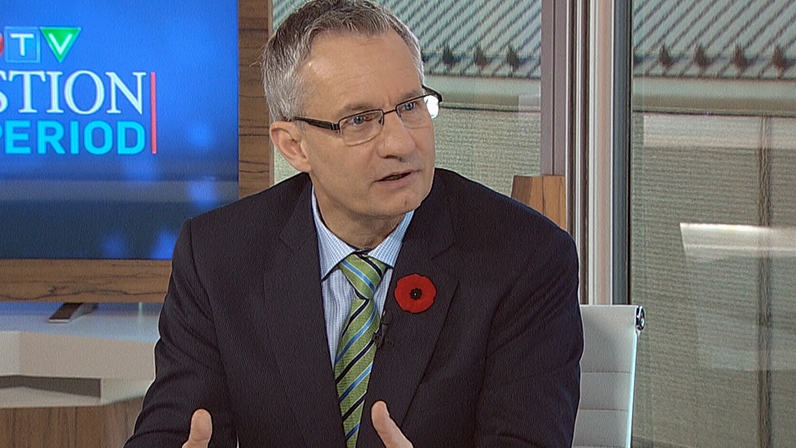
Minister of International Trade Ed Fast tackles the rules involved in the China-Canada treaty and whether more jobs will be created for Canadians.
Photos
CTVNews.ca Staff
Published Sunday, Oct. 28, 2012 12:38PM EDT

The government says a new treaty with China is designed to address Canada's trade imbalance with the Asian economic powerhouse, but its chief critic argues it could undermine Canadian security and sovereignty instead.
The Canada-China treaty -- set for cabinet ratification this week -- aims to protect Canadian companies operating in China, as well as Chinese companies with operations here, from expropriation.
The deal also prohibits either government from treating companies run by the other's nationals any differently than domestic businesses.
Both Canada and China would also assume "most favoured nation" status, meaning they would have to make the benefits of whatever investment deals they sign with other countries available to one another.
But the most controversial of its terms is a provision calling for arbitration in the event investors feel they've been wronged. The three-member panel, made up of one arbiter from each of Canada and China as well as a third member of their choosing, would be able to hear the case in private before issuing a public ruling, including penalties to be paid by government.
For Green Party leader Elizabeth May, the deal is worrying, particularly in light of CSIS' security concerns about Chinese investment in Canada.
"I'm not an expert in security but I have to believe the people at CSIS are," May told CTV's Question Period Sunday, adding that her concerns don't stop there.
"This not only locks in investors from China with the ability to sue Canada, it also puts a positive obligation on the government of Canada to encourage investment from China into Canada and I think I’d like to hear from CSIS before we pass this treaty."
Furthermore, May said the deal undermines the rule of law, insofar as an independent judiciary usually ensures that.
But Minister of International Trade Ed Fast says the Canada-China deal doesn't do anything other international trade agreements haven't done in the past.
"In terms of the dispute resolution process, international arbitration is what we use in all of our free trade agreements," Fast told CTV's Question Period.
"This one is no different," he added, explaining that arbitration "provides a level of confidence that investors need."
And besides, Fast said, the agreement is "fully reciprocal."
May said, while that may be true, Chinese state-owned operations that might be interested in investing here dwarf their Canadian counterparts.
"If you look at Sinopec, the Chinese state-owned oil company, it’s the fifth-largest corporation on earth," she said.
"You don't have a private sector company seeking damages against Canada for something that they say was arbitrary under one of these investor state provisions. You've got the government of China telling the government of Canada that either federally or provincially or municipally, one level of government in Canada has done something which interferes with their expectation of profits."
In May's view, since the government unveiled the deal in the House of Commons on Sept. 26 and her motion requesting a debate was denied on Oct. 1, Canadians are not being given enough time to consider its implications.
Answering allegations the government is trying to speed this deal into law, Fast said the opposition parties failed to seize on earlier opportunities to debate it.
"We've provided full transparency in terms of tabling it under our tabling policy," he said, noting that the public has a 21-day window during which they can raise objections.
"We are absolutely confident this is an agreement that's in Canada's best interest and will drive economic growth and prosperity here at home."


Read more: http://www.ctvnews.ca/politics/may-says-she-d-like-csis-to-weigh-in-on-new-treaty-with-china-1.1013991#ixzz2BBFM4yBH

The Mental Hospitals

NEXEN Review criticied By NDP

NDP criticizes Nexen review extension

NDP MP for Burnaby-New Westminster, Peter Julian
NDP MP for Burnaby-New Westminster, Peter Julian speaks to reporters after Minister of Fisheries and Oceans Keith Ashfield spoke about the planned closure of Vancouver's Kitsilano Coast Guard station during a news conference in Vancouver, B.C., on Tuesday, June 26, 2012. (Darryl Dyck/THE CANADIAN PRESS)
CTVNews.ca Staff
Published Saturday, Nov. 3, 2012 9:42AM EDT
Last Updated Saturday, Nov. 3, 2012 12:00PM EDT
The New Democrats are criticizing the Conservative government’s surprise announcement Friday to extend the review of a Chinese company’s bid to take over Canadian oil producer Nexen.
Industry Minister Christian Paradis issued a news release Friday night saying the government was extending its review. until Dec. 10.
Under the Investment Canada Act, the federal government has to review the bid to determine whether the takeover would bring a "net benefit" to Canada. The initial 45-day review period has been set to end Nov. 10.
"Extensions to the review period are not unusual. In general terms, the Act provides an initial 45 days for the review, which can be extended for an additional 30 days,” Paradis said in his release.
New Democrat MP Peter Julian laughed at the timing of the release. He tells The Canadian Press when politicians make announcements on a Friday night it's because they're scared of the public’s reaction.
Julian says it appears the government wants to approve the controversial $15.1-billion deal, but is trying to buy time because of growing public opposition.
The New Democrats say the federal review process has already been too secretive. Julian suggested that with the review now slated to run until mid-December, the plan may be to quietly announce approval for the deal sometime during the Christmas holidays.
"I think the way this government works and its lack of respect for the public means that they're going to be looking to rubber stamp it sometime during the Christmas season, hoping that public reaction will blow over,” he told CP in an interview.
State-owned China National Offshore Oil Co. (CNOOC) announced in July that it wanted to buy Calgary-based Nexen, which owns oil sands and shale gas. But immediately, concerns were raised about the idea of turning over Canada’s precious natural resources to a Chinese state-owned company.
The NDP has said the proposed deal raises many questions, including whether CNOOC will protect jobs and keep Nexen’s head office in Canada. As well, they say it’s unclear how Canada’s environmental standards will be enforced.
The NDP is also concerned about what the deal might mean for national security. Canada's spy agency CSIS warned in its annual report this year that foreign investment by state-owned firms can pose security concerns, though it didn't mention China specifically.
Prime Minister Stephen Harper has acknowledged the Nexen bid "raises a range of difficult policy questions."
CNOOC has already publicly pledged to keep Nexen’s head office in Calgary, seek a listing on the Toronto Stock Exchange and place $8 billion of its assets under the control of Nexen's management in Canada.
It has also promised to carry on Nexen's social responsibility programs in Canada and around the world.


Read more: http://www.ctvnews.ca/politics/ndp-criticizes-nexen-review-extension-1.1023137#ixzz2BB3gAADc

The NEXEN Headache

Ottawa extends review of Chinese bid for Nexen


Ottawa extends review of Chinese bid for Nexen
 

Some experts fear other foreign investors may take pause if the federal government blocks the proposed takeover of Calgary's Nexen by the China National Offshore Oil Corp.

Photograph by: Reuters , The Canadian Press

The Harper government is buying itself some more time to deal with a political hot potato.
It is extending its review of the controversial $15.1-billion bid by a Chinese state-owned company to acquire Calgary-based oil and gas producer Nexen Inc.
Industry Minister Christian Paradis says the Investment Canada Act review of the proposed purchase has been extended until Dec. 10.
He says extensions under the Act are not unusual and can again be prolonged with the consent of the acquiring company, in this case China National Offshore Oil Co.


Read more: http://www.thestarphoenix.com/Nexen+review+pushed+back/7493203/story.html#ixzz2BAyHsblG

Friday, November 2, 2012

Christy Clark And The BC Rail Scandal


there is a China connection, wait for it

FIPPA Dissent

SumOfUs and LeadNow deliver petition with 60,000 anti-Canada-China FIPPA signatures to Ottawa

 
LeadNow.ca's Matthew Carroll and SumOfUs' Emma Pullman.
Two young Canadians delivered a petition with over 60,000 signatures to Ottawa this morning.  The petition was signed by Canadians who oppose a Canada-China investment treaty and a major takeover bid by a Chinese state-owned company of a Canadian energy firm.
The Canada-China Foreign Investment Promotion and Protection Act (FIPPA) is slated to be ratified within the next two weeks, though the Ministry of International Trade did not confirm a specific date as of today.
"FIPPA has gone from obscurity to national prominence in just a couple of weeks," said Emma Pullman, a campaigner with SumOfUs. SumOfUs is an advocacy group for sustainable business.

The Vancouver Observer reports urgent stories that otherwise wouldn't be told—stories that make a difference. Become a friend of The Vancouver Observer.

Canadians of all ages across Canada signed the petition, Pullman said. She recounted an email from a 78-year-old man who lived in Canada his whole life.
He wrote: "I feel like we have a Prime Minister who is undermining the Canada that I've always loved."
Pullman presented the petition with Leadnow.ca's Matthew Carroll. Both were participants and organizers at PowerShift, a major youth-led conference in Ottawa focused on climate and environmental justice that finished on Monday.
"We felt honoured to be able to bring a message from 60,000 plus Canadians to Parliament Hill. We called on Prime Minister Harper to stop the secretive and extreme Canada-China FIPA investor deal. We want him to start over with a national process to make a democratic decision about the future of our economy, energy and environment," Carroll told The Vancouver Observer. LeadNow is an advocacy organization whose stated aim is "the fair, responsible and democratic Canada."
The petition also targets the $15 billion takeover bid of Calgary-based Nexen Inc. by the Chinese National Offshore Oil Corporation (CNOOC). Industry Minister Christian Paradis will determine the fate of whether the largest Chinese state-owned enterprise takeover of a Canadian natural resource firm in history will go ahead.
"The $15 billion-dollar Nexen takeover will open the floodgates to a wave of foreign buyouts of Canada's natural resources," the petition claims.
"I think this whole thing is a travesty of democracy"
The petition was presented just days before the majority Conservative federal government is slated to approve a controversial Canada-China foreign investment treaty which would give Chinese investors equal treatment as domestic investors, and allow Chinese investors to sue the Canadian government in extra-governmental tribunals. Opposition Green Party MP Elizabeth May sharply criticized the Conservatives' handling of the treaty's creation and ratification process.
"The Canada-China FIPA was not made public to anyone until September 26, when it was tabled in the House of Commons as quietly as humanly possible," May told The Vancouver Observer following the press conference presenting the petition. May said that the Conservatives tabled the treaty "as quietly as possible under parliamentary procedure."
"I'd been asking for it for days and looking for it. I was paying attention and I grabbed it and started reading it.
"The next day I went to [International Trade Minister] Ed Fast, and I said, 'Is there going to be a technical briefing for MPs?' He said no. I said, 'Can I get a technical briefing for myself?' And he said 'Oh, sure, anytime.' It took a month to set up," May said.
"I think this whole thing is a travesty of democracy. I can't tell you how angry I am."
May spoke at a press conference in Ottawa this morning to present a petition with over 60,000 signatures from Canadians opposed to the Canada-China Foreign Investment Promotion and Protection Act (FIPPA).
A Ministry of International Trade spokesman maintained that the federal government has introduced an "unprecedented approach to bringing international treaties to the scrutiny of the House of Commons."
"Contrary to their rhetoric, the Opposition had four opportunities so far to debate this treaty in Parliament. Each time they've chosen not to," he wrote.
He also maintained that the Canada-China investment agreement is "similar to the 24 other investment treaties Canada has signed with key trade and investment partners."
"We join countries such as New Zealand, Germany, the Netherlands, Belgium and Japan, who have all signed investment treaties with China on terms that are similar to or in most cases less favourable than the terms we have negotiated with China," he wrote.
But opposition MPs, international treaty experts and Canadian citizens have expressed increasing alarm at the potential implications of signing a major investment agreement with China, which has billions of dollars in natural resource investments.
Belgium is currently facing a $2 billion arbitration claim from China under a foreign investment protection treaty clause. The claim is filed by China’s second-largest insurer, Ping An Insurance Group, against the Belgian government over the expropriation of a Belgian-Dutch bank.
The Canada-China FIPPA will be ratified after an Order in Council, which, according to the Government of Canada, is a "royal prerogative" requiring the Governor General's signing off on the treaty.
The Ministry of International Trade spokesman did not confirm a specific date the Canada-China FIPPA will be ratified.

Related Content on the Vancouver Observer