*How do China's deadly drugs get into Canada?
Feb 13 2024
The opioid crisis and record-setting death counts caused by fentanyl flooding into Canada could get worse because of a growing diplomatic dispute with China, sources have informed Global News.
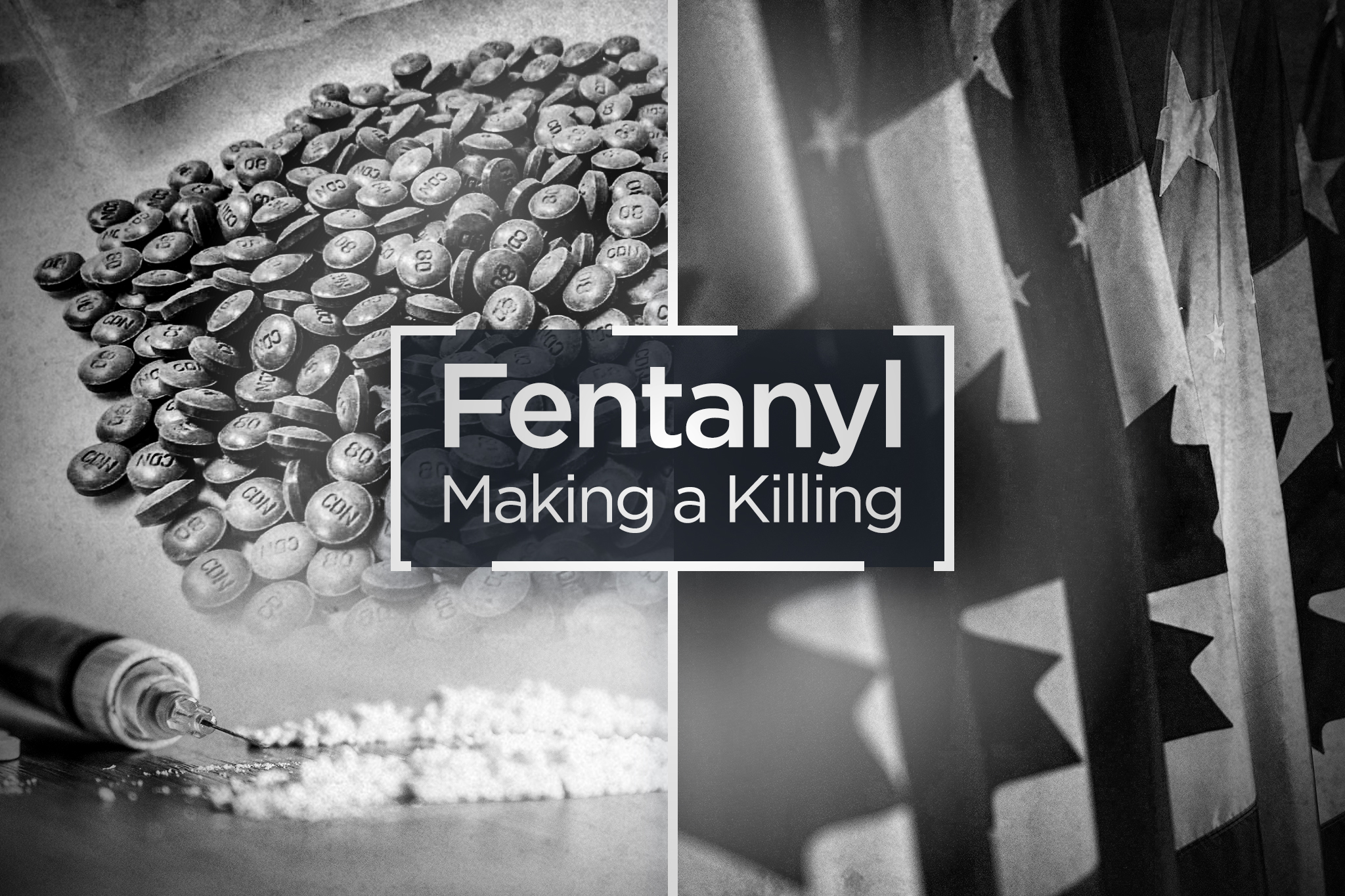
Canadian law enforcement agencies have found that fentanyl and its chemical precursors are mostly produced in southern China factories and sent to North America via shipping containers, and in the mail.
In public, Canada’s federal government claims there is co-operation with China in the fight against fentanyl. It isn’t politically feasible for Ottawa to openly criticize Beijing on the opioid crisis, especially as the two governments pursue deeper trade ties.
But behind the scenes, sources say frustration is growing over China’s inaction.
“This is a very hot issue diplomatically right now,” a source with knowledge of international policing said.
The situation has gone from bad to worse, after Canada recently turned down China’s request to insert a new police liaison officer in China’s Vancouver consulate.
“It’s a huge fight with China right now, and if you anger the Chinese they won’t work with you,” said a source, who could not be identified. “The fentanyl coming into Canada is going to get worse. Nothing will happen because we have to satisfy what they (the Chinese government) want.”
Responding to questions from Global News following the G20 summit on Saturday, Prime Minister Justin Trudeau maintained that China is cooperating with Canada on the fentanyl crisis.
“China has been actually working with Canadian officials and Canadian law enforcement over the past months, to take measures on the flow of fentanyl into Canada. There is, obviously as you say, more to do, we recognize that this is a crisis that is continuing in Canada and indeed getting worse,” Trudeau said.
What China wants, is freedom in B.C. to pursue alleged corruption suspects and financial fugitives, including a suspect accused of absconding with about $1 billion from a Beijing company. The suspect is laundering the money in Vancouver real estate, a source said, and using Vancouver as a hub to launder dirty money around the world.
China’s request to send a police liaison to Vancouver was rejected by Canada’s department of Global Affairs because of national security concerns, according to a source.
The concern is the police liaison could have worked for China’s Ministry of State Security, which is the non-military agency responsible for China’s counter-intelligence, foreign intelligence and political security operations.
“There are cases where people come to Canada working for the Ministry of State Security,” a source said.
It is not known what triggered Canada’s suspicion in this case, but reportedly, the so-called Five Eyes intelligence countries, including Canada, Australia, and the U.S., have recently increased information sharing on China’s alleged foreign influence, investment and spying campaigns.
Global News requested interviews with Global Affairs officials regarding the diplomatic dispute but the requests were declined.
A brief prepared statement did not address or refute the alleged case.
“Canadian and Chinese authorities continue to work together on law enforcement and legal-judicial issues, including fentanyl and opioids,” Global Affairs spokesman Guillaume Bérubé wrote.

Global News repeatedly contacted officials in China’s embassies in Ottawa and Vancouver to ask questions for this story, but was unable to obtain responses.
In an interview, Conservative critic for foreign affairs Erin O’Toole said “We have people dying. And if they are slow to crack down on production facilities that are perpetuating this horrible drug … the very fact that China might be dragging its feet on investigating and shutting down production facilities in Mainland China, is deeply concerning. And we should raise it at the highest level.”
And regarding the allegation that China is seeking diplomatic concessions from Canada in order to crack down on fentanyl exports, O’Toole said: “There should be no diplomatic quid pro quo. There are lives at stake here.”
Meanwhile, Senator Vern White, a former Ottawa police chief, said Canada should take punitive trade actions if China will not act to stem fentanyl arriving in North America from state-regulated factories in China.
Australia and United States federal forces also have anti-drug trafficking policing operations in China that the RCMP lacks, sources said.
As a result of these weaknesses, U.S. investigators and officials are expressing frustration with the limits of Canadian law enforcement, and concern about the growing reach of Chinese organized crime in B.C., an official confirmed to Global News. And the U.S. has established a significant number of federal law and drug enforcement officers in the U.S.’s Vancouver consulate, multiple sources confirmed.

Christine Duhaime, an anti-money laundering lawyer in Vancouver, said she recognizes the United States government is increasingly watching Chinese criminal networks in B.C.
“With the fentanyl crisis, and Vancouver being ground zero with imports from China paid with Bitcoin from unregulated exchanges, the U.S. government is concerned about Vancouver,” Duhaime said. “The fact that Vancouver has emerged as a safe haven for proceeds of crime is even more concerning.”
Tension between China and Canada over police agents is not a new phenomenon.
In the most famous case, agents claiming to be Chinese businessmen falsely obtained visas to enter B.C., and conducted covert operations in Richmond in pursuit of China’s most-wanted criminal, Lai Changxing. Lai was a billionaire smuggler and organized crime associate with ties to drug-trafficking and police and military officials in southern China, court records and sources say.
When a bribery and corruption case escalated in China, Lai fled to Hong Kong, and gained entry to Canada under immigrant investor status. He was a prolific VIP gambler in Richmond, associated to notorious loan sharks, and Big Circle Boys associates in British Columbia and Ontario, court records allege.
After a 12-year legal and diplomatic battle over China’s efforts to extradite Lai, a deal was struck in which China promised that Lai would not be executed if he was returned to face prosecution. He was sent to China in 2011 and imprisoned.
There are conflicting reports in China about Lai’s current condition.
“In accordance with the legal terms/parameters of Mr. Lai’s return to China, as outlined in the Federal Court Decision of 2011, as well as diplomatic assurances received at the time, Canadian officials have been monitoring Mr. Lai’s situation, pursuant to the assurances provided and in cooperation with Chinese officials,” Global Affairs stated, in response to questions about Lai’s health.
Monday, April 29, 2024
China is killing us intentionally funding Fentanyl distribution around the world especially the US and Canada
China is killing us intentionally funding Fentanyl distribution around the world especially the US and Canada
Apr 16 2024
WASHINGTON (AP) — China is funding and enabling the fentanyl crisis in the U.S. killing its citizens by directly providing the materials, that are used by traffickers to make the drug outside the country, according to a report released Tuesday by a special House committee focused on countering the Chinese government.


FILE - Then Attorney General William Barr appears before the Senate Judiciary Committee on Capitol Hill in Washington, May 1, 2019. A congressional committee is accusing China of fueling the fentanyl crisis in the U.S. A report released Tuesday by a House select committee says China is directly subsidizing the manufacturing of materials used by drug traffickers to make fentanyl outside the country. Barr says the committee’s report “uncovered persuasive evidence” that China’s government is “knee deep” in sponsoring and facilitating the export of fentanyl precursors.
WASHINGTON (AP) — China is behind the fentanyl crisis in the U.S. by directly subsidizing the manufacturing materials that are used by traffickers to make the drug outside the country, in a report released Tuesday by a special House committee focused on countering the Chinese government.

Committee investigators said they accessed a government website that revealed tax rebates for the production of specific fentanyl precursors as well as other synthetic drugs as long as those companies sell them outside of China.
“Through its actions, as our report has revealed, the Chinese Communist Party is telling us that it wants more fentanyl entering our country,” said Rep. Mike Gallagher, the Republican chairman of the special House committee. “It wants the chaos and devastation that has resulted from the epidemic.”
In November, President Joe Biden and Chinese President Xi Jinping announced a resumption of bilateral cooperation on counternarcotics with a focus on reducing the flow of precursor chemicals and synthetic drug trafficking. But the congressional report raises questions about whether China is following through.
The report’s findings were released Tuesday as part of a hearing examining China’s role in the fentanyl epidemic in the U.S. Most overdose deaths in the U.S. continue to be linked to fentanyl and other synthetic opioids. Inexpensive fentanyl is increasingly cut into other drugs, often without the buyers’ knowledge.
The Chinese government not only subsidizes the manufacturing of precursor chemicals, but the report says it has also thwarted investigations into illicit manufacturers by warning the targets of an investigation when U.S. law enforcement has sent a formal request for assistance. Investigators said multiple current and former federal agents have described the notification of targets, leading those targets to revamp operations and make it harder to detect their activities.
Former U.S. Attorney General William Barr told lawmakers in Tuesday’s hearing that it’s hard to believe that a country with the most pervasive surveillance system in the world is not fully aware of the massive drug trafficking taking place. He said the committee’s report “uncovered persuasive evidence” that China’s government is not just a bystander, but is “knee deep” in sponsoring and facilitating the export of fentanyl precursors.
Barr recommended the U.S. use its trade and economic power to seek greater enforcement from Chinese authorities. He also said victims should bring civil actions against companies and individuals involved in distributing the precursors and synthetic drugs.
“I don’t think we can count on their goodwill, as we have in the past,” Barr said.
A Chinese official in a statement didn’t directly address the allegation of China subsidizing the production of fentanyl precursors, but the official did list several steps the nation has taken to curb fentanyl production.
Following the Biden-Xi meeting in November, China issued a notice to remind relevant enterprises and individuals to be cautious in the sale of substances used for producing narcotic drugs. And on Jan. 30, a China-U.S. counter-narcotics working group officially launched, said Liu Pengyu, a spokesperson for the Chinese embassy in Washington.

China has also pushed forward with a campaign that has involved “severely cracking down on illegal activities involving smuggling, manufacturing, trafficking and abuse of fentanyl substances and their precursor chemicals,” Pengyu said. And drug control authorities from the two countries are in regular communication with the Chinese updating U.S. officials on progress related to law enforcement actions and responding to requests for verification.
“All these fully show that China’s drug control authorities have taken active actions to implement the consensus reached by the two Presidents, fully demonstrating China’s sincerity,” Pengyu said in a written statement. “It is very clear that there is no fentanyl problem in China, and the fentanyl crisis in the United States is not caused by the Chinese side, and blindly blaming China cannot solve the US’ own problem.”
Rep. Raja Krishnamoorthi, the top Democrat on the committee, said Chinese companies are also currently selling synthetic opioids on their websites, and pointed to a screenshot of one such solicitation that committee staff found just Monday night in advance of the hearing. He said such posts have to be taken down immediately.

“There are hundreds of these website posts — hundreds” Krishnamoorthi said. “This is completely unacceptable.”
The chemical companies providing fentanyl precursors often have legitimate businesses with customers around the world. The report said fentanyl precursors and other synthetic narcotics are a “side hustle” designed to maximize profits.
Businesses that deal in fentanyl precursors and narcotics on the side are particularly vulnerable to U.S sanctions. The same goes for companies such as banks, online platforms and shipping companies that enable illicit fentanyl trade.
The report calls on Congress to clarify the power of the president to sanction those involved in drug trafficking, for the U.S. to impose financial sanctions on violators and for regular reports to Congress on how often sanctions have been undertaken.
It also calls for forming a task force that would place intelligence, economic and enforcement resources under one roof. The head of the group would report directly to the attorney general of the U.S. and serve as a special assistant to the president on the National Security Council with authority over the opioids portfolio.
Canadian law enforcement agencies have found that fentanyl and its chemical precursors are mostly produced in southern China factories and sent to North America via shipping containers, and in the mail.
In public, Canada’s federal government claims there is co-operation with China in the fight against fentanyl. It isn’t politically feasible for Ottawa to openly criticize Beijing on the opioid crisis, especially as the two governments pursue deeper trade ties.
But behind the scenes, sources say frustration is growing over China’s inaction.
“This is a very hot issue diplomatically right now,” a source with knowledge of
The situation has gone from bad to worse, after Canada recently turned down China’s request to insert a new police liaison officer in China’s Vancouver consulate.
“It’s a huge fight with China right now, and if you anger the Chinese they won’t work with you,” said a source, who could not be identified. “The fentanyl coming into Canada is going to get worse. Nothing will happen because we have to satisfy what they (the Chinese government) want.”
Responding to questions from Global News following the G20 summit on Saturday, Prime Minister Justin Trudeau maintained that China is cooperating with Canada on the fentanyl crisis.
“China has been actually working with Canadian officials and Canadian law enforcement over the past months, to take measures on the flow of fentanyl into Canada. There is, obviously as you say, more to do, we recognize that this is a crisis that is continuing in Canada and indeed getting worse,” Trudeau said.
What China wants, is freedom in B.C. to pursue alleged corruption suspects and financial fugitives, including a suspect accused of absconding with about $1 billion from a Beijing company. The suspect is laundering the money in Vancouver real estate, a source said, and using Vancouver as a hub to launder dirty money around the world.
China’s request to send a police liaison to Vancouver was rejected by Canada’s department of Global Affairs because of national security concerns, according to a source.
The concern is the police liaison could have worked for China’s Ministry of State Security, which is the non-military agency responsible for China’s counter-intelligence, foreign intelligence and political security operations.
“There are cases where people come to Canada working for the Ministry of State Security,” a source said.
It is not known what triggered Canada’s suspicion in this case, but reportedly, the so-called Five Eyes intelligence countries, including Canada, Australia, and the U.S., have recently increased information sharing on China’s alleged foreign influence, investment and spying campaigns.
Global News requested interviews with Global Affairs officials regarding the diplomatic dispute but the requests were declined.
A brief prepared statement did not address or refute the alleged case.
“Canadian and Chinese authorities continue to work together on law enforcement and legal-judicial issues, including fentanyl and opioids,” Global Affairs spokesman Guillaume Bérubé wrote.
Global News repeatedly contacted officials in China’s embassies in Ottawa and Vancouver to ask questions for this story, but was unable to obtain responses.
In an interview, Conservative critic for foreign affairs Erin O’Toole said “We have people dying. And if they are slow to crack down on production facilities that are perpetuating this horrible drug … the very fact that China might be dragging its feet on investigating and shutting down production facilities in Mainland China, is deeply concerning. And we should raise it at the highest level.”
And regarding the allegation that China is seeking diplomatic concessions from Canada in order to crack down on fentanyl exports, O’Toole said: “There should be no diplomatic quid pro quo. There are lives at stake here.”
Meanwhile, Senator Vern White, a former Ottawa police chief, said Canada should take punitive trade actions if China will not act to stem fentanyl arriving in North America from state-regulated factories in China.
As a result of these weaknesses, U.S. investigators and officials are expressing frustration with the limits of Canadian law enforcement, and concern about the growing reach of Chinese organized crime in B.C., an official confirmed to Global News. And the U.S. has established a significant number of federal law and drug enforcement officers in the U.S.’s Vancouver consulate, multiple sources confirmed.
Christine Duhaime, an anti-money laundering lawyer in Vancouver, said she recognizes the United States government is increasingly watching Chinese criminal networks in B.C.

“With the fentanyl crisis, and Vancouver being ground zero with imports from China paid with Bitcoin from unregulated exchanges, the U.S. government is concerned about Vancouver,” Duhaime said. “The fact that Vancouver has emerged as a safe haven for proceeds of crime is even more concerning.”
Tension between China and Canada over police agents is not a new phenomenon.
In the most famous case, agents claiming to be Chinese businessmen falsely obtained visas to enter B.C., and conducted covert operations in Richmond in pursuit of China’s most-wanted criminal, Lai Changxing. Lai was a billionaire smuggler and organized crime associate with ties to drug-trafficking and police and military officials in southern China, court records and sources say.

When a bribery and corruption case escalated in China, Lai fled to Hong Kong, and gained entry to Canada under immigrant investor status. He was a prolific VIP gambler in Richmond, associated to notorious loan sharks, and Big Circle Boys associates in British Columbia and Ontario, court records allege.
After a 12-year legal and diplomatic battle over China’s efforts to extradite Lai, a deal was struck in which China promised that Lai would not be executed if he was returned to face prosecution. He was sent to China in 2011 and imprisoned.
There are conflicting reports in China about Lai’s current condition.
“In accordance with the legal terms/parameters of Mr. Lai’s return to China, as outlined in the Federal Court Decision of 2011, as well as diplomatic assurances received at the time, Canadian officials have been monitoring Mr. Lai’s situation, pursuant to the assurances provided and in cooperation with Chinese officials,” Global Affairs stated, in response to questions about Lai’s health.