Keeping an eye on Communist, Totalitarian China, and its influence both globally, and we as Canadians. I have come to the opinion that we are rarely privy to truth regarding the real goal, the agenda of China, it's ambitions for Canada [including special focus on the UK, US & Australia]. No more can we trust the legacy media as there appears to be increasing censorship applied to the topic of communist China. I ask why. Here is what I find.
Asian Americans Advancing Justice is a proud partner of Communities Against Hate, a diverse coalition coming together for the first time across communities to document hate and demand action.
This website is made available by Asian Americans Advancing Justice to document hate and to educate about the environment of hate around the country. Advancing Justice is not responsible for verification of the stories published on this site. As a result, we make no claims regarding the facts, details, dates, or places of these stories. Asian Americans Advancing Justice reserves the right to add, modify, or delete any information on this website at any time.
Chinese Canadian National Council Toronto
The National Association of Asian American Professionals
Worrisome advocacy commercial promoting and recruiting bigots...
Fact remains that the Chinese are the most racist and bigoted demographic within and outside of their... "Motherland".
HOW CHINA’S TECHNOCRACY USES THE PANDEMIC TO SUPPRESS RELIGION
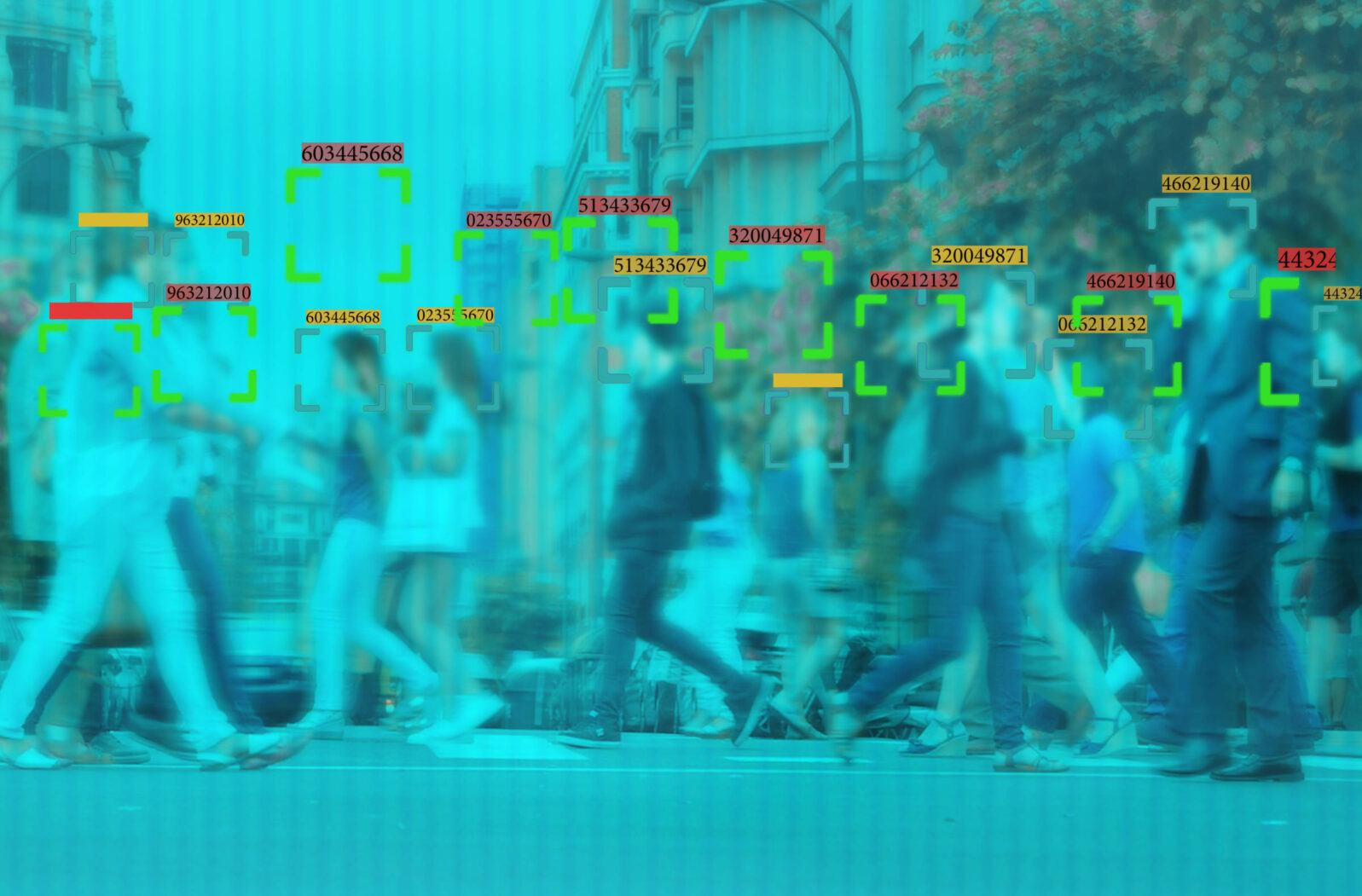
The pandemic provided a pretext to install surveillance equipment in churches and society at large to surveil believers online
OCTOBER 18, 2020
The COVID-19 pandemic has brought out the ways that technology can lead either to greater accessibility or greater oppression. The Chinese Communist Party (CCP) is now using the same technologies that have given many people around the world access to religious materials and church services during the pandemic to forcibly stop religious gatherings and restrict the distribution of religious materials within China.
Although the CCP is officially atheist, over 60% of the population adheres to a recognized religion; 30.8% practice Chinese folk religions, 16.6% Buddhism, 7.4% Christianity, 4.2% ethnic religion, and 1.8% Islam. Authentic numbers may be higher, given the risk of punishment for practicing certain religions in China.
The Chinese government has persecuted, tortured, and imprisoned Falun Gong members and Uyghur Muslims after these groups had mobilized protests. According to The Council on Foreign Relations report “Religion in China,” religious suppression has less to do with doctrine and more with a group’s organizational ability, which could threaten the CCP’s control over the people. That reasoning underlies the government’s continued persecution of Falun Gong, whose membership exceeds seven million.
However, doctrine does play some role in whether the CCP tolerates a religion. In a 2019 article in The Guardian, Duke University scholar and expert on Christianity in China Xi Lianexplains,“What really makes the government nervous is Christianity’s claim to universal human rights and values:”
Increasingly, activist church leaders have taken inspiration from the democratising role the church played in eastern European countries in the Soviet bloc or South Korea under martial law, according to Lian. Several of China’s most active human rights lawyers are Christians.
“They have come to see the political potential of Christianity as a force for change,” said Lian. “What really makes the government nervous is Christianity’s claim to universal rights and values.”
Notably, both Christianity and Chinese folk religions are the fastest growing religions in China.
Online Church Services Are Largely Shut Down
When the pandemic hit the U.S., many churches moved their services to an online platform. While online church services have their critics, they have functioned as a helpful stopgap until more information becomes available about the coronavirus and best prevention tactics. A key goal has been to prevent overwhelming the medical infrastructure.
No such option was available in China. The Chinese government not only enforced strict lockdown so that people could not leave their homes, it also shut down websites streaming religious services. The CCP controls the internet within its borders through its “Great Firewall.” Religious resources, WeChat and Weibo posts, live streams, and recorded videos were taken down if they contained religious content that has not been vetted by the authorities. Such materials have been routinely censored for the last four years but the pandemic offered the final blow to accessing religious materials online.
Bitter Winter, an online magazine which documents religious persecution in China, reports that a preacher for the Three-Self Church (a state-approved Protestant denomination) said that he had been providing online sermons for years until the government imposed more restrictions on religious practices in 2016. By 2019 his online accounts, including chatrooms, were blocked.
In the past China permitted the private practice of religion but things changed in 2018 when the Measures for the Management of Religious Information on the Internet legislation came into effect. One of its articles reads,
No organizations or individuals will be allowed to live-stream or broadcast religious activities, including praying, burning incense, ordinations, scripture chanting, holding Mass, worshipping or receiving baptism online in the form of text, photo, audio or video.
The final set of restrictions, decided in December, 2019 and put into effect in February 2020, kept supposedly “allowed” religious groups from free practice by placing all religious activity under the auspices of the Chinese government. According to the Council on Foreign Relations, the 2020 regulations require religious groups to “spread CCP ideology and values.”
Wuhan went into lockdown on January 23, with other centers soon to follow. Residents were prohibited from meeting in person and, as per earlier rules, online sermons were also prohibited:
Our first and only online gathering was blocked by the government soon after it started,” the preacher explained. She added that before the coronavirus outbreak, their church had to change venues for at least five times because of the continuous police harassment.
Other churches tried to have online meetings, only to have them blocked twenty minutes into the stream.
Online Religious Activities Are Monitored
In a previous article, I talked about the restrictions journalists and other Chinese citizens in Wuhan faced when discussing the on-the-ground situation during the early days of the COVID-19 lockdown. Religious groups in Wuhan came under the same scrutiny as citizen journalists for mentioning anything about the epidemic online. Authorities used the pandemic as an opportunity to purge online venues of religious content.
On January 24, the next day after the lockdown in Wuhan was imposed, members of a Three-Self church in Shangqiu city’s Suiyang district in the central province of Henan received a notice from their pastor, demanding to dissolve all their WeChat groups. In February, a village official forced a religious resident to change his WeChat account profile picture, which contained an image of the cross.
In China online purchases are monitored, and Chinese citizens can be flagged by authorities for purchasing religious materials online. While the law has been in place since March 30, 2018, the pandemic provided an opportunity for stricter enforcement, including monitoring WeChat discussions that might reveal that someone purchased an item from overseas.
Authorities can also retroactively sanction a resident for purchasing religious materials online. A Christian bookseller in China was detained for selling copies of religious materials from the U.S. and Taiwan. Afterwards, the government looked up all the customers who had bought the materials before the laws went into effect. One house church member investigated by police for buying religious materials from the book store toldBitter Winter that, as a result, she has “left all church-related groups on WeChat after the police examined all my online activities.”
Professor Xu Zhangrun, in an eloquent critique of the Chinese government, written from Wuhan during the outbreak, calls this “WeChat terrorism”:
Unlimited government budgets have funded technological developments that are turning China into a mega data totalitarian state; we are already subjected to a 1984 style of total surveillance and control. This state of affairs has enabled what could be called “WeChat terrorism” which directly targets the country’s vast online population… As a result, people live in a state of constant anxiety
Churches reopen—with smart locks and government surveillance cameras
While many places of worship in the U.S. and around the globe are working on re-opening their doors, religious venues in China have largely remained closed. Governing authorities must conduct a “health” inspection before they can re-open; many fail their inspection for unknown or irrelevant reasons. Or they may be forbidden because they openly display religion: Some venues were only allowed to re-open if they removed crosses or signs that have the Chinese character for “God” on them. Others had to remove general religious symbols. According to one deacon, his church was not allowed to re-open because the sermons that had to be submitted ahead of time mentioned the Bible and did not pay homage to the Chinese government for its efforts during the pandemic.
While churches, mosques, and temples were shut down during the pandemic, authorities installed surveillance cameras to ensure that congregants were not meeting secretly. Several churches report that they already had surveillance cameras, but during the pandemic several more were installed to cover all areas of the building.
Additionally, cameras were installed in or near believers’ houses to ensure that they are not having religious gatherings. In one village where more than 70% of the population is Catholic, the authorities installed five surveillance cameras at the village’s major intersection. They also installed a 360-degree camera near the house of a local Catholic priest. According to Bitter Winter, people they interviewed said the cameras could surveil the interior of a house. Because of these measures, the priest is restricted in where he can go and people are afraid to visit him.
During the pandemic, authorities also installed “smart locks” on the doors of rental properties. These locks use facial recognition or cell phones to unlock doors. They ostensibly track whether the occupant has traveled outside of the province and needs to quarantine. However, the technology can be used to identify a religious meeting. For example, several believers of The Church of the Almighty God, a Christian-like sect that believes Jesus has returned as a Chinese woman, have had their homes monitored to ensure they are not secretly meeting. Others have been told to quarantine even though they had not traveled outside the province.
Despite all this, religious belief is growing
Influenced by Marx’s tenet that Communism begins with atheism, Mao Zedong sought to rid China of “old” things during the Cultural Revolution. Despite the Communist Party of China’s persistent oppression of religious groups, the number of people who identify with a religion continues to grow in China. Human nature yearns for something more than an atheistic nationalism can provide because materialist philosophy leaves “a spiritual vacuum” that seeks to be filled.
Here are some of Heather Zeiger’s other recent columns on the techno crackdown in China:
Experts, power and society:The rise of technocracy in modern China
A project by
Cécile Armand
Elites, Networks and Power in modern China
May 1 2021
The second project investigates how far we can revisit the Republican period — especially the Nationalist regime (1927-1949) — as the cradle for a modern technocracy in China, by exploring a combination of factors since the late Qing dynasty that are symptomatic of technocratic regimes: the creation of technocratic institutions (commissions, committees, bureaus); the reliance on specialized rather than general knowledge, and on a new brand of experts who partly inherited from imperial scholar-officials, and yet departed from their predecessors by their educational background, their process of selection, their social position and their career opportunities; the broader dissemination of technocratic values (scientific management, rationalization, modernization) in every domains of social life, including work and family.
We will nonetheless acknowledge the existence of limiting factors that precluded the development of a full-fledge technocracy in early Republican China: the domination of military men over engineers, and of defense concerns over technical considerations in the backdrop of the Sino-Japanese war and the imperative of national survival; the prevalence of competing ideologies, mostly nationalism, communism and neo-Confucianism.
This project branches out into two case studies : Inventing public opinion in modern China and The development of the modern press in modern China.
Illicit Chinese drug money laundered in BC Canada while politicians look the other way
Explainer: What’s new in B.C.’s money laundering commission
The Cullen Commission is holding hearings with former political leaders and witnesses until May 14
May 3, 2021
Former Ministers Mike De Jong and Rich Coleman, and former Premier Christy Clark. (Flickr/ Province of British Columbia)
Over the last month, former B.C. Premier Christy Clark and former Ministers Mike De Jong and Rich Coleman have spoken at hearings with the Cullen Commission, a team investigating the systemic reasons behind the rise of money laundering in B.C. casinos over the past two decades.
Clark, who was premier of the province from 2011 to 2017, told the commission on April 20 that she wasn’t aware of the issue until 2015.
She testified to answer the Commission’s inquiry into how much she knew about the increasing amount of suspected drug cash going into B.C. casinos if she recognized the money was increasing government revenue, and if she made any attempts to intervene.
Throughout her testimony, Clark said her government acted quickly during her time in office. They placed a report titled Province Strengthening Anti-Money Laundering at Casinos in 2011 that suggested changes to anti-money laundering strategies, including creating a task force investigating suspicious activities and transactions at B.C. casinos.
“The idea was never to try and get revenue at the expense of public safety or public confidence in our casino system. Stopping crime, money laundering, was always a primary concern way over and above the revenue that came from B.C. lotteries,” said Clark.
However, the former head of the RCMP Integrated Proceeds of Crime Unit, Barry Baxter said there was no political will to stop the money flowing into the casinos.
On April 8, Baxter told the Cullen Commission that when he took command in 2010, he didn’t doubt that organized crime groups were laundering money through casinos.
In 2013, the unit was split up, and the casino money laundering investigation was dropped, and the RCMP’s priority shifted to addressing terrorism and national security.
“The ability to move those large amounts of cash into the casino remained right up until the day I left and I know it continues on,” said Baxter. “The casinos run on profits, and provincially those profits generate revenue for the province because they’re here, and I just don’t think that BCLC agreed that this was money laundering.”
From 2013 to 2017, De Jong was the minister responsible for gaming. De Jong told the Commission on April 23 that generating higher gaming profits at the British Columbia Lottery Corporation didn’t place priority on concerns of money laundering at casinos.
De Jong said serious efforts were made to understand and address the issue of money laundering and that he was unaware of times where people failed to interfere.
He said he realized the severity of the issue in 2015 when large amounts of cash were seen moving through casinos and knew more needed to be done to address the issue. Government documents showed that between 2014 and 2015, more than $176 million was laundered through B.C. casinos.
“It has been very frustrating to, candidly, hear commentary that the government was disinterested in the subject, or the minister responsible was disinterested in the subject of anti-money laundering because fiscal considerations took precedence, and that’s just not true,” he said.
Former Liberal solicitor general Rich Coleman spoke at a hearing on Wednesday. He was responsible for gaming on and off from 2001 to 2013. Coleman said he never asked for the job and his portfolio kept following him around.
During Coleman’s four-hour testimony, he said when he came to office in 2001, money laundering wasn’t considered a major issue, as loan sharks and vehicle thefts in parking lots were top concerns for the province.
“I never saw any attitude within the government that you need to let questionable money flow into any aspect of government,” Coleman said to Brock Martland, a member of the Commission.
B.C. gave the Commission an extension in March to complete its final report, which is now due on Dec. 15.
Coleman deflects questions about money laundering in B.C. casinos at hearing
The longtime former Langley MLA was asked about disbanding a gambling crime police unit
Apr. 28, 2021
The issue of large cash transactions at B.C. casinos didn’t ever come up in Rich Coleman’s first five years as minister in charge of gaming, he testified Wednesday to the Cullen Commission’s money laundering inquiry.
Coleman was the MLA for Fort Langley-Aldergrove or Langley East from 1996 to 2020, and during the years the Liberals controlled the B.C. Legislature from 2001 to 2017, he was the cabinet minister in charge of gaming multiple times, including from 2001 to 2005.
Coleman described the previous regulations and system as one that was largely operated by small local charities with a few casinos. His ministry created new legislation that professionalized the industry, and before long, attracted new casinos such as the River Rock in Richmond, still the largest casino in the province.
“There’s no doubt that once you modernized, the revenue did go up from casinos,” Coleman noted.
Brock Martland, a lawyer working for the Cullen Commission, asked if the changes were made to generate money for the government, but Coleman said it was meant to modernize and strengthen a weak and dysfunctional gaming system.
“There was never a discussion that we needed to do this for money,” he said.
The primary focus in the early years for enforcement around gaming in B.C. was illegal slot machines in bars and pubs, and loan sharking and general theft around the outsides of legal casinos, along with some concern about illegal gambling such as poker games, Coleman testified.
“None of the large cash transaction piece was ever brought to my attention,” Coleman said, referring to the reports that huge volumes of cash, sometimes hundreds of thousands of dollars, was sometimes brought into B.C. casinos and converted into chips.
By 2008 to 2010, there were beginning to be questions from inside investigators and whistleblowers and, later, from the media about the big cash transactions.
Coleman was asked whether he recalled a 2008 meeting with Gaming Policy and Enforcement Branch senior members in which he was allegedly told that the cash issue was keeping one senior official up at night.
“I do not,” Coleman said.
Despite the alleged concerns raised, the Illegal Gaming Enforcement Team (IGET), a five-year pilot project, was disbanded in 2009, under Coleman’s directive.
“It wasn’t that successful, it had trouble with focus,” Coleman said.
He noted that earlier that year, the government had announced the hiring of 168 new officers and 10 dedicated Crown prosecutors to go after guns and gangs.
The thought was that those new officers and prosecutors would pick up the slack from the disbanded IGET, which was about to lose its funding from BCLC.
He was also asked about an email that was sent to him in 2010, apparently by staff at the Edgewater Casino, that said there was a “see no evil hear no evil mentality,” there, with management ignoring loan sharking.
Coleman said he wouldn’t have responded to an email like that other than by passing it along to investigators, as there could have been an active investigation already.
Asked about the large amounts of cash, Coleman said that the difficulty was always proving which of it was illicit, criminal cash and what was legitimate.
One “issues document” – a briefing document given to cabinet ministers for use during budget debates – said in 2012 that patrons were asked for ID if they tried to bring in more than $9,000 in cash and had to give a “valid occupation.”
Other similar issue documents boasted that the province had a “robust anti-money-laundering regime in place.”
Coleman was asked if that was accurate, or if there was a component of “spin” in those documents.
“My assessment would be that it’s pretty accurate,” he said.
One way the government prevented money laundering in casinos was by simply giving back the same cash that had been deposited when large transfers were cashed out, Coleman said, which meant no laundering occurred.
However, media reports a decade ago indicated in at least one case casino staff provided a letter certifying that a six-figure sum of cash was legitimate casino winnings for at least one gambler.
In general, Coleman said he had to leave investigations to police and remain at arms length as minister in charge of gaming. He said he didn’t recall police ever specifically expressing concerns over resources to investigate such issues.
The Cullen Commission was formed in the wake of reports of huge amounts of illicit cash moving through B.C. casinos with few attempts to investigate the source of any of the funds.
An inquiry launched by the NDP outlined how illegal cash from organized crime was flowing through casinos, as well as the real estate and luxury car markets in Metro Vancouver.
Last November, Fred Pinnock, who was in charge of the now-defunct IGET, told the commission that he met with then-solicitor general Kash Heed, who is also a former officer he knew through policing circles for 35 years.
Pinnock said Heed told him that his concerns about illegal activities were legitimate but Rich Coleman, who was the gaming minister, was “all about the money.”
Coleman flatly denied that twice during his testimony.
He also said that an allegation Pinnock made about a crushing handshake delivered by Coleman during an encounter at a Liberal fundraiser “never happened.”
Pinnock was later grilled about his testimony by a lawyer for Heed, who suggested Pinnock’s memory of events was faulty.
Coleman has told the Langley Advance Times that he is confident the then-Liberal government did a good job with gaming during their tenure.
The hearings are overseen by Commissioner Austin Cullen, a B.C. Supreme Court judge.
More Political Testimony On Money Laundering Case
Last week’s testimonies in Cullen Commission’s public inquiry into money laundering has heard testament from former B.C. cabinet minister Kash Heed. He addressed the recordings of him channeling serious assertions regarding former gaming minister Rich Coleman as just an opinion rather than based on facts. In 2018, Mr. Heed was recorded saying that RCMP officials were puppets in the hands of the then minister Coleman.
Mr. Heed has been the latest political figure to give testimony last week at the public inquiry. The commission has been tasked with determining whether the alleged money laundering activities in the province’s casino properties have occurred and whether they continue to this day. Headed by Justice Austin Cullen the inquiry has a December 15 deadline date to compile its final report on the matter.
”Meant to Stay Private“
Mr. Heed has commented on the recorded phone call between him and his friend Fred Pinnock who is an ex RCMP officer and once led the Integrated Illegal Gaming Enforcement Team. The former minister stated that the conversation was meant to be private between two friends and his assertions were based on his personal opinion and not on first-hand knowledge or experience.
Both are friends since the early ‘80s, and last November Mr. Pinnock stated that in 2009 Mr. Heed claimed that Mr. Coleman has a major part in the inability to deal with money laundering and that senior RCMP operatives are also to blame. However, the former did not record the meeting in question but stated that he taped three conversations with Mr. Heed in 2018.
According to one of the recordings, the former minister was heard describing the former local government as “the most unethical group of people you can imagine”. Mr. Heed responded to the tape by claiming that his remarks were entirely based on rumors and media reports he had seen after leaving the solicitor general’s office.
The former minister has also claimed he being recorded without his consent was morally repulsive and that there is a huge difference in what he said in the 2018 phone calls and the 2009 meeting with Mr. Pinnock. The former minister insisted that the assertions were just part of a conversation with a friend and it was his personal opinion rather than facts.
April Testimonies
Previous testimonies saw Mr. Coleman giving testament himself. The former British Columbia denied that the province’s government has put higher revenue numbers ahead of dealing with the money washing issue. He claimed that he never heard or saw someone suggesting to allow the issue to continue for the benefit of the government. He has also claimed that back then he did not possess enough authority to order what and when should be investigated.
Prior to that, Attorney General David Eby has also testified at the public money laundering inquiry. He stated that the British Columbia Lottery Corporation and its regulator the GPEB had a major difference in the information that they were reporting to him. Mr. Eby also claimed that the Crown agency was offered some precautionary measures by the branch, but it was unwilling to adopt them for quite a while.