Thursday, July 4, 2019

Huawei Insider Reveals Company’s Intimate Relationship With the Chinese Communist Party

Huawei Insider Reveals Company’s Intimate Relationship With the Chinese Communist Party

July 3, 2019 
Huawei’s ownership structure and its relationship with Beijing authorities have been hotly debated in the Western press.
But recently, a Huawei insider detailed to The Epoch Times that Huawei’s relationship with the Chinese Communist Party (CCP) runs deep.
The ex-wife of Haosheng Hudson Liu, Huawei’s executive in Australia and former CEO of Huawei Indonesia, recently told The Epoch Times that Huawei uses its business relationships with foreign telecommunications companies to conduct espionage and influence foreign companies and governments on behalf of the CCP.
Liu joined Huawei in 1998. He was formerly the deputy managing director of Huawei’s office in Germany and CEO of the company’s Belgian and Indonesian offices. In May 2019, he was appointed CEO of Huawei Australia. Australia was the first country to sanction Huawei. The company was banned from participating in the construction of Australia’s 5G network last year.
Ren Hua married Liu in 2004, followed him on his postings abroad, and the couple formally divorced by 2017.
Ren said that after the breakup, her phone was intercepted and her network and mailboxes were attacked and monitored by hackers. Her bank account’s personal account information was under the control of hackers. Ren believes that this series of persecution comes from the CCP. As the ex-wife of Huawei executive, she says her personal experiences are enough to debunk Huawei’s claims that it is not controlled by the CCP.
Ren said that Huawei is not a private enterprise as self-claimed, but a company that carries out special orders and receives special treatment from the CCP.

Keeping Foreign Heads of States Close

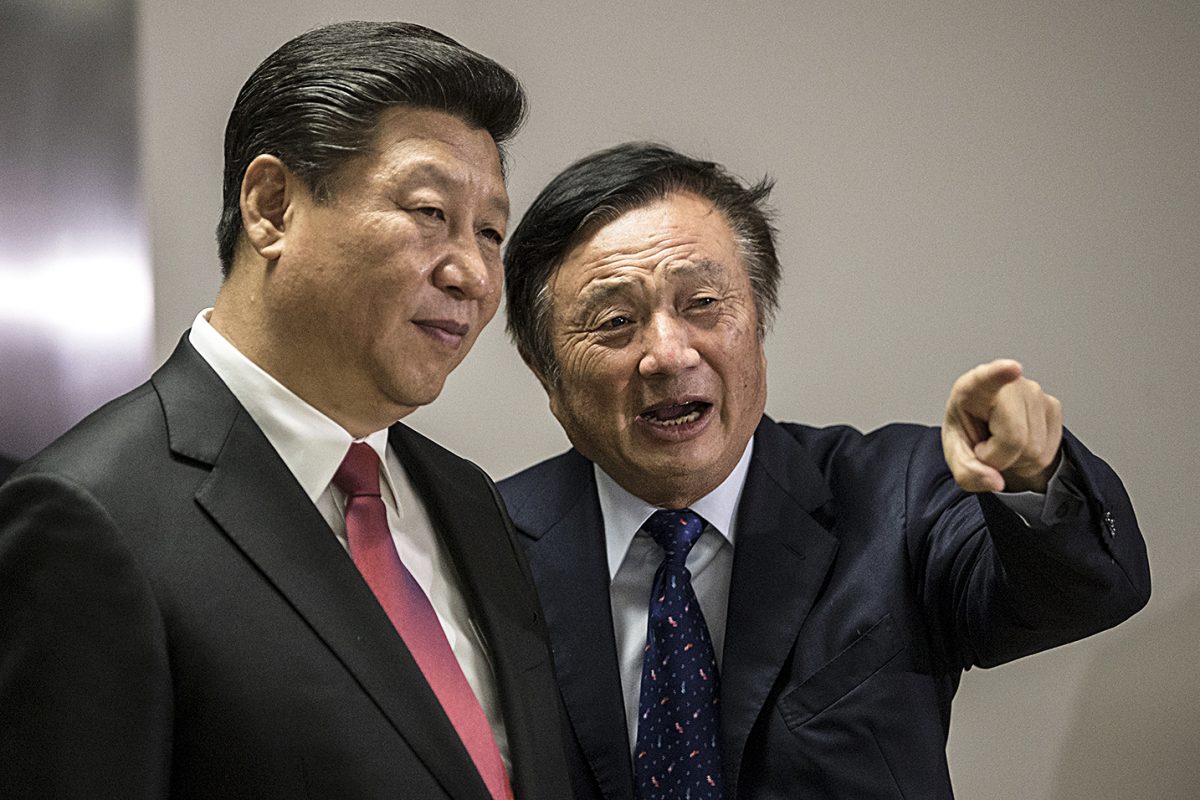
To Ren’s knowledge, Huawei CEO Ren Zhengfei had asked Huawei’s representative offices in various countries to maintain positive relationships with local authorities, especially heads of state, so as to cooperate and assist the CCP in foreign diplomacy.
Ren said that during her stay in Belgium, Liu regularly reported to the local Chinese Embassy. In 2015 when Liu invited the King of Belgium to visit Huawei and the Chinese government, she heard Liu mention that Ren Zhengfei had notified and asked all overseas representative offices of Huawei to uphold public relations with each local country’s heads of state and important officials, and to invite them to visit Huawei and China.
Liu was of course Huawei’s lead executive in Belgium bet 2014 to 2016, and Belgium is the headquarters of the European Union. Huawei has been operating in Belgium since 2007 and has five offices in Brussels, Leuven, Ghent and New Leuven.
Ren said when Belgian King Philippe LĂ©opold Louis Marie visited China in June 2015, Huawei put in a lot of effort behind the scenes. During his stay in China, the Belgian King visited Huawei’s headquarters in Shenzhen and met with CEO Ren Zhengfei.
On Nov. 12, 2015 the first Huawei customer service store with integrated service and sales opened its doors in Brussels. The owner of the store is a pro-Communist overseas Chinese whose relations with the Chinese Embassy are atypical.
Although Huawei’s market relationship in Belgium is deepening, the international community’s doubts about whether Huawei is a spy portal for the Chinese government have not diminished. In December 2018, Vice President of the European Commission Andrus Ansip pointed out that the EU should be vigilant against Huawei and other Chinese technology companies, stating that the chips produced by these companies may be used “to get our secrets.”
In May 2016, Liu was transferred to Huawei Indonesia. Huawei’s Indonesian company was established in 2000. With a population of more than 264 million, Indonesia has the fourth largest population in the world, behind only China, India and the United States. Most Indonesian telecommunications companies rely on foreign equipment to operate. According to the CCP’s Xinhua News Agency, “Huawei has been operating in Indonesia for 16 years. Through establishment of the Joint Innovation Center and cooperation with the Indonesian Ministry of Information (Kominfo), it has participated extensively in the development of information and communication technologies in Indonesia.”
In February 2019 following the Mobile World Congress, Indonesia signed a five-year network maintenance and equipment supply contract with Huawei despite protests from the United States.
According to Ren, Huawei not only controls the Indonesian telecommunications industry, but has great influence over government policy. Huawei’s long-term contract was signed with Telkom Indonesia, which is majority-owned by the Indonesian government. In addition to Huawei’s economic and technical cooperation with Telkom Indonesia, Huawei can be expected to influence the Indonesian government by extension.
According to Ren, Huawei has close ties with the Chinese Embassy. During major Chinese holidays, Huawei’s foreign representatives are invited to participate in activities organized by the Chinese Embassy. Ren has also participated in such events.
The ambassador to the Chinese Communist Party in Indonesia has also viewed memos from Huawei Indonesia. On the website of Chinese Embassy in Indonesia on May 28, 2018, the article “Ambassador Xiao Qian Visits Huawei Indonesia” was published, which said “On May 24, 2018, Ambassador Xiao Qian visited PT Huawei Tech Investment and heard a briefing by Huawei Indonesia on the company’s recent work and achievements, accompanied by Huawei Indonesia CEO Hudson Liu, Vice President Peng Jun, Vice President Li Fei, and Vice President Selina Wen. Ambassador Xiao spoke highly of Huawei’s development achievements and its contribution to the economy and society in Indonesia.”

Huawei is Involved in Benefit Transfer

Huawei has rapidly expanded its overseas market share in recent years. Under the strategic deployment of the CCP, Huawei has helped the CCP develop relationships with foreign governments, tried to infiltrate foreign governments, and is also suspected of bribing politicians in foreign countries.
Ren said, “In July 2017, our family was on holiday in Indonesia. When we met with some Huawei Indonesia employees Yao Moumou, the account manager of Indonesia Telecom, and Liu Haosheng talked about how Huawei obtained its contract with Telkom as well as how Huawei transferred benefits to Indonesia government spokesperson Luhut Binsar Pandjaitan, the Minister of Communications, the Telkom Indonesia CEO, and other related people.”
Luhut has a special relationship with the Chinese government. Whether as the coordinating minister for the Political, Legal, and Security Affairs in the past, or as the current Minister for Maritime Affairs, Luhut has always been an important leader in coordinating bilateral cooperation with China from the Indonesian side. He founded his own Toba Sejahtra Group in 2004, whose activities cover mining, energy, plantation, and real estate.
Huawei disputes the assertion that it is subject to the commands of the CCP. On March 20, U.S. public relations companies Racepoint Global and Burson Cohn and Wolfe registered as Huawei’s agents overseas. The two companies asked Huawei to confirm that it is not subject to the supervision of foreign governments, has no foreign government shares, and does not receive foreign government funding, control or subsidies, but this has yet to be confirmed by Huawei.

Huawei is Supported by the CCP

Huawei also receives special treatment from the CCP. According to a Xinhua News Agency report from September 2009, China Development Bank (CDB) and Huawei signed a round of strategic cooperation agreements to expand the credit line between the two parties to $30 billion. It was an increase of $20 billion from the credit line provided in 2005.
The shares of CDB are held by the Ministry of Finance of the People’s Republic of China and the State Administration of Foreign Exchange. CDB has provided massive low-interest loans to Huawei for many years. In the overseas telecommunications market, Huawei can use below-cost pricing to grab market share and achieve the goal of rapid expansion.
In order to seize the overseas market share, Huawei has even helped overseas businesses obtain low-interest loans from CDB that are lower than other loan interest rates. If the business subsequently goes bankrupt, the business would not need to repay its loan from the CDB. This means that businesses do not need to bear any financial risks or future consequences when using Huawei equipment. This is equivalent to CDB helping Huawei implement disguised bribery to foreign telecom operators.
However, Huawei isn’t just giving out free equipment. In addition to seizing the market, many countries have also questioned that behind Huawei’s low-cost products are other ulterior motives. The worry is that Huawei’s network will be used by CCP spies. During peacetime communication channels are wiretapped, and during wartime the signals could be suddenly cut off, realizing the ambition of the CCP to control, monitor, and infiltrate its rivals with technology.

Watch Out Vancouver Island, Canada! Earthquake Strike


Strong earthquake strikes off B.C. coast between Haida Gwaii and Vancouver Island

2 of 3
  • U.S. GEOLOGICAL SURVEY
A strong earthquake hit off the coast of British Columbia near Queen Charlotte Sound between Haida Gwaii and Vancouver Island tonight.
The tremblor struck at 9:30 pm. today (July 3) and was reported to be lightly felt on Vancouver Island and the mainland coast.
Earthquakes Canada measured it as a 5.8-magnitude seismic event while the U.S. Geological Survey reported it as a 6.2-magnitude quake according to preliminary measurements.
The epicentre was located at a depth of 10 kilometres (6 miles) and 211 kilometres (131 miles) southwest of Bella Bella, 353 kilometres (218 miles) southwest of Kitimat, and 581 kilometres (361 miles) northwest of Vancouver.
Although small earthquakes occasionally occur in the region, the last earthquake in the area larger than 6.0-magnitude was recorded on October 2, 2012, when a 7.8-magnitude quake struck.
According to both Earthquakes Canada and the U.S. Tsunami Warning Centre, a tsunami is not expected from this quake.
Earlier today, a 3.9-magnitude quake also hit further north off the Pacific coastline at 3:36 a.m. (PST) between Haida Gwaii and Prince of Wales Island.
The epicentre was located at a depth of 10 kilometres (6 miles) and was 93 kilometres (58 miles) southwest of Craig, Alaska, and 290 kilometres (180 miles) northwest of Prince Rupert.
A 3.9-magnitude quake also struck between Haida Gwaii and Prince of Wales Island on July 3.
U.S. GEOLOGICAL SURVEY

DND may abandon $1B move to former Nortel site because of Chinese surveillance bugs

DND may abandon $1B move to former Nortel site because of Chinese surveillance bugs

Monday, September 30, 2013

Related image
The Department of National Defence may not move into its new headquarters at a former Nortel Networks complex because the building is riddled with Chinese eavesdropping devices.
DND told CTV News it may abandon the move, and sources said it’s unlikely any other department would take over the former Nortel site because of the security risks.
Former Nortel employees have said the company was the target of Chinese espionage for nearly a decade.
Keith Murphy, CEO of the information security company Defence Intelligence, said it’s not a suitable home for DND.
“It seems an odd choice to choose to move an organization of that nature into a site that you know was compromised and a victim of Chinese espionage,” he told CTV News.
DND won’t discuss the security risk at the former Nortel campus, but said it takes the threat seriously.
The Conservative government has already set aside approximately $1 billion for its plan to move DND to the new headquarters.
“Spending $1 billion on a new headquarters, even if it’s state-of-the-art -- and of course, it isn’t -- is a really bad idea,” said retired lieutenant-general Andrew Leslie.
Documents obtained by the Ottawa Citizen show that then-Defence Minister Peter MacKay was warned about the security threat by China last year.
MacKay was informed in a briefing note that the costs to relocate could be substantially more than the $1 billion earmarked by Ottawa.
“This not only raises the level of difficulty of verifying appropriate security safeguards in the future, it will probably dramatically increase security costs and cause delays to reach full operational capability,” MacKay was told last year.
The briefing note was obtained by the Ottawa Citizen through an Access to Information request.
“I don’t think we should go forward without certainty that there will be a secure facility for the operations of the Canadian Forces,” said NDP defence critic Jack Harris.
............................................................................................................................

Image result for Minister Peter MacKay was warned about the security threat by China last year.


China’s Record on Cyberhacking a Key Concern for Canada, Says Former Defence Minister Peter MacKay

As Ottawa pursues closer relations with Beijing, MacKay warns about security, economy
 EPOCH TIMES
December 11, 2017
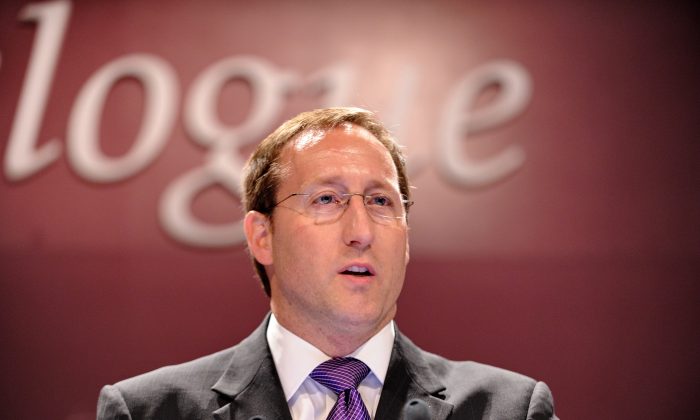
When it comes to Canada’s relationship with Beijing, national security should be of the utmost concern, warns former defence minister Peter MacKay.
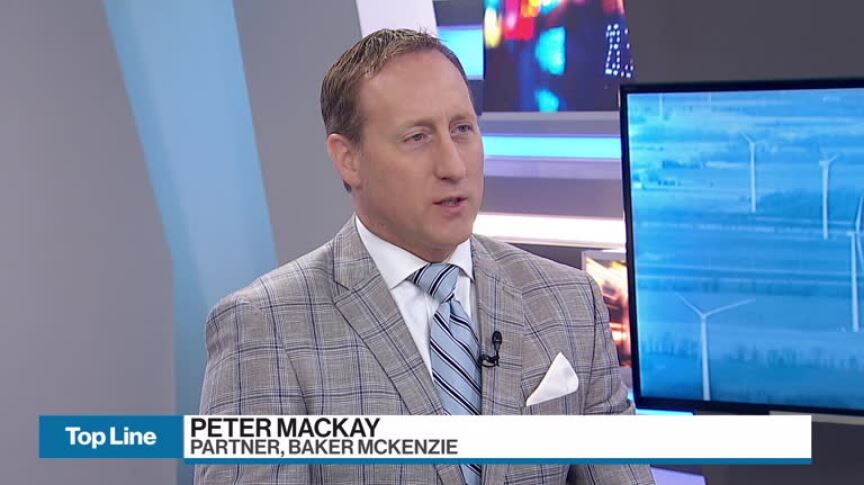
“I’m not comfortable in many ways in having the Chinese more and more integrated into our technology system,” said MacKay, who served as minister of justice, minister of defence, and minister of foreign affairs during Stephen Harper’s Conservative government.
“In particular, the way in which we have ample evidence of their activities around cyberhacking—including critical infrastructures, government banks, government departments—we have to be very frank and upfront about protecting our interests,” he said.
“It’s not to say we can’t do business with them, but we expect them to play by the rules, and play fairly.”
MacKay’s words of warning come just after Prime Minister Justin Trudeau concluded a five-day trade mission to China in what has become an annual trip to ramp up bilateral ties between the two countries.
According to a recent report by Public Safety Canada, there were more than 2,500 foreign state-sponsored cyberattacks between 2013 and 2015 against the Canadian government’s computer networks. The report doesn’t name any specific countries; however, China is among the most active countries launching cyberattacks around the world, including the well-publicized Chinese state-sponsored cyberattack on Canada’s National Research Council computer systems in 2014.

Free Trade

MacKay warns of a “recklessness” in pursuit of free trade with China, particularly given that the regime doesn’t play by the same rules as Canada.
“[And] particularly given what’s at stake in losing control over things like our natural resources, the major economic drivers of our country,” he said.
Ottawa and Beijing have been pursuing a free trade deal since the Liberal government came into power. However, the two sides did not reach an agreement to launch formal free trade negotiations during Trudeau’s China trip, and said they will continue exploratory talks.
MacKay said there are many concerns in pursuing a free trade deal between a democratic country like Canada and a communist state like China.
“[China] is not a democratic country, it’s not a country that necessarily shares our values, certainly not a country that has any semblance of human rights, of rule of law, or free market economy,” he said.
“They don’t want to concern themselves with labour standards, or sharing the profits—there is a completely different view of the economy in a communist country than there is in a democratic one like Canada, and so you have to proceed with a great deal of caution.”
At the same time, he said, such a deal could jeopardize Canada’s efforts in NAFTA renegotiations with the United States.
“We can’t take our eyes off the ball as far as ensuring that NAFTA is going to survive and stay intact,” he said.
MacKay’s former cabinet colleagues in the previous Conservative government, James Moore and Rona Ambrose, who are both on Trudeau’s NAFTA advisory panel, have expressed similar concerns.

Takeovers

China’s ambassador to Canada, Lu Shaye, has made it clear that Beijing doesn’t want human rights to be part of trade talks with Canada. Additionally, he has said that Chinese state-owned enterprises (SOEs) should have unfettered access to the Canadian economy, stating that China would regard as protectionism any attempt to block its SOEs from taking over Canadian firms on national security grounds.
Earlier this year when the federal government approved a China-based company’s takeover of Vancouver-based satellite communications firm Norsat International Inc. without requiring a comprehensive security review, it drew heavy criticism from intelligence and security circles. This included the U.S.-China Economic and Security Review Commission, a congressional commission. Norsat makes radio transceivers and systems used by the American military and Canada’s other NATO partners.
Before that, government approval of a Hong Kong company’s takeover of Montreal-based ITF Technologies, a laser technology company, drew similar criticism, especially because the previous Conservative government had blocked the sale citing security concerns.
“I find that very troubling,” MacKay said.
“The backdrop to all of this is that the Chinese are serial cyberhackers within the Canadian economy, and so turning over control of an important tech company—I find worrisome when there wasn’t an in-depth security check done, when they didn’t go through this rigorous analysis that is in place for a reason and that is to protect Canada’s interest,” he noted.
“The Politburo [of the Chinese Communist Party] doesn’t have the same interest in protecting Canadian values and Canadian prosperity that the Canadian government does.”
MacKay said he is also concerned about the proposed takeover of Canadian construction giant Aecon by China’s state-owned CCC International Holding Ltd.
Late last week, following Trudeau’s trip to China, Aecon announced that the proposed sale has obtained regulatory approval under the Canadian Competition Act. However, it still needs to undergo a review under the Investment Canada Act, invoked when large foreign investments in Canada are involved.
MacKay said if the Chinese SOE takes over a major Canadian construction company, the Chinese government could effectively be taking on huge construction projects that are taxpayer-funded, especially now that the government is launching a substantial infrastructure upgrade program.
“They would be bidding on potential contracts for this massive infrastructure build that has been proposed by the government. Does that mean that Canadian companies now will be losing contracts to a large Chinese state-owned construction company?”
Furthermore, a Chinese SOE is more likely to use steel and other material that are imported from other Chinese SOEs into Canada. This would be a real threat to Canada’s steel industry, as China is notorious for dumping steel in Canada, by selling the product at a lower-than-normal price to drive out local competition.
In a controversial decision, the previous Conservative government approved the sale of oil and gas giant Nexen to the Chinese state-owned CNOOC back in 2012.
MacKay said the Conservative caucus was “always very uneasy” about the sale, adding that there was more competition in that sector, which made it a little different from the Aecon case.
“I can tell you it did go through a very rigorous analysis, but it wasn’t without controversy or dissent within our own government,” he says.
In announcing the approval of the Nexen takeover as well as the takeover of Progress Energy by Malaysia’s Petronas in 2012, then-prime minister Harper said that going forward, any similar takeovers would only be allowed under “exceptional circumstances.”
“When we say that Canada is open for business, we do not mean that Canada is for sale to foreign governments,” Harper said.

Rule of Law, Human Rights

MacKay cites concerns about respect for the rule of law and human rights as an important aspect when considering deals with China.
“The rule of law is very important in not only contractual disputes, but also very important when it comes to giving a person a full answer in defence,” he said.
“I’m very leery of the way China treats not only its own citizens, but those who are visiting their country.”
There are currently several Canadians detained in China. They include Vancouver resident Sun Qian, the founder of a billion-dollar company who was detained for her faith in Falun Dafa, a spiritual meditation practice persecuted by the Chinese regime; Huseyin Celil, an Uyghur dissident; and British Columbia winery owner John Chang, who was arrested along with his wife, Allison Lu, over a customs dispute issue. Lu was later released but remains unable to leave China.
While in China, Trudeau said he raised human rights and specific consular cases involving detained Canadian citizens with the Chinese leadership. So far, none of the Canadians have been released.
“You have to also have honesty in the relationship. You have to be able to talk about sensitive issues like human rights, being able to settle these consular cases,” MacKay said.
Canada should be very cautious in its relationship with Beijing, MacKay added.
“Move at the pace that ensures that Canadian rights and Canadians’ interests are going to be protected.”

Tuesday, July 2, 2019

HUAWEI FOUNDER REN ZHENGFEI DENIES INVOLVEMENT WITH NORTEL COLLAPSE

Sometime in Nortel’s final chapter Huawei offered to take it over, claims Huawei founder Ren Zhengfei.

As a Canadian technology giant neared collapse, its fast-rising Chinese competitor moved in, ready to buy what was left of the company it was about to trounce.
Huawei was still a little-known Chinese manufacturer of communications equipment in 2009, when Nortel was in the midst of bankruptcy proceedings. Only later would Nortel’s former security adviser accuse Huawei of benefiting from years of Chinese hacking into the Canadian company’s systems and stealing confidential information.
But sometime in Nortel’s final chapter, Huawei offered to take it over, the Chinese company’s founder, Ren Zhengfei, told The Globe and Mail in an interview.
“I told Mike that I wanted to acquire Nortel,” Mr. Ren said, referring to Mike Zafirovski, the man who was then Nortel’s chief executive officer.
The deal did not happen, Mr. Ren said, because Mr. Zafirovski “replied by saying that he wanted to be the controlling shareholder of Huawei,” Mr. Ren said. “Nortel was already going into bankruptcy, but they still insisted on taking a controlling stake in Huawei.”
The Chinese executive recalled asking, “Where will you get the money?” Nortel filed for bankruptcy protection on Jan. 14, 2009.
Mr. Zafirovski said “he could go out looking for money,” Mr. Ren recalled. “I said it’s impossible.”
Mr. Zafirovski did not respond to multiple requests for comment. And it’s not clear whether any such takeover could have been approved.
“I don’t think any approach from Huawei would have been taken very seriously. The U.S. government was too important as a customer,” said John Manley, the former Canadian deputy prime minister who also served on the Nortel board. Mr. Manley did not recall any specifics of a Huawei proposal.
The idea that Huawei sought to acquire the collapsing remains of Nortel is also likely to be seen as bittersweet by those who lay blame for the disintegration of the Canadian telecommunications champion partly at the feet of Chinese intellectual property theft. Brian Shields, Nortel’s former security adviser, has said internet logs show hackers from China had access to Nortel’s systems for years, at a time Huawei was rapidly developing some similar products.

Related: Huawei’s CEO has a message for Canada: Join us and prosper in the 5G future

Nortel at its peak employed nearly 100,000 people, with annual revenues of US$30-billion. Huawei today employs 194,000 with revenue last year of US$107-billion.
Mr. Ren’s account stands at odds with a report in the Ottawa Citizen, which detailed how in May of 2009 a group of former Nortel executives, with the help of former CEO Bill Owens, convinced executives at Huawei to make a minority investment in an operating company they had formed to buy up Nortel’s remaining assets.
The idea died when Huawei’s board rejected it, the Citizen reported.
Mr. Ren said discussions with Nortel did not progress far enough to settle on an acquisition price.
Huawei eventually hired a number of former Nortel scientists, some of whom became key figures in the company’s Ottawa research facility, where it did some of the science that underpins its fifth-generation cellular network technology.
When Nortel fell apart, Huawei recruited, Mr. Ren said.
“Back then, Nortel didn’t have the technology we are talking about today; they only had talented people. When such talented people were out of work, it was just natural that they would find other jobs,” he said.
“When Nortel collapsed, 3G had just started developing in the world. As the industry evolved from 3G to 4G, and then to 5G, those people also improved themselves during the process. What they have contributed to Huawei is what they had in their minds. It’s definitely not about intellectual property theft.”
Mr. Ren denied that his company had anything to do with Nortel’s failure.
“Nortel suffered and collapsed because the bubble economy burst,” he said.