Sunday, September 2, 2018

Beijing to Launch Satellite Network to Monitor South China Sea Traffic

Beijing to Launch Satellite Network to Monitor South China Sea Traffic

22:00 16.08.2018

Officials in China's Hainan province are preparing to send a series of satellites into space starting in 2019 in order to keep track of "every reef and ship" within the contested waters of the South China Sea.
The project is headed by the Sanya Institute of Remote Sensing in Hainan and has been sponsored by the provincial government, according to the China News Service. In total, 10 satellites will be launched into low-Earth orbit by the end of 2021.
According to the institute, the first three Hainan-1 optical satellites will be sent off into orbit sometime during the second half of 2019 and will be followed by three more Hainan-1 satellites and two Sanya-1 multispectral remote-sensing satellites in 2020. The final two, both Sansha-1 synthetic aperture radar satellites, will go up in 2021.
A state report issued on the project noted that Hainan-1 satellites would "monitor every reef and ship within the South China Sea" to offer "accurate and quick response" in emergency situations.
"The combination of cameras and automatic identification systems will allow us not only to monitor ships lawfully sailing in the South China Sea, but also to detect and track illegally operating ones," Yang Tianliang, director of the Sanya Institute, told the China News Service on Wednesday.
Cameras on the Hainan-1 satellites will be able to monitor large and mid-sized ships, while the Sanya-1s will assess water conditions, the South China Morning Post reported. The Sansha-1 satellites will offer all-weather, high definition monitoring.
Although the program is expected to offer aid in weather tracking and emergency situations, Chen Xiangmiao, a researcher with the National Institute for the South China Sea, told the China News Service that the project will also play a role in national defense. Per Chen, the technology will aid Beijing in negotiating the demarcation of the disputed waters.
The resource-rich waters have been involved in a longstanding dispute, as countries including China, the Philippines, Brunei, Vietnam, Malaysia and Taiwan have picked apart the sea and claimed territories for themselves.
Rupert Hammond-Chambers, president of the US-Taiwan Business Council, told Sputnik Thursday that the new satellites "will provide the PRC [China] with a greater degree of actionable intelligence which is likely to be employed in undermining counter claims and efforts by other countries to establish their sovereignty."
He also noted that, "It may have a practical effect if the intelligence is used to track non-PRC fishing boats and the information is used to interdict them while they are working. This could be a real flashpoint. Consider the cod wars between the UK and Iceland in the 1970s as an example of how natural resources can become a flashpoint for broad tension."
Map showing countries' claims in the South China Sea.
© WIKIPEDIA / VOICE OF AMERICA
Map showing countries' claims in the South China Sea.
China's move to construct artificial islands and stock them with military equipment has been a thorn in critics' sides, as many argue that the move is simply intended to expand China's stake in the sea, with implied threats of violence if it's challenged.
"I don't believe the deployment of new capabilities by the PRC will deter other claimants from pressing their interests," Hammond-Chambers told Sputnik. "I do think it unlikely that international courts will be pursued given the non-use of the recent ruling by the Hague declaring the PRC's claims to be spurious. I'd expect PRC military aggression and coercion to be met more head on by claimants as well as interested parties such as the US, Australia, India and the Europeans."
In 2016, a Hague-based arbitration tribunal ruled that China had no legal basis for claiming historic rights over areas falling within the so-called "nine-dash line" — a vague demarcation line Beijing uses to claim parts of the South China Sea.
Beijing refuses to recognize the verdict and says the matter be resolved through negotiations with other claimants.

First oil delivery to China through petro-yuan settlement set for September

First oil delivery to China through petro-yuan settlement set for September

First oil delivery to China through petro-yuan settlement set for September
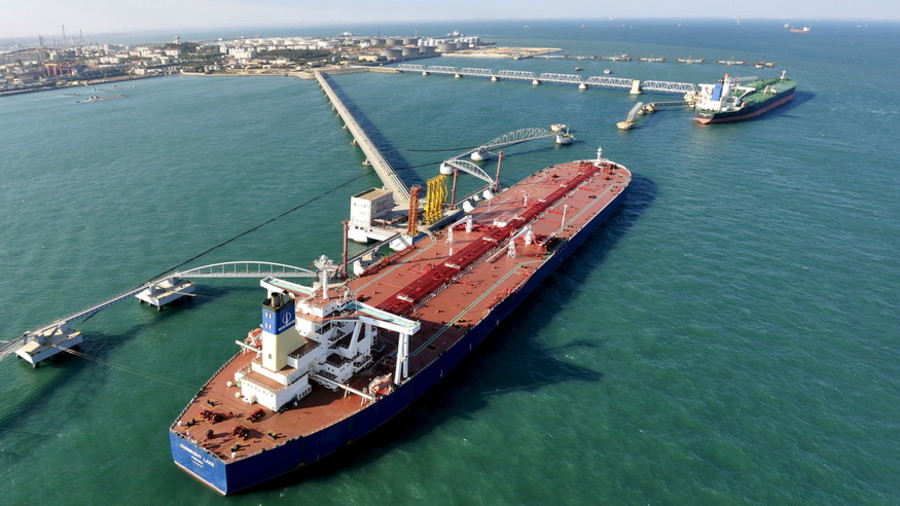
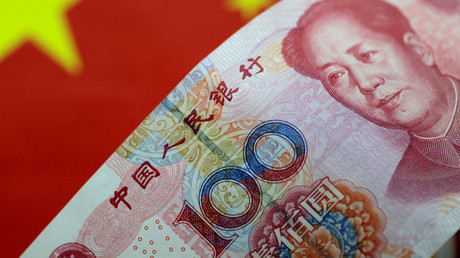
In the first physical settlement of the Chinese yuan-denominated oil futures contract, five companies will deliver a total of 600,000 barrels of Middle Eastern crude grades to buyers of the September futures contract.
China’s crude oil futures launched in March, with crude set for delivery in September, the first month which the Shanghai International Energy Exchange (INE) designated for deliveries in order to allow the contract to develop and accumulate volumes for physical delivery.
The deliverability, the volume, and smooth process will be key to China fulfilling its ambition to have the yuan-priced oil futures contract become a major crude benchmark on a global scale like the Brent and WTI benchmarks, analysts told Reuters.
The first such test will be next month, during which Chinese companies, including state-held majors, will deliver oil against the Chinese oil futures contract to storage facilities that are among the eight sites that the Shanghai exchange has approved for cargo delivery in the futures contract, according to sources.
Unipec, the trading unit of Asia’s biggest refiner Sinopec, plans to deliver some 200,000 barrels of Iraqi grade Basra Light to Sinopec-held storage tanks at an island off the eastern province of Zhejiang.
Each of CNPC Fuel Oil, Zhenhua Oil, and unidentified private firm will deliver 100,000 barrels of Basra Light into CNPC Fuel Oil-operated storage farm in the southern port of Zhanjiang, while CNPC’s trading arm Chinaoil will deliver 100,000 barrels of Oman crude to storage tanks in the northeastern city of Dalian, the sources said.
It is not immediately known who will be taking the oil that the companies will deliver against the yuan-denominated oil futures contract.
Analysts have flagged storage costs in China as one of the problems that traders could face in the delivery mechanism of the Chinese oil futures contract. Storage costs in China are much higher than elsewhere. The reason for the higher cost is limited storage capacity availability and the requirement that the cargo be stored at a specific storage facility rather than at any available.

China’s Tesla-killer ready to go public in New York

China’s Tesla-killer ready to go public in New York

China’s Tesla-killer ready to go public in New York
Chinese electric carmaker Nio, which is often seen as an alternative to Elon Musk’s Tesla, is preparing to list shares on the New York Stock Exchange.
The company said in a filing on Monday that it’s looking to raise as much as $1.8 billion in the initial public offering (IPO). Nio is backed by Chinese conglomerate Tencent and another giant tech company, Baidu. The Shanghai-based firm listed Morgan Stanley, Goldman Sachs, JPMorgan, Bofa Merill Lynch, Deutsche Bank, Citi, Credit Suisse and UBS as underwriters.
Nio started selling its first vehicle, the ES8 SUV, in December – three years after the company was founded. The vehicle comes with a price tag of $65,000, or about half the current price of the most basic version of Tesla’s Model X SUV in China.
The Chinese company is seeking to launch the more affordable ES6 sport-utility vehicle next year and bring out a sedan called the ET7 in 2020. “We are generally targeting to launch a new model every year in the near future as we ramp up our business,” the company said in Monday’s filing.
Like Tesla, Nio is burning through money. The company had a net loss of $502.6 million on less than $7 million in revenue in the first half of 2018, according to the filing.
Nio’s move to sell shares in the US comes at a time when Tesla CEO Elon Musk has a plan to set up a gigantic factory in Shanghai, China to corner a market where the government is promoting new-energy vehicles with incentives for buyers.
According to Bloomberg estimates, by 2040, more than half of all new car sales and a third of the world’s automobile fleet, which is 559 million vehicles, will be electric.

Chinese Cops Now Spying on American Soil


EXCLUSIVE

Photo Illustration by Kelly Caminero/The Daily Beast


A major human rights crisis is unfolding in northwestern China, according to the United Nations, which said last week that there were credible reports that the Chinese government is holding one million or more ethnic minorities in secretive detention camps.
Yet even for those who have escaped China, surveillance and intimidation have followed. As part of a massive campaign to monitor and intimidate its ethnic minorities no matter where they are, Chinese authorities are creating a global registry of Uighurs who live outside of China, threatening to detain their relatives if they do not provide personal and identifying information to Chinese police. This campaign is now reaching even Uighurs who live in the United States.
A few months ago, Barna, who lives in a major U.S. city and requested that her real name not be revealed, received an odd message from her mother, who lives in China. Barna’s mother asked her to send her U.S. car license plate number, her phone number, her U.S. bank card number, and a photo of her ID card. Barna’s mother said that China is creating a new ID card system that includes all Chinese, even those who are abroad.
“From her unsettled voice, I can tell she has been pushed by the authorities... For the sake of my mom’s safety, I said OK.”
— ‘Barna’
Since her mother was located in China and they were talking via WeChat, a Chinese chat app permitted by China’s internet regulator since it gives authorities access to messages and phone calls, Barna knew that their conversation was likely being monitored. So she told her mother that she did not have a car in the United States and that she only uses her Chinese bank card, though her mother knows this isn’t the case.
But Barna agreed to send the photo of her ID card. “From her unsettled voice, I can tell she has been pushed by the authorities,” said Barna. “For the sake of my mom’s safety, I said OK.”
In recent months, many other Uighurs living in the United States have received similar demands from Chinese authorities, relayed by family members back in China who were paid official visits from local public security bureau officials. One Uighur living on the east coast told The Daily Beast that Chinese police had demanded a copy of the individual’s employment contract with their university; another was told they had to provide a letter from their academic supervisor. If they don’t comply, these Uighurs know that their relatives may be detained.
“I’ve heard about many of these cases of influence and intimidation from Chinese authorities being extended to Uighurs abroad, whether they are students or journalists or everyday people,” said James Millward, a professor of Chinese and Central Asian history at Georgetown University. “In many cases they are permanent residents, green card holders, or even citizens in the United States, Australia, or elsewhere.”


There are about 10 million Uighurs in China. Uighurs are a Turkic-speaking, largely Muslim ethnic minority concentrated in China’s northwestern region of Xinjiang. In recent decades, a low-level insurgency in the region has brought occasional violence, and in 2009 ethnic riots there killed hundreds.
Beijing accuses Uighur separatists of religious extremism and has launched a shocking campaign of religious and cultural repression that has dramatically escalated in the past year and a half. Anywhere between 100,000 to a million Uighurs or more have been herded into extrajudicial concentration camps in Xinjiang; exact numbers are extremely difficult to assess, as the Chinese government tightly restricts access to the region and has not acknowledge the camps’ existence. In the camps, Uighurs are forced to renounce Islam, to memorize Chinese Communist Party (CCP) propaganda, and to swear allegiance to the party. In some Uighur villages, up to 40 percent of the population has disappeared. Chinese authorities have also recently embarked on a campaign to build crematoria in Xinjiang.
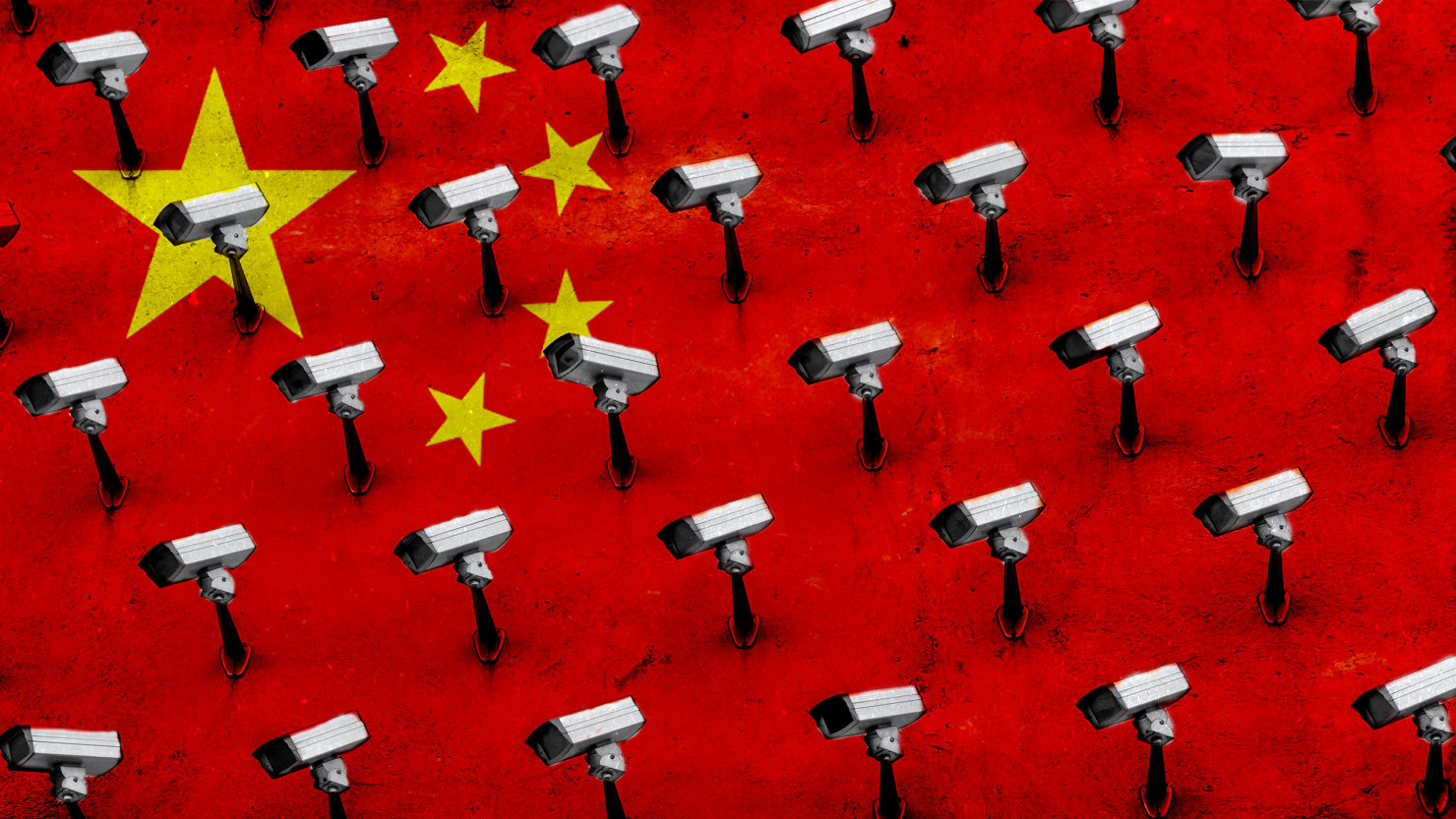
At the same time, Beijing has been constructing an experimental high-tech totalitarian regime in Xinjiang. They’ve lined the streets with security cameras equipped with facial-recognition software, created a region-wide DNA database of all residents, and implemented a rating system encoded in every person’s ID card, categorizing the individual as “safe” or “not safe” based on criteria including how often the person prays.
These technologies, first tested on Uighurs and other ethnic minority groups, are now being exported to countries like Pakistan as part of China’s “safe cities” project.
“They’ve lined the streets with security cameras equipped with facial-recognition software, created a region-wide DNA database of all residents, and implemented a rating system encoded in every person’s ID card, categorizing the individual based on criteria including how often the person prays.”
As a result of the growing oppression, many Uighurs have tried to flee abroad. But Beijing has launched an unprecedented global campaign to get them back, or to monitor them where there are. China has used its geopolitical clout to repatriate, forcibly if necessary, Uighurs living or studying in countries from Thailand, Egypt, Turkey, and even the United States. Of those who returned to China, many immediately disappeared, presumably into one of the camps. China also recruits Uighurs living abroad, as detailed in a Buzzfeed report in July.
Now, Beijing is seeking to create a detailed database of those who haven’t returned.
“The reason that Uighurs are a canary in a coal mine,” explained Millward, “the reason that everyone should pay attention to this, even if they aren’t concerned about the fate of this ethnic group, is that these are tools of control that are now being employed by the CCP and are easily applied to other individuals as well.”
“The totalization and securitization of information in China, and then the globalization of that reach, is most apparent with regard to the Uighurs but is by no means limited to Uighurs,” he said.
The growing human rights crisis in Xinjiang, and China’s expanding campaign of control and harassment abroad, has attracted growing attention from U.S. lawmakers and human rights groups. On July 26, the Congressional-Executive Commission on China held a hearing on the crisis there, and lawyers and activists are pushing for the U.S. government to levy sanctions under the Global Magnitsky Act on the Chinese officials directly responsible for the concentration camps.
For Uighurs living in the United States, demands from Chinese police thousands of miles away serve as an unwelcome reminder that nowhere, not even the United States, is free from the long arm of the Chinese state.
“They are just telling us, ‘We are watching you. Wherever you go, still you are a Chinese,’” said one Uighur who lives in the greater Washington, DC region. “Even though abroad, it doesn’t mean they can’t do something to you. Because they have your friends, your relatives. I think that’s what they want to tell us.”

Has China been duping the US for nearly half a century?


Saturday, September 1, 2018

Canada-U.S. trade talks grind to a halt amid reports Trump said he would not compromise

BANG!!!! The sickening sound of crashing Liberal egos [The Freeland Express] on the NAFTA /Free Trade Bus and a BIG FAIL! How stupid can a Liberal Government get, specially with a drag queen wannabe as the driver. How could anyone take seriously an acting extra who has wardrobe failures with drooping eyebrow stick-ums together multi-coloured, brothel creeping day-glow socks with mickey mouse figures on them. Canada's Done ..never to be taken seriously again in any grown up business deals with the US...AH but there's always his Best Bud's those little happy chappies, chuckling and laughing away behind their Communist curtain and rubbing their 'collective' grubby hands with glee, the Chinese, right! GAWD Help Us!


...........................................................................................................................

Canada-U.S. trade talks grind to a halt amid reports Trump said he would not compromise

One source who received reports from both sides said there had been little movement from the Americans during the three days of meetings, some of which stretched through the night


Foreign Minister Chrystia Freeland speaks at the Canadian Embassy in Washington, D.C.Eric BARADAT / AFP
A frenetic round of trade talks between Canada and the U.S. came to a crashing halt Friday, as the two sides were unable to find enough common ground to add Canada to an earlier deal between the States and Mexicans.
The breakdown in negotiations on revamping NAFTA followed a surprise report that President Donald Trump had said privately any deal with Canada would be “totally on our terms.”
He later seemed to verify the quotes. And sources briefed on the discussions — which began in earnest on Wednesday with a deadline of Friday set by the White House — said U.S. negotiators made little attempt to compromise during the whirlwind discussions.
Trump gave notice to Congress Friday that he would sign a deal with Mexico in 90 days, and include Canada “if it is willing, in a timely manner, to meet the high standards for free, fair and reciprocal trade” in the accord.
To that end, the negotiations were to resume next Wednesday in Washington, as both sides did their best to put a positive spin on the tense situation.
“The talks were constructive and we made progress,” the office of U.S. Trade Representative Robert Lighthizer said in a brief statement. “Our officials are continuing to work toward agreement.”
At a news conference late Friday afternoon, Foreign Affairs Minister Chrystia Freeland refused to respond directly to Trump’s provocative comments, and also suggested the parties were moving toward a resolution.
Our objective in these talks is to update and modernize NAFTA in a way that is good for Canadians, good for Americans and good for Mexicans

“We’re not there yet,” she said. “(But) this is a very complex agreement and we’re going to continue working at it … Our objective in these talks is to update and modernize NAFTA in a way that is good for Canadians, good for Americans and good for Mexicans. We know that a win-win-win agreement is within reach.”
One source who received reports from both sides of the talks said there had been little movement from the Americans during the three days of meetings, some of which stretched through the night.
“Canada conceded a whole bunch of things. Canada gave a ton of things,” said the person, who asked not to be named to preserve their relationship with government officials. “Canada was making concessions and Canada needed something, and the U.S. was agreeing to nothing.”
Ohio-based trade lawyer Dan Ujczo, also briefed on the talks, said the Canadian negotiators met a brick wall after arriving in Washington.
“I think the U.S. came in good faith … but I’m not sure whether they were ready to give good results, from Canada’s perspective.”
Ujczo said there is still a good chance of reaching agreement and that much of the problem this week was the volume of work the two sides had to accomplish.
“You’re dealing with people who are under a lot of stress, they’re very tired,” he said. “It was a very good call to take a break.”
The half-week of negotiations came after the U.S. and Mexico announced Monday they had reached a wide-ranging agreement to update the North American Free Trade Agreement. That was after five weeks of bilateral talks that left Canada stranded on the sidelines.
U.S. Trade Representative Robert Lighthizer. Freeland said only that her negotiating counterpart was Lighthizer and that he had been bargaining in good faith. She also declined to comment on specific issues being discussed behind closed doors, saying the two sides had agreed not to negotiate in public. MANDEL NGAN/AFP/Getty Images
Trump set a deadline of Friday to bring Canada on board, which would enable the accord to be signed before Mexico’s new president takes office Dec. 1, and still give Congress the required 90 days’ notice.
U.S. law also stipulates that a text of any trade agreement be made public 60 days before it’s signed, which experts say provides wiggle room for more negotiations with the Canadians.
In fact, members of Congress have already balked at the idea of approving an agreement just with Mexico, given the deeply intertwined North American economies — and the fact the White House had authority only to negotiate a trilateral deal.
“(Trump) does not have the support of Congress to get a bilateral through. He does not,” said Jennifer Hillman, general counsel to the U.S. trade representative during Bill Clinton’s presidency. “There simply are not the votes in Congress for a U.S.-Mexico deal without Canada.”
The administration’s notice of a Mexico-only deal is a “sham,” added Lawrence Herman, a former Canadian diplomat who practises trade law at Herman & Associates.
“The U.S. can’t sign a bilateral agreement with Mexico while still in NAFTA,” he said. “The whole business of this notification and what went on today is a fantasy.”
The core of the Mexico deal concerned new rules on the content of automobiles exported duty-free into the U.S. under NAFTA, designed to address Trump’s concern that American car-making jobs are slipping away to low-wage countries.
Canada was onside with those “rules of origin” — which require 75% of auto parts be made in North America and 40-45 per cent by workers earning at least $16 an hour. But the talks that began this week stuttered in the face of at least two U.S. demands.
One was that Canada dismantle its supply-management system for dairy products, the other that NAFTA’s “chapter-19” dispute-resolution section — to deal with anti-dumping and anti-subsidy duties — be scrapped.
Sources suggested Canada was willing to grant the U.S. more access to its dairy market, while preserving supply management itself, a political hot-button on this side of the border. The USTR, though, said in a statement to Bloomberg news agency Friday that Canada had made no concessions on agriculture.
Still, the talks seemed on Thursday to be heading toward an agreement, before momentum slowed Friday morning.
Then came a surprise report from the Toronto Star of off-the-record comments that it said Trump made to Bloomberg during an interview, suggesting an uncompromising approach.
“Off the record: totally on our terms. Totally,” the Star quoted him as saying about the talks.
And, ““Here’s the problem. If I say no — the answer’s no. If I say no, then you’re going to put that, and it’s going to be so insulting they’re not going to be able to make a deal…I can’t kill these people (Canadian negotiators).”
Trump later appeared to confirm the comments, complaining on Twitter that off-the-record remarks had been made public and adding “at least Canada knows where I stand!”
Asked about the comments, Freeland said only that her negotiating counterpart was Lighthizer and that he had been bargaining in good faith. She also declined to comment on specific issues being discussed behind closed doors, saying the two sides had agreed not to negotiate in public.