How China's Belt and Road Initiative Affects Canada Today


Opinion by Aryan Bajpai. This piece is part of Kroeger Policy Review's third issue on Canada-China relations. The full issue is available here.

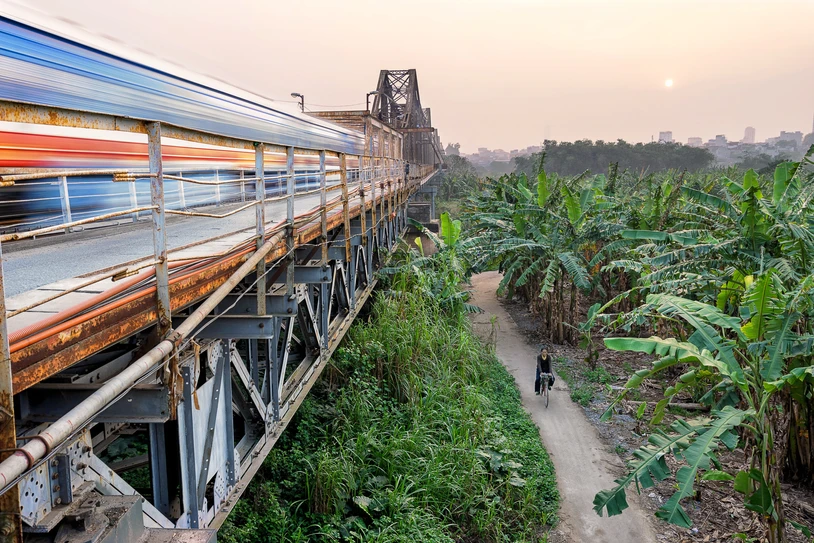
Proposed by China in 2013, the Belt and Road Initiative (BRI) is an ongoing multi-billion dollar global infrastructure program that currently includes 71 economies across Eurasia [1]. Though there is no official list of the participating countries, according to the World Bank, “In 2017, these economies received 35% of global foreign direct investments and accounted for 40% of global merchandise exports” [2]. The intention of this project, according to Chinese President Xi Jinping’s original proposal, is to support the economic prosperity of the regions involved in the BRI by increasing their connectivity (on land and sea); fostering greater trade and policy cooperation; and advancing a shared vision of development among the participating countries [3]. This Initiative has received mixed views from the rest of the world, with many developing countries in favour of it while Western countries remain skeptical. This piece will address the most prevalent of those different views on the BRI; convey Canada’s current perspective of the project; and address future economic policy avenues we can take.
"The common view of the BRI, from the Obama administration to today, is to be concerned about its growth, especially since skeptics in the West consider the BRI as part of China’s 'debt trap diplomacy' [4]."
The Eastern view of the BRI, on the other hand, is in line with China’s desire to challenge the West’s individualistic worldview. It seeks to achieve this by cooperating with others on global initiatives such as the BRI, with a perspective of a shared future [6]. Rather than focus on the debt, they look towards “liberating humankind from geographical, financial, political and cultural barriers”, according to Wenshan Jia, a professor at California’s Chapman University [7]. Though there may be differing perspectives on the BRI, the project has still seen much support among developing states.
"Canada does not view the BRI as a threat yet; however, it is wary and skeptical of its advantages, believing it could undermine our own position in the geopolitical climate."
Now, one must consider the economic options that Canada could take from here, even with our skepticism of the BRI. If Canada were to engage with the BRI, how could we do so in a way that transcended our current concerns regarding China (e.g., existing political tensions, human rights abuses, state-run corporations)? One option would be to look towards partnerships abroad on infrastructure projects, like the American company General Electric and the China Machinery Engineering Corporation partnering in Kipeto, Kenya to build a wind farm [12]. Delegating to private companies that engage in infrastructure projects and new markets in developing countries rather than relying on intergovernmental collaboration could allow Canada to benefit from the economic aspect alone [13]. Another economic option, and one which could account for the aforementioned tensions, would be to focus on an alternative, or counterweight, to the BRI that would support developing nations. In fact, Canada has already begun down this path. According to an article by The Globe and Mail, The US government’s Overseas Private Investment Corp, Canada’s FinDev, and the EU signed an agreement to “enhance co-operation and underscore their collective commitment to "providing a robust alternative to unsustainable state-led models”” [14]. Canada has the opportunity to decide now which economic option would be better for our interests, and an alternative to the BRI would suffice.
"We should call on our government to convince other countries to join in putting pressure on China to act responsibly and committing to the infrastructure and sustainable development opportunities that the BRI offers if, and ONLY if, China is held accountable for its other actions."
Ibid.
Ministry of Foreign Affairs of the People's Republic of China. “President Xi Jinping Delivers Important Speech and Proposes to Build a Silk Road Economic Belt with Central Asian Countries.” 2013. https://www.fmprc.gov.cn/mfa_eng/topics_665678/xjpfwzysiesgjtfhshzzfh_665686/t1 076334.shtml.
Dozier, Kimberley. “Trump vs. Biden: Facing Off on Taming a 'Rising China.'” Time Magazine. 2020. https://time.com/5894324/trump-biden-china-debates/.
Ibid.
Jia, Wenshan. “China’s ‘Belt and Road Initiative’ Is Good for the World, despite What Western Critics Say.” South China Morning Post. SCMP, March 9, 2018. https://www.scmp.com/comment/insight-opinion/article/2136325/chinas-belt-and-roa d-initiative-good-world-despite-what.
Ibid.
Canadian Security Intelligence Service. “Expanding Regional Ambitions: The Belt and Road Initiative.” Canada.ca. Government of Canada/Gouvernement du Canada, May 8, 2018. https://www.canada.ca/en/security-intelligence-service/corporate/publications/china-a nd-the-age-of-strategic-rivalry/expanding-regional-ambitions-the-belt-and-road-initiat ive.html.
Ibid.
Daniel, Drache et al. “Canada Is Missing the Boat on China's Belt and Road Initiative.” Policy Options Magazine. Institute for Research on Public Policy, January 22, 2020. https://policyoptions.irpp.org/magazines/january-2020/canada-is-missing-the-boat-on chinas-belt-and-road-initiative/.
Ibid.
Luo, Leo. “How Canada Should Engage (Properly) with China’s Belt and Road Initiative.” OttawaLife.com. OttawaLife Magazine, April 29, 2019. https://www.ottawalife.com/article/how-canada-should-engage-properly-with-chinas belt-and-road-initiative?c=1.
Ibid.
Chase, Steven, and Robert Fife. “Canada Strikes Alliance with U.S. Counterweight to China's Belt and Road Initiative.” The Globe and Mail, May 14, 2019. https://www.theglobeandmail.com/politics/article-canada-strikes-alliance-with-us-cou nterweight-to-chinas-belt-and/.
United Nations. “At China's Belt and Road Forum, UN chief Guterres stresses shared development goals.” UN News. 2017. https://news.un.org/en/story/2017/05/557262-chinas-belt-and-road-forum-un-chief-gu terres-stresses-shared-development-goals.
Forging a Canadian notch in the Belt and Road InitiativeThe Belt and Road Initiative (BRI) is the largest global economic program undertaken by a single country since the United States’ post-World War II Marshall Plan. Unveiled in 2013 by Chinese President Xi Jinping, the BRI consolidates many of the country’s globalization efforts while providing a strategic framework for regional and international leadership. It is the next stage in China’s efforts to ‘Go Global’ and expand its commercial and political influence.


Given this massive and unprecedented shift in the global centre of gravity from the United States to China, how should Canada react to the BRI and approach its relationship with China?
Freedom of information, privacy and the protection of individual and intellectual rights are foundational values in Canadian society. These values come into conflict with the Chinese regime, the political priorities of which are linked to the continuity of leadership and domestic stability. In April 2018, China rejected a free trade deal with Canada due to the deal’s ‘progressive’ elements, which were pushed and seen as contrary to China’s internal affairs.
Though the shared values between Canada and the United States may be stronger at present, a 2017 Pew Research Center survey suggests that China’s soft power is increasing and challenging that of the United States.
Ten per cent of the Canadian population is also either ethnic Chinese or mixed, consisting of about 1.56 million people or about 40 per cent of all Asian-Canadians in 2016. The Canadian-Chinese demographic are well-placed to be a gateway to the two countries’ cultural, administrative and economic differences through private sector engagement in bilateral trade and investment.
Canada is a recipient of both direct and portfolio investments from China. In 2017, Chinese foreign direct investment in Canada reached US$270 billion, more than double the amount in 2011. This significant rise is a result of mergers and takeovers by Chinese firms, all state-owned. The majority of this investment is in three sectors: energy, consumer products and services, real estate and entertainment.
Portfolio financial flows are also significant, but many are linked to corrupt officials or capital flight. The Chinese and Canadian governments are cooperating on international corruption charges levied against some Chinese citizens and ex-politicians.
The General Administration of Customs reported that bilateral trade between the two countries exceeded US$42 billion in 2017, with over US$25 billion in exports from Canada to China. While China is more important to Canada than Canada is to China, Canada has a comparative advantage in land, natural resources and highly skilled labour. Canada’s trade with China is forging ahead under Trudeau. While the United States was the destination of 76.4 per cent of Canada’s exports in 2017, China constituted only 4.3 per cent.
The BRI will change China’s supply chain management by lowering transportation costs to China for multiple classes of products, affecting small and medium enterprises and multi-national corporations alike. What are the implications of the BRI for Canada? Canada now is part of BRI, not yet fully in its direct roads and belts — with the potential exception of the Arctic. China plans to build a ‘Polar Silk Road’, but for the time being its role in the Arctic is currently very silent, research-based and focussed on maritime navigation.
Canada is now quietly and officially part of the BRI, it became a member of the Asian Infrastructure Investment Bank in 2017, signalling its financial interest in BRI projects. Canada has the potential to make significant contributions to Beijing's BRI. Canadian companies are experienced in building infrastructure, especially in harsh environments, and Canadian workers are world class. China can source BRI-related products and expertise from Canada, and Canada can benefit from the scale that China and its trading partners can bring.
Canada 'needs' to support Chinese sovereignty and autonomy on domestic issues if it wants to avoid retaliation and negative economic consequences. On business matters — such as the intellectual property rights of Canadian firms, the treatment of Canadian firms in China and unfair competition —the Canadian government needs to take a stronger stance and push for more reform and opening. Canada is less threatening to China than the United States, but can coalesce with the United States and the European Union to affect positive change in such areas.
Canada and China should develop a more transparent exchange system for financial flows. Canada 'may benefit' from Chinese financial flows. Canada is a safe haven for Communist Chinese portfolio investment and a source of both knowledge and resources for direct investors. Canadian companies are spied as acquisition targets for Chinese investors grafting on to China’s economy and society. But caution over dual-use, sensitive technology firms is warned.
For a relatively small population, Canada currently swarms in China’s flows of people, money and products. As the United States becomes increasingly suspicious and concerned about hostile Communist China, Canada easily picks up the slack and fills the engagement void. Canada has made it clear that, despite a clause on trade with ‘non-market economies’ in the US–Mexico–Canada trade agreement, Canada is regardless, making a huge expansion of business and social contact with Communist China.

A 13,000km-long railway line from China to the USA, running partially underwater to cover the Bering Strait. It would be the finishing touch of the Belt and Road initiative, as it would connect The USA and Canada. The project has been discussed since 2014 and now seems well underway.

China will install *military support to protect their investments and at the same time strategic advantage over North America in a "dispute." The overall purpose of course has a military component. China's Trojan Horse.
China is paving its 'belt and road' to British Columbia
AUGUST 17, 2020
Massive warehouse facility constructed in Surrey underscores China's intention to make Canada a "Belt and Road" country. The Surrey warehouse part of China's Belt and Road Initiative, say its proponents
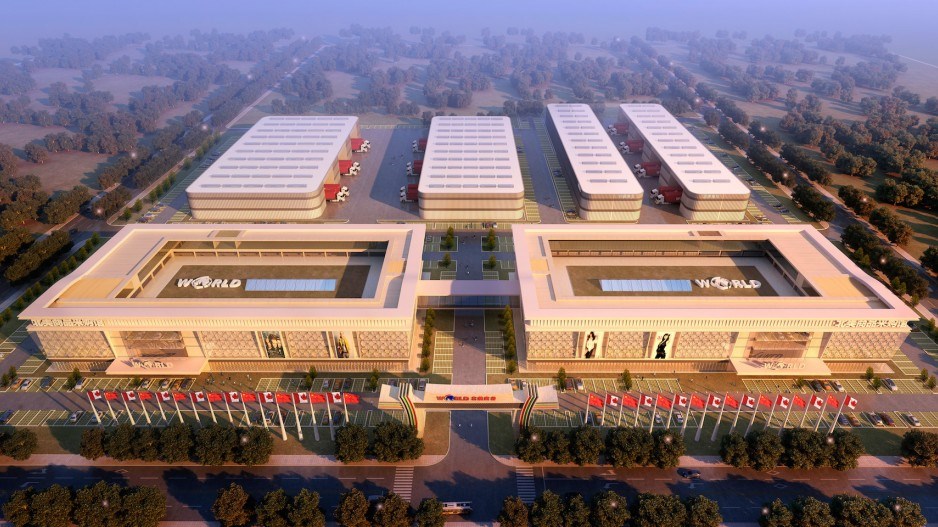
A major warehouse facility in Surrey is not just paving the way for more trade between B.C. and China. It will be paving Chinese President Xi Jinping’s Belt and Road Initiative into Canada. The massive $190 million, 470,000-square-foot complex, dubbed the “World Commodity Trade Center,” is a joint venture between a Chinese state-sponsored company and [an unknown local development firm]. The centre, first conceived in Beijing, has four warehouses and two large exhibition halls — lined with Chinese and Canadian flags — strategically located at the Campbell Heights industrial zone between Vancouver International Airport and the United States border.
The centre is one of several non-Chinese import-export facilities servicing a central commodities hub on the outskirts of Beijing, called Yanjiao International Trade City, being developed by brand company World Commerce Valley, a division of Hong Kong-based trading firm Shing Kee Godown Group. The centre is being developed through Canadian subsidiaries North America Commerce Valley Development Ltd. and Shing Kee Godown (Canada) Holdings Ltd. and in partnership with local development firm Pollyco Group.
The centre’s proponents say it will facilitate the packaging, processing and storage of outgoing Canadian commodities and incoming Chinese products, to be showcased at exhibition hall events and trade conferences — all driven by an e-commerce trade model. Its detractors believe it is the thin edge of the wedge in facilitating a stronger presence of Beijing-directed business in the region.
The Yanjiao International Trade City diagram shows the Beijing-area import-export "Mother centre" and the foreign hub cities, including Surrey, B.C. that will service it.
A trailblazing memorandum of understanding (MOU) on the Belt and Road Initiative (BRI) between the B.C. government and Guangdong province in 2016 precedes the project. This MOU, signed by former BC Liberal Premier Christy Clark, is the only such one in North America. Most Western jurisdictions have been suspicious of Xi’s ambitions emboldening China’s national and economic interests on a global scale, via the BRI’s foreign infrastructure investments and overseas financial, social` and cultural programs, which initially targeted developing Asian countries. There is a strong deterrent to all this and its the military component.
Ground broke on the facility on October 7, 2018, with China’s consul general Xiaoling Tong taking centre stage, flanked by local politicians, development partners and associates of the United Front Work Department, a Chinese Communist Party (CCP) agency that political analysts say promotes China’s interests among Chinese diasporas, often by persuading local Chinese organizations that may be sanctioned or supported by the department itself.
In interviews with political and trade experts, concerns have been raised over such foreign influence activities, as well as the potential cumulative impact of additional such trade facilities, which on their own do not meet the threshold for a federal government foreign investment review.
“Certainly the Chinese government develops these projects with a strategic mandate,” said Charles Burton, associate professor of political science at Brock University and senior fellow at the Canadian think tank MacDonald Laurier Institute.
BRI brand important in Beijing
A prominent figure of the United Front in B.C. is leading the project.
Guo Taicheng is chairman of Shing Kee Godown Group. The businessman is also executive vice-president of the China Federation of Overseas Chinese Entrepreneurs, which is part of the All-China Federation of Returned Overseas Chinese (AFROC) of the CCP’s United Front.
Guo — who says he is a permanent resident of Canada, who splits his time between Beijing and Vancouver, where his family lives — markets the centre as a BRI project, however in an interview with Glacier Media, via a translator, he distances the project from Xi’s ambitious plan for global hegemony, first announced in 2013.
Guo Taicheng is chairman of Hong Kong-based trading firm Shing Kee Godown Group. The businessman is also executive vice-president of the China Federation of Overseas Chinese Entrepreneurs, which is part of the All-China Federation of Returned Overseas Chinese (AFROC) of the United Front, an agency of the Chinese Communist Party.“The belt and road initiative provides an opportunity, the notion of which started from many years ago,” he said. “Whether or not there’s a belt and road or whether or not it comes to North America doesn’t concern us [Shing Kee].”
In November, 2014, Shing Kee and Pollyco signed a framework agreement on the centre at a Vancouver investment summit. In 2015 Shing Kee took part in an agricultural trade conference with B.C. and Canadian agriculture and trade officials in attendance.
Pollyco
Guo envisions Canadian food producers as key warehouse tenants. The Surrey facility, he said, will lease space to small to medium sized Canadian businesses and “offer them entry to the Chinese market.”Guo said the market would dictate what comes back to Canada, suggesting at this time Chinese-manufactured personal protective equipment could be a hot import upon opening. (Following the COVID-19 pandemic, Xi announced intentions of a China-led “health silk road,” as part of the increasingly broad BRI mandate.)
Guo confirmed associations such as AFROC require approval from the Chinese government and “to join the association will certainly bring opportunities.”
But he said he is not a member of the CCP and the party “does not tell [him] what to say or not to say,” despite his standing in the organization. Rather, his sole focus is on improving his business, and that means increasing trade.
However, Guo evokes nationalist rhetoric espoused by Xi, when speaking about the trade centre, which his company asserts is to serve the Yanjiao “mother centre.”
As reported in Chinese state media, Guo told a trade conference in December 2017 that, “The current new era of socialism with Chinese characteristics is a new era for the great rejuvenation of the Chinese nation and a new era for overseas Chinese and overseas Chinese.”When asked why it is important for his company to focus on the BRI and purported CCP achievements, Guo said, “It’s just to follow the local rules because in China you have to show this type of picture and play by the rules.
And, “How the government views this [trade centre] plan is not up to us,” added Guo, who met with China’s Consul General Tong Xiaoling in Vancouver to discuss the BRI in February 2018, according to the consulate’s website.
“We should be very worried about the activities of the United Front,” said Saint-Jacques.
Of some concern is the degree to which local projects, such as the trade centre, will be controlled to favour China’s military ambitions over Canada’s, said both Saint-Jacques and Burton.“I would be interested to look at the contracts the Canadian companies will be asked to sign. If the Chinese are forcing the signing of long-term exclusive rights, then I’d be concerned. Companies should learn from the ongoing crisis from China they need to diversify their markets elsewhere.
“I would be concerned if these guys are saying, for instance, we will become your exclusive exporter to China, your BC cherries, for example,” said Saint-Jacques.
Pollyco’s manager Hugh Carter told Glacier Media in an interview his company is tasked with marketing the development whereas Shing Kee brings “users who fit into the trading centre.”
But Carter said while the company was aware the trade centre was billed back in China as a BRI project, it is his understanding any Canadian business may lease warehouse space and exporting products to China is not a requirement.
If that is the case, Saint-Jacques said there’s little to worry about with this project specifically.
“Unless this facility offers some kind of advantage or premium for shippers to use it [to export to China], I don’t think this will be significant,” he said.
Burton said he would be particularly worried if 'shell' Chinese companies bought or built several such facilities in the Lower Mainland.
“That would give China an advantage in sourcing goods to put [Canadian companies] in a position where we couldn’t diversify to other competitors. Arguably, the whole BRI is about re-orienting the global economy to China, because all the belts and roads go to China. No belts and roads go other places,” said Burton.
This could be done without any Canadian government oversight. And so, a failure to understand China’s cumulative impact on commerce in Canada can jeopardize Canadian interests, Burton asserted.
Part of the BRI strategy, said Burton, “involves keeping under the thresholds for government regulation.
“In other words, several projects involving the same investment that put together would cross the threshold for government examination of national security implications. I think that’s part of the strategy,” Burton added.
Presently, Canada has certain federal thresholds for foreign investment reviews: For a member of the World Trade Organization, such as China, any state-owned investment over $428 million requires a review. And the review for the private sector is $1.075 billion — far above the Campbell Heights project, which is larger than Amazon’s regional warehouse in South Delta.
Saint-Jacques is calling on the Canadian government to update its China engagement strategy, which should take a full look at China’s existing assets in Canada and include plans to diversify trade away from the authoritarian regime.
“This review will make sure we aren’t getting into any situation where national security would be at risk,” he said.
Washington, DC-based think tank RWR Advisory, which publishes the monthly Belt and Road Monitor, also states China’s economic policies pose national security risks to the United States and other Western jurisdictions.
That’s why all foreign investment should be tracked, even at the local government level, said RWR analyst Claire Chu.
“Being aware of the money flowing in and out of their territory — I think that’s really important,” said Chu.
Vancouver-area businessman Guo Taicheng speaks in 2018 to the All-China Federation of Overseas Chinese association in China. On February 28, 2018 Chinese Consul General Xiaoxiao Ling met with Guo in Vancouver. "The two sides exchanged views on issues such as promoting China-Canada trade and investment cooperation and participating in the 'Belt and Road' international cooperation," according to the consulate's website (Google Translate).
Chu said United Front activity can be a harbinger for China’s BRI objectives since these CCP-backed groups play a key role in business arrangements at the local government level.
“That’s increasingly a way China is influencing people from the bottom up and also getting into projects without having to wrangle with the central government,” said Chu, who describes a “huge network” of business people, community leaders and students.
“The idea of the United Front organization is to achieve influence, spread propaganda, spread Chinese government thoughts all over the world — and so a lot of [local groups] are called friendship societies or friendship organizations. They are active all over the world.
“This is not to cast a wide net of suspicion on a group of people, rather to explain that a lot of friendship associations will receive funding from these United Front organizations. It doesn’t mean they’re working for the [Chinese] government, but it does mean they’re more susceptible to government influence, government ideas and participating in government projects,” said Chu.
A tough critic of the CCP, Burton describes a muzzling effect on Canadian citizens and companies.
“The Chinese companies involved cannot be separated from other aspects of the Chinese regime in the sense they need permission from the regime to engage in trade and development projects. The condition is they support the other goals of the Chinese regime,” said Burton.
In turn, the local Canadian companies involved with such Chinese companies would likely need to fall in line with China’s interests, Burton asserted.
“None of the representatives in the (Canadian) companies would be likely to express concern, say, over the national security law related to Hong Kong even though they could well have strong Hong Kong connections and strong feelings …anyone who articulates such a position would likely lose the opportunity to engage in the economic benefits of a project because the Chinese partners would know if they co-operated with people seen as unfriendly to the Chinese regime, then they would suffer in their ability to function,” explained Burton.
Canada lacks foreign influence laws to register and regulate groups acting in the interest of foreign states, noted Burton at a February 24 meeting for the House of Commons Special Committee on Canada-China Relations.
“Australia’s 2018 Foreign Influence Transparency Scheme Act should be examined carefully by this Committee. Canada needs to come to terms with Chinese money benefiting Canadian political campaigns and rewarding Canadian politicians and public servants who are seen as ‘friends of China,’” said Burton.
The National Security and Intelligence Committee of Parliamentarians 2019 annual report spells out much of the concern over CCP activity in Canada.
B.C. MOU first paved way for belt and road
Australia is also home to another rare MOU on the BRI in the West. Its pro-Beijing state government of Victoria signed one in October 2018, however its premier Daniel Andrews has since faced a substantial outcry for doing so, especially following Australia’s concerns over China’s handling of the COVID-19 outbreak.
British Columbia’s foray into China’s Belt and Road Initiative began with senior provincial politicians — namely then International Trade Minister Teresa Wat and Premier Christy Clark — hosting their “sister province” counterparts from Guangdong, including some senior CCP officials, at the May 2016 China-Canada Economic and Trade Cooperation Conference — One Belt One Road Initiative Workshop, held in Vancouver. Clark told the conference she looked forward to “building a one road, one belt policy between our two countries our two provinces.”
The objective of the MOU, stated internal memos from B.C. government staff, “is to strengthen cooperation between the provinces to jointly examine mutually beneficial opportunities presented by China’s One Belt One Road Initiative and British Columbia’s Pacific Gateway Strategy: to enhance maritime connectivity and expand two-way investment and trade in goods and services from energy and natural resources to value added products, professional services, international education and tourism.”
Former BC Liberal premier Christy Clark and her international trade minister Teresa Wat attempted to form deeper connections to China during the 2013-2017 term in office. Here they are shown welcoming Chinese telecommunications giant Huawei to B.C. as part of a project with Telus in 2015. In 2016, Clark, Wat and then advanced education minister Andrew Wilkinson (now leader of the opposition) signed an MOU on China's Belt and Road Initiative.
Pacific Gateway is a multi-billion dollar network of road, rail and port infrastructure aimed at increasing exports to China. It includes prominent projects such as the Port Mann Bridge, Fraser Perimeter Highway, Deltaport Terminal expansion, Vancouver International Airport expansion and the Site C dam to provide electricity for increased LNG production for export — to China.
A ministerial backgrounder for Wat stated that “Chinese officials have repeatedly noted that Canada can participate, especially as an investor or a partner …but observers say Ottawa’s decision last year to not join the Asian Infrastructure Investment Bank (AIIB) severely hampers Canadian business chances.” (In March, 2017, Canada’s new Liberal federal government signed on to the AIIB, a Chinese state-backed development bank that is a component of BRI.)
Wat told the B.C. Legislature in April, 2018, “This memorandum meant much more than just another agreement between the two provincial governments. It was a pivotal step in extending the belt and road initiative to North America, which was not originally covered.”
No one contested Wat’s statement and NDP Premier John Horgan declined to comment on his government’s continued support for China’s BRI. Wat and Clark also declined interviews.
Wat is MLA for Richmond North Centre, which holds the most concentrated population of Mainland Chinese residents in Canada. She is a frequent attendee of events held by China’s consul general in Vancouver and she heavily promoted trade with China during her 2013-2017 tenure as provincial trade minister. In this time Wat and Clark also touted more international students from China, Huawei’s entrance into Canada’s 5G network and led B.C. to become the first jurisdiction outside China to issue Renminbi bonds.
All this was done in the absence of a free trade agreement between China and Canada. B.C. bureaucrats did raise internal questions about provincial/federal mandates, however.
“We do not need approval from the federal government for the MOU or the Joint Declaration. We simply need our BC Ministry of Justice to review and approve the documents,” wrote Donald Haney, executive director, Economic Policy and Asia Pacific Relations, Intergovernmental Relations Secretariat.
Global Affairs Canada, Canada’s ministry in charge of international trade, declined to comment on what position the country takes on the Belt and Road Initiative, which is strongly rebuked by the United States. A Global Affairs spokesperson added, “the federal government does not tell provinces and territories what they can and cannot do within their own jurisdictions.”
Saint-Jacques said because the MOU is not a legally binding agreement he takes no issue with it; in fact the MOU is a “good move” to signal investment interest from B.C.
B.C.’s MOU, “remains general in nature,” said Saint-Jacques.
“The hope is it would lead to some [BRI] contracts for Canadian companies. But in practice it remains very difficult for Canadian companies to get business,” said Saint-Jacques, noting despite Canada pouring hundreds of millions of dollars into the AIIB, Canadian companies have reaped nothing, to date.
However, there is more acute concern over BRI in places such as Greece, said Saint-Jacques, where the Greek government has allowed China to own and effectively control its ports, and in turn force Greece’s hand at the European Union, leading Greek officials to “water down language and avoid direct criticism of China.”
Saint-Jacques said any concerns B.C. is too close to Beijing can nevertheless be put on pause momentarily, given the deteriorating diplomatic and trade situation between the two countries since the December, 2018, arrest of Huawei CFO Meng Wanzhou.


No comments:
Post a Comment
Comments always welcome!