Thursday, March 30, 2017

The case of the Canadian with eight citizenships, and why the world’s rich covet ‘backup’ passports


The case of the Canadian with eight citizenships, and why the world’s rich covet ‘backup’ passports

PUBLISHED : Friday, 10 March, 2017, 1:35am
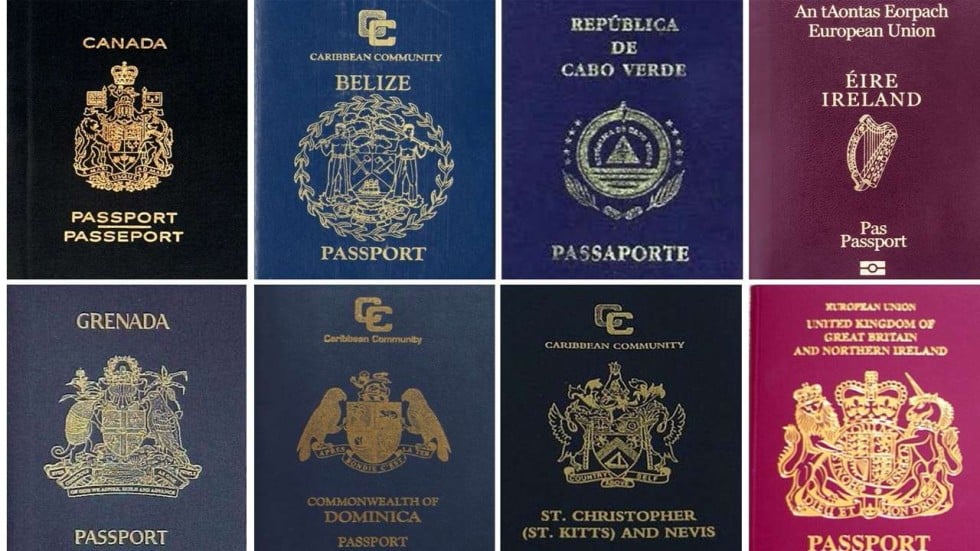

Image result for The case of the Canadian with eight citizenships, and why the world’s rich covet ‘backup’ passports


The reasons to have a second passport are many, but for the world’s wealthy elite, they often amount to what Canadian immigration lawyer David Lesperance calls “the backup plan”.
He recounted a Shanghainese client who likened second citizenship to having a “fast junk in the harbour, fitted with gold bars”. After generations of turmoil, the bolthole mentality runs deep among China’s rich – by one estimate, 47 per cent of rich mainlanders plan to immigrate within five years .
But it’s not just China’s millionaires. Americans have represented a big slice of business for Lesperance’s Toronto-based practice, as they look for alternatives to a lifetime of US tax obligations, which are determined by nationality and not residency.
Which brings us to the case of the Canadian with eight citizenships.
Lesperance said his client didn’t start out Canadian; he was an American-born businessman. But at the end of his citizenship spree, he had collected a portfolio of passports via economic citizenship and residency that spanned both sides of the Atlantic, from Belize to Britain. Along the way he became a Canadian, too, and renounced his US citizenship.
“It sounds flaky, but he was intrigued by this concept [of economic citizenship]…He had the money. He didn’t need another car, so this is what he spends his money on. It was wonderful to be his lawyer,” said Lesperance, a former Canadian border officer who has worked as an immigration lawyer for more than 25 years.

The billionaire bolthole club

The concept of multiple citizenships among the wealthy has been in focus recently thanks to two cases.
Peter Thiel, the Trump-supporting US tech billionaire, was revealed last month to have been granted New Zealand dual citizenship in 2011.

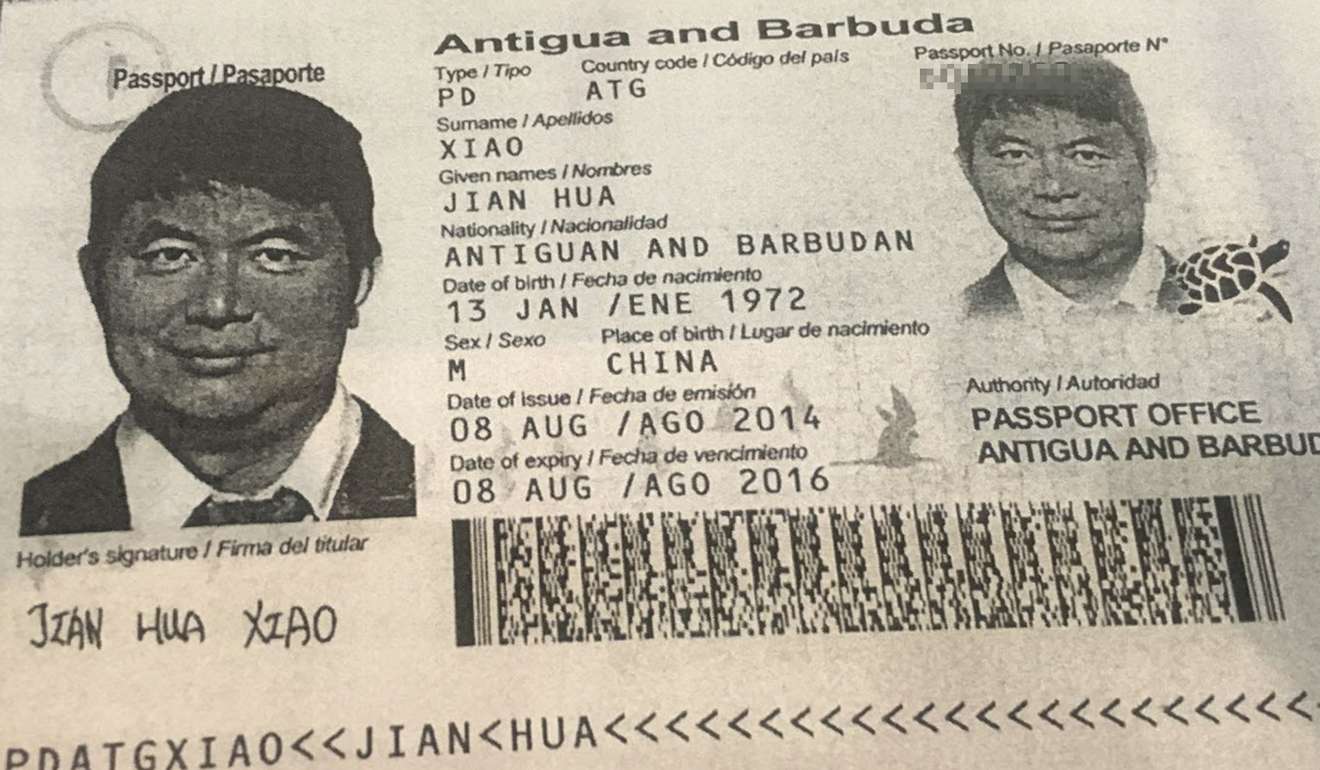
Of more concern to Lesperance’s clients is the case of Xiao Jianhua, the Chinese-Canadian-Antiguan billionaire who on January 27 was whisked away from the luxury Four Seasons apartments in Hong Kong and over the border, in circumstances that raised concerns about Chinese law enforcers acting on SAR soil.
He is now reportedly linked to investigations into bribery and market manipulation.
Statements issued on January 30 under Xiao’s name on one of his companies’ WeChat accounts denied that the tycoon had been “abducted”, and said he enjoyed consular protection as a Canadian citizen. “I [also] have diplomatic protection as I hold a diplomatic passport. Please don’t worry about me,” one of the since-deleted statements added, without specifying that Xiao held such a document from Antigua and Barbuda.
But Lesperance wasn’t so optimistic about Xiao’s prospects on mainland soil. “He is screwed. Canadian citizenship is but a tool... If you don’t have the assistance of someone to load it or the willingness to fire it, then it just hangs on the wall.”
He noted that Xiao’s family was now reportedly trying to apply pressure for his release via Canada’s foreign affairs department, and former prime minister Brian Mulroney, but “whether this is too little too late, only time will tell.”
Lesperance said he suspected Xiao had not renounced his Chinese citizenship, and, for all the efforts taken to acquire an Antiguan diplomatic passport and Canadian citizenship, had failed in a timely fashion to call upon them for help while he was still in Hong Kong.
He suggested that if Xiao had properly anticipated the risk of rendition to the mainland, he could have had in place a plan to publicly alert the media and Canadian authorities, the moment any PRC officers made their move. “What this might do is give hesitancy [on the part of Chinese authorities]…they can’t just get you from Central to the border in 10 seconds.”

Instead, Xiao was rolled out of the Four Seasons in a wheelchair, in the company of unidentified men. “It is uncertain if Xiao was conscious when he left,” a source told Reuters.
The risks faced by most Chinese millionaires may be less dramatic, but Lesperance said the case had some of his Chinese clients thinking “there but for the grace of God go I”. “Maybe their particular concern is being caught up in a corruption charge. Now, that could be because they are corrupt - or it could be because they are on the wrong side of a power struggle,” said Lesperance.
Either way, “you get a much better chance to defend yourself if you are not already in a Chinese jail.”

How many passports? Eight is enough

There is no suggestion that the US-born Octo-citizen described by Lesperance was similarly fearful of pursuit by American authorities. But his goal – securing safe harbour for himself and his wealth – was broadly the same as Xiao’s.
The client’s specific intention was to legally insulate himself against future US tax liability, and doing that meant acquiring both alternative nationality, and a new home.
His first stop, in the late 1980s, was Cape Verde, although he had no intention of permanently living there. The Atlantic islands are an obscure republic about 600km west of Africa, notable for volcanoes, stunning beaches, and one of the original economic citizenship programs.
And so the businessman obtained his first backup passport, and was able to renounce his US citizenship.
But a Cape Verde passport offered limited benefits in terms of visa-free travel.
Which brought him to Ireland, which at the time was offering instant citizenship in return for a five-year unsecured investment of US$1.7 million. But for all the charms of the Emerald Isle, which included visa-free access to the rest of Europe, it was distant from the businessman’s family.
“So then his situation is that, having renounced his US citizenship, where is he going to sleep? Well, he likes Canada, so he gets Canadian permanent residency,” said Lesperance. He applied via the Federal Immigrant Investor Program, a scheme granting permanent residency in return for a tax-free loan to the government.

Next came the three-year wait to qualify for Canadian naturalisation. In the meantime, he collected other citizenships from Central American and Caribbean nations, based partly upon the various “marginal increases in visa-free travel” they offered: the Commonwealth of Dominica, Grenada, Belize, St Kitts.
But at some stage, citizenship acquisition had become less about the actual benefits, and more about the “novelty value”, said Lesperance.
After eventually acquiring Canadian citizenship – and setting up two businesses in Canada which employed about 60 people - the businessman moved to income-tax-free Bermuda, long favoured as a home-away-from-home for rich Americans (including former New York mayor Michael Bloomberg). He lived there to qualify of UK citizenship, by virtue of the island’s status as a British Overseas Territory.
“That was a difficult move for him. He quite liked Canada,” said Lesperance.
He now had eight citizenships, including two with the benefits of being European Union members. That was enough. When Lesperance asked if he was interested in acquiring Cypriot economic citizenship (in return for a 2 million euro investment), the answer was “no, I think I’ve had my fill”.

Why bother with ‘physical presence’ rules at all?

The case of the Octo-citizen raises some well-worn questions about economic residency and citizenship. Are participants truly committed to their new country? How much (or little) time do they spend there?
The current rules allow an individual to get PR, lie about their physical presence in Canada [and] avoid the currently low chance of audit
DAVID LESPERANCE
In Canada, immigrants who arrived under the now-scrapped Federal IIP and the still-running Quebec IIP have paid woefully low levels of income tax, and breadwinners frequently return to greater China, from where the large majority originated.
Lesperance is critical of the IIP schemes, but he said concerns about rich immigrants spending too little time in Canada are misplaced. He advocated entirely scrapping “unenforceable” pre-citizenship requirements of physical presence (currently four years out of six, prior to application), and instead strictly pursuing taxation upon global income, coupled with routine sharing of information between Canada’s tax and immigration authorities. This would ensure applicants were “the kind Canada wants”, namely, the tax-paying kind.
“The current rules allow an individual to a) get PR; b) lie about their physical presence in Canada; c) avoid the currently low chance of audit, since information is not shared between CIC [Citizenship and Immigration Canada] and CRA [Canada Revenue Agency]; and d) pick up Canadian citizenship at a low price,” said Lesperance.
Physical presence is a “misguided fixation” that “does not deal with ‘ghost residents and citizens’,” Lesperance said. “Rather it continues to allow those who are contributing little to Canada to acquire Canadian residence and citizenship.”

Canada tax chiefs knew foreign money’s big role in Vancouver housing market 20 years ago

Canada tax chiefs knew foreign money’s big role in Vancouver housing market 20 years ago, leaked documents show, but they ‘ignored’ auditors’ warning

Team of investigators tried to raise alert about tax cheating after 1996 analysis found rich new immigrants dominated luxury property market, buying 93 per cent of homes in two cities, while declaring extremely low incomes


Leaked documents have revealed that Canada’s tax department was warned 20 years ago about the impact of millionaire migration on greater Vancouver, by a team of auditors who discovered the influx was playing a huge role in the luxury housing market and suspected the buyers were engaged in widespread tax cheating.
But the “alarming” results of the auditors’ investigation were “ignored” by Canada Revenue Agency bosses who failed to commit the resources needed to tackle the issue, and just “wanted the problem to go away”, one of the auditors, now retired, told the South China Morning Post.
Instead, Vancouver went on to become one of the world’s most unaffordable housing markets, with rich mainland Chinese flocking to the city in recent years under the same wealth-migration model that raised the auditors’ concern two decades ago.
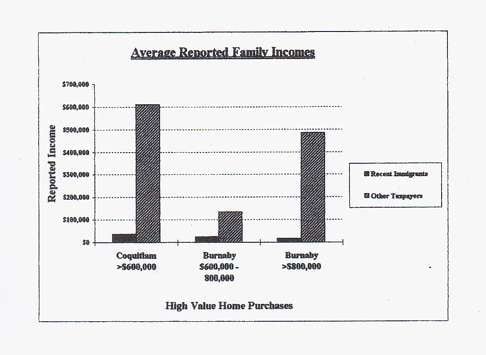
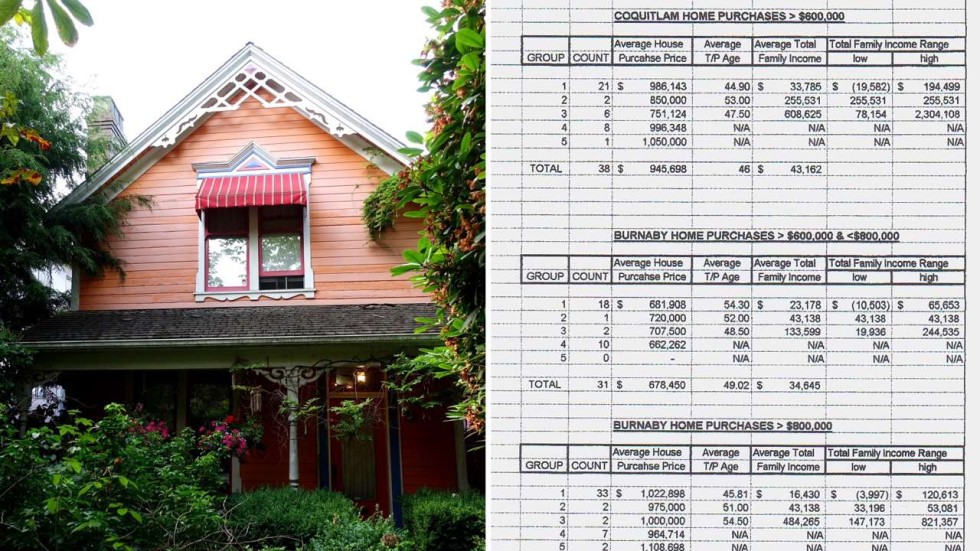
The 1996 investigation, described in interviews, leaked memos and a spreadsheet obtained by the SCMP, compared luxury home sales in two regional cities against buyers’ social insurance numbers and tax records, amid the arrival in Vancouver of thousands of rich immigrants from Hong Kong and Taiwan. It showed that recent immigrants made up more than 90 per cent of top-end, C$600,000-plus purchases in which buyers were identifiable.

Image result for Canada tax chiefs knew foreign money’s big role in Vancouver housing market 20 years ago, leaked documents show, but they ‘ignored’ auditors’ warning


However, these buyers only declared average household incomes of about C$23,000, compared to more than C$368,000 for the handful of long-term Canadian residents who bought in the same price brackets.

The existence of the CRA team’s 1996 analysis has never before been publicly revealed. It was conducted by CRA’s Underground Economy Workload Development Unit in the Burnaby-Fraser tax office, which had been tasked with identifying potential audit targets.
A retired auditor who was involved in the analysis said the results were sent to Ottawa in what amounted to “a call out for help…’look, we have identified significant non-compliance from this group of people. We will not start audits unless you can do something [to help us]’. Nothing was ever done.”
He said “senior CRA management just wanted the problem to go away and did not want to put resources towards these high-hour audits”, which could take many months.
Only a handful of audits were ever conducted as a result of the initiative, which was “abandoned” for lack of interest and resources, he said.
The account of the investigation - and its apparent snubbing by CRA bosses - was corroborated by a second person who worked in the Burnaby-Fraser CRA office at the time.
PUBLISHED : Thursday, 18 August, 2016, 11:48pm
Image result for Canada tax chiefs knew foreign money’s big role in Vancouver housing market 20 years ago, leaked documents show, but they ‘ignored’ auditors’ warning

The leak of the documents to the SCMP comes amid concerns that millionaire migrant money from China is helping fuel Vancouver’s current home-price explosion, with the average price of a detached home in the metropolitan region standing at C$1.8million and the “benchmark” price for all residential sales at C$930,400, a whopping 32.6 per cent increase in the past year.
From 1986 to 2014, two main millionaire migration vehicles, the Federal Immigrant Investor Programme and a parallel scheme run by Quebec (the QIIP), brought 190,487 wealthy immigrants to Canada. An estimated 120,000 of those likely moved to Vancouver, including a majority of QIIP migrants, who are not required to stay in the French-speaking province.
The first waves of immigrants using the scheme were mainly Hongkongers and Taiwanese arriving in the wake of the 1989 Tiananmen crackdown and ahead of the 1997 SAR handover. Since then, the schemes have been dominated by rich mainland Chinese. The federal IIP was shut down in 2014, but the QIIP continues to operate, and is on track to bring about 5,000-5,500 millionaires and family members to Canada every year.

‘The numbers were alarming’

The retired auditor said the schemes had long raised concern among auditors, prompting the 1996 study.
He said the investigation began with auditors obtaining a list of immigrant investors from administrators of their funds; their social insurance numbers were compared against tax rolls to deduce that although most were living in high-income neighbourhoods and relatively young, they had “minimal declared income”.
“Based on this information…it was decided by the Burnaby-Fraser TSO (taxation services office) underground economy team to start analysing high-end home purchases in the lower mainland,” he said.

The study examined all sales in Burnaby and Coquitlam worth more than C$600,000 - which at the time represented a top-end luxury sale - in a two-month period of 1994. The auditors identified buyers, studied their tax records and determined their immigration status based upon filing history and the sequencing of social insurance numbers.
“The numbers were alarming,” the ex-auditor said. “New immigrants made up the largest proportion of buyers, but their incomes were significantly lower than long-term Canadian residents.”
A memo describing the study, dated October 1, 1996, was sent from team leader Dino Altoe to John Fennelly, at the International Tax Directorate in Ottawa.
Neither could be reached for comment, and the CRA declined to discuss the leaked papers. “The Canada Revenue Agency cannot comment on the authenticity of the documents you have provided. We respectfully decline your request for an interview,” a spokesperson said.
Altoe says in the memo: “Based on the lifestyle and average age of these taxpayers, it is likely that many of these new Canadians still have active business activities, but are not reporting all their sources of income.”
Just four out of 243 home sales in Burnaby priced between C$600,000 and C$800,000 involved identifiable long-term Canadian residents, the memo says. A spreadsheet accompanying the memo shows that 21 out of 29 identifiable buyers of C$600,000-plus properties in Coquitlam were recent immigrants; they made up 18 out of 21 C$800,000 buyers in Burnaby. Recent immigrant buyers in the three categories had average incomes ranging from C$16,430 to C$33,785. Across all three categories, the average income of long-term resident buyers was C$368,530.
The exact figure for the entire Burnaby cohort of 243 C$600,000-C$800,000 buyers who were not identifiable was not given, but a random sample of 31 buyers by the auditors suggested a rate of 32 per cent. Assuming that held true for the group of 243, the percentage of recent immigrant buyers in the entire study was 93 per cent.

David Ley, a University of British Columbia geography professor who has studied the phenomenon of wealth migration to Vancouver for decades, said that at the time of the study there was an intense debate in the city about whether the role of rich immigrants in the housing market was being exaggerated.
He said the leaked data would have been valuable to this discussion had it been made public at the time, and pointed out that the same debate and doubts were echoed today.
“It certainly elucidates what was going on. If we wanted a transparent sense of this trend in society, then this would have informed that debate,” he said, adding that he “most certainly would have” wanted the data himself back in the 1990s.
The Altoe memo goes on to say that a separate analysis of sales in the cities of Richmond and Vancouver had been conducted “with similar demographic results”. However, any spreadsheets showing this could not be obtained by the SCMP.
In a follow-up memo to Fennelly, dated October 2, Altoe says a high proportion of the Burnaby-Coquitlam recent immigrant buyers were likely of Taiwanese origin. The writer maps out the challenges of pursuing audits against such taxpayers – including the absence at the time of tax treaties with Hong Kong and Taiwan, the difficulty of searching for assets in Taiwan, and the likely uncooperativeness of the audit targets.
He says his audit team planned to “revisit this data if meaningful offshore asset reporting data becomes available or information from immigration”, before signing off with a request for suggestions on how to proceed.
However, the SCMP’s source said the team was “powerless to do anything without better access to immigration records”. “A few audits were done, and the initiative was abandoned,” he said, describing the study as having been “ignored”.
The source of the leak came forward after the SCMP reported last month that CRA was planning a tax crackdown on suspected real estate tax cheats buying homes with foreign earnings in Vancouver. However, the secret strategy briefing obtained by the Post that described the crackdown revealed there had been just one successful audit of global income conducted in British Columbia last fiscal year.
NOTE: This story has been updated to include a response from the CRA, which had not been provided at the time of initial online publication.

Vancouver’s real estate is ‘fuelled by a money laundering bubble’: Market analyst

Vancouver’s real estate is ‘fuelled by a money laundering bubble’: 

Market analyst


ABOVE: Marc Cohodes used to run one of the largest hedge funds on Wall Street. Now he's eying the Canadian housing market. He joins Randene Neill via Skype from California.


There is no denying that the real estate market in Vancouver is red hot – prices have been rising with no end in sight.
But one market analyst thinks we will see the bubble burst.
Marc Cohodes used to run one of the largest hedge funds on Wall Street. Now, he’s eyeing the Canadian housing market.

“Short selling in stocks is basically, you borrow shares that other people own and you sell them,” said Cohodes. “If I was in the cattle business and I thought the price of cows were going to go down, I would sell all my cows, I would borrow some of your cows, I would sell them with the promise to buy them back and return them to you some day, and if they went down I would make, and if they went up and I got tired of my position, I would lose.”
Speaking on Global BC News Morning, Cohodes made it clear that he has no personal stake in the Vancouver real estate market.
Cohodes said he wants to speak out about the housing market in Vancouver because he feels strongly “people are being taken advantage of.”
Recent headlines of real estate deals in Vancouver include a 7,200-square-foot heritage mansion for sale in Vancouver’s Shaughnessy neighbourhood for $21 million and a a $2.398-million price tag for a ‘fixer-upper’ in the Point Grey neighbourhood.
The Greater Vancouver real estate board says the benchmark price of a detached home in Vancouver hit $1.56 million in June, which is up 38.7 per cent in one year.
“I think it’s a money laundering-induced market,” said Cohodes. “Where the local politicians, or the BC Liberals, are kept or in cahoots with the real estate brokers, developers, lawyers, that angle. And they have sought Chinese money to keep the market propped up and it won’t last.”
“China has capital controls on and Vancouver has become the money laundering mecca of either the world or North America and something is going to change and change drastically.”
Tom Davidoff, an economist at UBC’s Sauder School of Business, said while he agrees with Cohodes that overseas capitalism is an important driver of our market, “whether there is anything illegal going on, and whether we should think of that as a bubble or a trend, I think are more challenging questions to answer.”
Cohodes said if the provincial government doesn’t step in to change the market, they’re going to be voted out.
“This is sheer insanity,” he said. “What’s going on is you’re pricing local, hardworking people out of the market and as I’ve said before, the housing market in Vancouver resembles the Vancouver stock exchange and penny stocks many years ago and that didn’t end well at all.”
Davidoff said if something isn’t done, “Vancouver is going to become a playground for the rich.”
WATCH: Is there a real estate bubble?
Finance Minister Mike de Jong has said he does not believe Vancouver is in a real estate bubble, to which Cohodes said “he’s full of more crap than a Christmas turkey.”
“The market is ridiculously high and slippery Christy Clark goes and takes real estate people over to China.”
“They have the records,” said Cohodes,” they just don’t want people to really know or they don’t want people to know the truth.”
In a statement to Global News, de Jong said:
We continue to work with both local governments and the federal government to address issues in Vancouver’s real estate sector, particularly to help bring new supply of homes to the market at affordable prices, and acting on concerns about regulation and enforcement. The premier announced last week that the province will end self-regulation of the real estate industry, and further steps aimed at helping make homes more affordable for the middle class will follow in the near future.
Cohodes said he has solutions to fix what the “issues are” but B.C. politicians don’t want to “take the medicine because their livelihoods depend on this.”
According to Cohodes, people who buy in this market will only become “debt servants for the rest of their lives.” He said when Vancouver’s market does tank or collapse, people are going to lose a generation of savings and equity.
“It’s fueled by a money laundering bubble that politicians don’t want to end.”
“At some point, bubbles burst.”
Michael Levy of Border Gold Corp. disagrees, saying while a bubble can be anything that is overvalued, we can just let the air out and it doesn’t have to burst.
“That would be a correction in the market that would take place, but as Mr. Cohodes said, I do not believe we are in the kind of bubble that is going to burst.”
“To say that markets are going to go down 50 to 80 per cent is absolutely irresponsible and I feel that his statements are doing nothing but inflaming the issues that are going on here, but not being helpful at all,” added Levy.
WATCH: Michael Levy reacts to Marc Cohodes’ comments:
He said there needs to be more stringent regulation about who can buy in the market, what kind of financial stability they have and he agrees about adding a tax on foreign home ownership.
Levy did agree the real estate market is a “cash cow for the provincial government because of the property transfer tax,” but he thinks the government is going to have to act soon to calm the public’s fears they are being priced out of the Vancouver market.
However, he does not necessarily think a tax is the best way to go.
“I think there are ways to go about this but I don’t think you have to slam the door and to start to think to put a huge tax in place, I just want to remind the viewers that in 1974 that’s what the provincial government did in Ontario,” said Levy. “They put a 50 per cent tax on properties that people bought for speculation and they tanked the real estate market.”
“It absolutely fell apart, so I say, be careful what you wish for.”

Australia,18C: Proposed changes to Racial Discrimination Act defeated in Senate

18C: Proposed changes to Racial Discrimination Act defeated in Senate

March 30 2017


A late-night debate in the Senate on proposed changes to the Racial Discrimination Act has been described as "filibustering" by the Opposition.

Key points:

  • Government wants to replace words "insult", "offend", "humiliate" with "harass"
  • It does not have the numbers to pass changes
  • Labor, the Greens, some of the crossbench killed off amendments after seven hours of debate
The Government had extended the Senate's sitting hours so it could deal with two key pieces of legislation: changes to the act and the Government's cuts to company tax rates.
The Government had wanted to replace the words "insult", "offend" and "humiliate" in section 18C of the Racial Discrimination Act with the term "harass".
On Thursday evening it became apparent the Government did not have the numbers to pass the changes, but the debate continued.
After seven straight hours of discussion, Labor, the Greens and some of the crossbench killed off the amendments.
It means the wording of section 18C of the Racial Discrimination Act will not change.
The Senate then continued debating process changes to the Human Rights Legislation Amendment Bill, the majority of which were uncontentious.
After another hour of discussion, Labor Senator Sam Dastyari accused the Government of trying to kill time.
"Let's just be clear what's going on here," he told the Senate.
"The Government is filibustering on its own bill about watering down race hate laws so that it can cut a deal on giving big business tax cuts."
"It's 11.30pm — you still don't have a deal."
The intention was for the Senate to sit until both issues had been dealt with, but just after midnight the Government suspended the sitting without a mention of the second item on its agenda.

Company tax cut negotiations continue

The suspension means the Government is yet to strike a deal on its company tax cut legislation with the Senate crossbench.
Thursday was supposed to be the final sitting day before the Government hands down its budget in May.
But with a key part of the budget still in limbo, the Government has extended the sitting hours of both houses into Friday to try to pass the legislation.
The Government's 10-year Enterprise Tax Plan would see the company tax rates cut to 25 per cent for all businesses.
It would cost $48 billion, but the Government argues it would keep Australia internationally competitive and attract more foreign investment.
Labor and the majority of the Senate crossbench do not support the legislation in its current form.
The negotiations are about the size of the businesses that should receive a tax cut.
The key players are the Nick Xenophon Team, which so far has maintained it will not support cuts for businesses with a turnover of more than $10 million a year, while One Nation is urging the Government to cap it at $50 million.
The Government looks almost certain to have to split its bill and pass cuts for smaller businesses before deciding whether to re-prosecute the case for tax relief at the top end of town after the budget.