Thursday, January 29, 2015

China will capitalize on the euro’s decline


China will capitalize on the euro’s decline

 Tom Velk: Rich with foreign exchange, able to survive temporary cash drains, far-sighted in its investment plans, able to stay focused on distant horizons, China can step in at a critical moment when the euro totters.
As Europe falters, its troubled assets will be bought up by China
On Jan. 15, the Swiss Central Bank abruptly announced the end of its “bail-out-buying” scheme, wherein it spent high-value Swiss francs in exchange of weak euros. Formed in 2011, this currency peg was intended to prevent the Swiss franc from rising to the high value the market would otherwise place upon it. The Swiss were protecting their exports and holding off what might have been an indigestible excess of inflowing foreign money capital. Among other things, they did not wish to be the safe haven vis-a-vis the Euro. The plan was expensive. By the end of 2014, Switzerland’s accumulation of “excess” euros caused SNB’s foreign-exchange reserve to balloon to €174 billion.
After the announcement, the Swiss Franc jumped 20%. It was a clear sign that the Swiss central bank cannot fight the market, which views the prudent, moderate Swiss tradition of rule of law, respect for property rights and contract law as a much needed safe haven. The ECB’s adoption of trillion dollar quantitative easing might easily force all other central banks to buy up excess euros rather than allow euro depreciation and consequent disturbances in the trade and capital markets world-wide.
In imitation of the U.S. Federal Reserve, bonds issued by euro nations will soon be bought up by the European Central Bank at the rate of 60 billion per month, effectively turning those bonds into paper money. This excess supply of new paper euros will likely depress the value of existing euros while worsening European “asset price” inflation. (During such inflation, assets like big city property, securities, and investment assets – not so much ordinary consumer prices – go up and down in destabilizing ways that divert and confuse investors.) Holding a €174 billion stake in the one asset that loses most value during a bubble-up, bubble down asset price inflation is not a winning strategy. And so the Swiss central bank stopped buying euros. The Swiss regret the bad investment choice they made in conducting their earlier, losing attempt to support the euro’s value.
The Swiss regret their earlier, losing attempt to support the euro’s value
Investors are not just running towards the Swiss Franc, but away from the euro. So-called “generational accounting” shows that governments have over-extended every variety of future spending promises. Economists measure true debt by asking two questions. What is the present value of future committed spending (pensions, welfare, housing, medicine) and what is the present value of future revenues (tax, excise, license fees)? Subtract excess spending from inadequate revenue and the resulting negative number measures true debt. Thus measured, debts are gigantic, unsustainable and – unless promised spending and threatened taxing plans are radically rewritten – guaranteed to end in repudiation, inflation and crisis.
The problem is especially severe in Europe. The PIIGS (Portugal, Italy, Ireland, Greece, Spain) have enormous unpayable debts, and even Germany and France have large net generational imbalances. This creates the contrary pulls in Merkel’s dilemma: one in favour of Germany’s commitment to the euro and another in support of the cries of Germany taxpayers. Germans have an export economy, and its intra-euro trade is fluid and – so far – without the costs and inconveniences that burdened the old multiple-currency world. To hold onto Germany’s role as regional exporter of goods and receiver of investment capital, Merkel will likely continue to help the PIIGS service and even expand their indebtedness. She has accepted the ECB’s assurances (unlikely to be honoured, but nonetheless given to the Bundesbank) that the proposed debt purchases will be so allocated as to prevent “cross-national” support by Germany of the bonds of others.
A quiet China looks on as the euro weakens. But China is not merely enjoying the spectacle. Rich with foreign exchange, able to survive temporary cash drains, far-sighted in its investment plans, able to stay focused on distant horizons, China can step in at a critical moment when the euro totters. China is the only player able to make offers to buy troubled assets, support faltering security prices, and re-connect a fragmented Europe. Oddly, China superficially resembles the USA during the Marshall Plan years: the only man left standing with money in his pockets, and overseas investment in mind.
Advertisement
China is not Switzerland. It does not invest in paper; equity is more to its taste. As the euro loses value due to the monetization of European government debt, the value of China’s money, unimpaired by any fanciful notions that increasing paper claims is a good policy idea, will mean that Chinese central bank investments can be much more profitable than is the case for the Swiss investments. Using its good money China will be even more able to continue on its current role of divesting itself of paper wealth (largely consisting of bonds issued by the U.S. Treasury). Instead China’s vast foreign exchange reserves, now having relatively more international purchasing power, may be even better used to buy equity assets around the world, a process the Chinese have been undertaking for some years.
China well-understands a second-order of generational accounting problems within the eurozone. There, the component economies are too different to be forged together. China is a united nation, has a united currency and enjoys a single-minded economic strength and growth potential. Europe, although it has a single currency, has few of these unifying qualities. The euro was invented, along with the EU, to create a United States of Europe. But the work was done, if at all, backwards. You can’t create a country. A country has to be there, and a currency simply reflects the commonalities in the country. China has been a real nation for thousands of years.
The end of the day will mark another instance where China’s astute financial practices will prove to be much more profitable than the choice made by the once-wise gnomes of Zürich.

US And China Are At War But The World Doesn't Know It Yet


Requiem for a Snakehead

Requiem for a Snakehead


Attorney Colin R. Singer 
Montreal / Canada
Jan, 2015
Cheng Chui Ping, known as Sister Peng, died in early June in New York’s Chinatown of pancreatic cancer. Serving a thirty-five-year sentence for operating a sophisticated immigration-smuggling ring that transported untold thousands of undocumented migrants from southeast China to the United States, Cheng Chui Ping died in a federal prison in Texas.
In the summer of 2005 the New York Post and the Daily News were among several newspapers that reported on the widely publicized trial of Sister Ping. In China, human smugglers are known as Snakeheads, and the prosecutors who put Sister Ping on trial called her “the mother of all snakeheads.” Despite being heralded by the tabloids with headlines such as “Evil Incarnate,” many in the community of Chinatown rallied to her cause, defending Sister Ping as a heroic figure who had escorted a generation of immigrants out of poverty in China to a better life in the United States.
Sister Ping’s customers knew that, in a single year slicing broccoli in a Chinese restaurant in the U.S. would yield a sum greater than a decade’s earning back home. Immigrants entered the country via airplanes, using phony documents, or on rafts across the frigid rapids of the Niagara River, and eventually on big ships.
Sister Ping was a ruthless personality. To prevent any defaulting of fees, she hired a violent Fujianese street gang to hold her customers, in some instances at gunpoint, until relatives, friends or a loan shark provided the funds.
In June 1993, a tramp steamer called the Golden Venture ran aground off of Rockaway, Queens, with nearly three hundred undocumented Fujianese passengers on board.  Sister Ping was one of the snakeheads behind the voyage and fearing a crackdown on immigrant smuggling, slipped out of the country and returned to her home village in China. She controlled operations remotely from this new location. However, in 1998, another one of her ships capsized off the coast of Guatemala, killing fourteen passengers from China and she was finally arrested in Hong Kong, in 2000.
Sister Ping remained defiant to her crimes. Illegal migration is a dangerous business and Mattathias Schwartz recently wrote for The New Yorker about the lengths that African migrants will go to wash ashore on the Italian island of Lampedusa, and Jim Dwyer, at the Times, published a heart breaking piece about the death of a young Ecuadorian girl seeking to reconnect with her parents in the United States.
According to Sister Ping, her contributions to her customer entering the country, outweighed the costs. “My life remains valuable,” she insisted, during the sentencing phase of her trial. “It remains valuable.”
In Chinatown, many people agreed with her view. Her death was front-page news in New York’s Chinese-language newspapers, with articles describing her “righteousness,” and calling her an “immigration hero.” “Her warmth moved everyone,” a local man who came from her village back in Fujian told the Times.
Sister Ping’s family still owns a Chinese restaurant at 47 East Broadway, opposite which lies the Grace Gratitude Buddhist Temple. In this vestibule, incense burns alongside platters of apples and little bowls of dried fruit, and a framed photograph of Sister Ping sits in a brightly lit main room. A group of monks in orange robes can be found leading mourners from Chinatown in a funereal chant.
Source: The New Yorker

Chinese Applicants Sue Canadian Government Over Cancelled Immigration Scheme


Chinese Applicants Sue Canadian Government

 Over Cancelled Immigration Scheme


Like thousands of other wealthy Chinese, Lili Feng and her husband applied for a Canadian permanent residency via the immigration investor scheme, believing that Canada would offer a better future to themselves and their three daughters.
But after four years of waiting, Ms. Feng’s dreams were all but dashed in February when the Canadian government announced it was halting its immigrant investor program and cancelling tens of thousands of outstanding applications.
In an attempt to persuade Canada to reverse its decision, Ms. Feng has joined more than 1,500 mostly Chinese plaintiffs in a lawsuit against the Canadian immigration authorities, claiming damages of $5 million Canadian per applicant and their dependents in compensation, on the grounds that their applications were not processed within the promised time frame.
The cancellation of the program was announced in February after a series of reports were published in the South China Morning Post revealing that the program had been overwhelmed with applications by rich investors from China.
According to the newspaper, the Canadian government had stopped accepting new applications in July 2012 due to the enormous backlog of applications - 66,423 as of last July, of which 50,131 had been filed by Chinese applicants.
The cancellation of the program and outstanding visa applications will not take effect until the budget is passed on June 26.
“For decades, it has significantly undervalued Canadian permanent residence,” the proposed budget says of the investor program, with “little evidence that immigrant investors…are making a positive economic contribution to the country”. Immigrant investors tend to under-report employment and income and therefore pay lower taxes than other economic migrants, it adds.
Before its cancellation, Canada’s immigrant investor program was widely considered to be one of the easiest routes to gain permanent residency abroad - investors seeking to immigrate to Canada were required only to make a five-year, interest-free loan to the government of $400,000 or $800,000, depending on the time of application, as well as show a net worth of $1.6 million Canadian.
China is among the three countries with the highest number of millionaire households, of whom the proportion looking to settle abroad is 64 percent. The main reasons cited by wealthy Chinese for emigrating are concerns about quality of education, environmental pollution and food safety.
The Canadian government has said it will announce new plans for a “more focused and effective” pilot program for immigrant investors in the coming months.
“Canada has a proud tradition of welcoming immigrants from all over the world, including China,” Bill Brown, a spokesman for the immigration department, said. China has been among the top source countries for Canadian immigration and it would “continue to rank as such.”
At the time the program was cancelled, the investors represented in the lawsuit were in various stages of the application review process.
For Ms. Feng, who applied with her family in 2010, moving to Canada had been a longstanding dream. In anticipation of the move, Ms. Feng placed her oldest two daughters in an international school in Shenzhen and began making preparations to transfer the management of the company which she runs with her husband. The entire application process, they were told, would take no more than two to three years.
But four years on, the Fengs have been left bitterly disappointed by the turn of events.

Canada seeks 50 [Chinese] millionaires for [test] of immigration program?


Canada seeks 50 millionaires for [test] of immigration program?


Dec 17 (Reuters) - Canada is looking for 50 wealthy foreigners to join a pilot run of an immigration program for millionaires, although applicants will have to be far richer than those who entered under a previous scheme and will also need language skills to get in.


The federal government, which scrapped its previous investor class visa earlier this year amid criticism it was allowing rich Chinese to buy their way into Canada, will start accepting applicants for the new Immigrant Investor Venture Capital plan in January.

Under the new program, would-be immigrants will have to invest a minimum of C$2 million ($1.7 million) in Canada for a 15-year period and must have a net worth of at least C$10 million, the government said on Tuesday. They must also meet a new requirement that they speak English or French, among other criteria.

Many of Canada's wealthy immigrants flock to major cities like Vancouver and Toronto.

Realtors who sell homes in Vancouver's top neighborhoods said the new language rules will exclude many people who had hoped to enter under the previous program.

"For investment immigrants, before, if you had enough money, then it was very easy to come here," said Na An, an agent with Royal Pacific Realty Group. "But with the language requirement, I think they will block a lot of people."

Na said that could push wealthy foreigners to choose other jurisdictions, like Britain orAustralia, or they could simply enter Canada under a 10-year multiple entry visa.

Launched in the mid-1980s, Canada's immigrant investor program promised a fast-track visa for foreigners with a net worth of C$800,000 and some C$400,000 to invest. The minimums were later upped to a net worth of C$1.6 million and C$800,000 to invest. There was no language requirement.

The program was wildly popular, particularly with ethnic Chinese investors - first from Hong Kong and Taiwan, and later from mainland China. Vancouver, with its proximity to the Asia-Pacific region, was the preferred destination.

But applications surged over the last decade and the scheme was frozen in 2012 as officials scrambled to clear the backlog. Canada officially canceled the program earlier this year. ($1 = 1.1587 Canadian dollars) (Reporting by Julie Gordon; Editing by Cynthia Osterman)

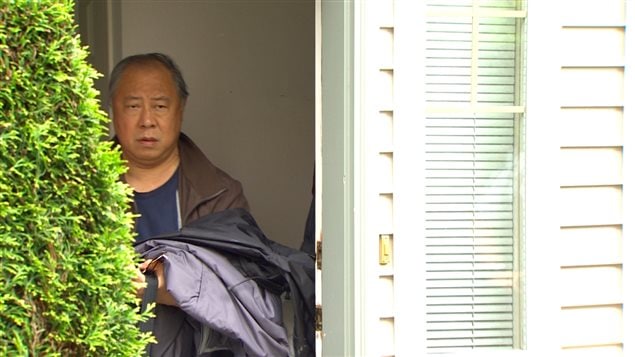
B.C. Court of Appeal Justice Nicole Garson said of Mrs. Bea: "contemptuous disregard":

Couple in strata scrap must sell condo: court
10765312.jpg
In her reasons for judgment, B.C. Court of Appeal Justice Nicole Garson said Mrs. Bea, the registered owner of the suite, had shown a "contemptuous disregard" for court orders both by her own conduct and the conduct she authorized her husband to pursue.   Photograph By Nick Procaylo
PORT COQUITLAM — A Port Coquitlam couple will have to sell their condo after being found in contempt of court after a protracted legal battle with their strata council.
In a ruling released Tuesday, the B.C. Court of Appeal upheld a ruling that orders the drastic measure for Cheng-Fu Bea and Huei-Chi Yang Bea.
The dispute began in 2006, when the council passed a bylaw regulating the use of parking stalls, a move opposed by the Beas.
The couple went to court but lost their case. They then launched a fresh petition, using many of the same failed arguments. They lost again.
Over the next several years, they repeatedly returned to court, forcing the council to rack up more than $185,000 in legal fees to defend itself.
There were numerous judgments obtained against them as well as numerous orders of special costs. The two were eventually declared vexatious litigants and ordered to cease any further legal actions.
They ignored the court orders and a B.C. Supreme Court judge found that the only way they would take notice of their flouting of the law would be an order them to sell their premises.
The couple appealed the sale order, arguing the court had no jurisdiction and that it was not an appropriate decision.
But in her reasons for judgment, B.C. Court of Appeal Justice Nicole Garson said Mrs. Bea, the registered owner of the suit, had shown a “contemptuous disregard” for court orders both by her own conduct and the conduct she authorized her husband to pursue.
Justice Anne MacKenzie agreed with Garson but a third judge, Justice Richard Goepel, dissented, finding the judge did not have the jurisdiction under the court’s civil rules.
Iuli Varva, a former president and longtime member of the strata council, said it was about time the court ruled against the Beas.

Condo parking dispute: B.C. couple upset over Court of Appeal ruling

Condo parking dispute: B.C. couple upset over Court of Appeal ruling

Port Coquitlam couple has spent a decade fighting strata's decision to assign parking spots

CBC News Posted: Jan 28, 2015

Coquitlam condo eviction


The B.C. Court of Appeal has, in a split decision, ruled a Port Coquitlam couple can be forced to sell their condo in order to settle a decade-long dispute over their assigned parking stall.

After more than 50 court appearances in front of 32 judges and six petitions, Cheng-Fu Bea and his wife Huei-Chi Yang Bea have lost.
The court ruled their strata council had the right to seize their unit and sell it to recoup legal costs - but the couple seems determined to fight the appeal and take the case all the way to the Supreme Court of Canada.
"You wait and see what happens if they sold my unit. I will claim for the damages," Mr. Bea said.

Beas lost all appeals

2378 Rindall Ave
Cheng-Fu Bea and Huei-Chi Yang Bea's six year legal battle has ended in a contempt of court ruling that is costing the couple their condo in this complex. (CBC)
The dispute began in 2006 when the strata council at 2378Rindall Ave declared the parking in the building common property and assigned specific parking spots to each unit.
Last year a judge ordered Cheng-Fu Bea and his wife, Huei-Chi Yang Bea, to vacate their condo so that the strata council could sell it to recover more than $170,000 in legal costs.
The Beas refused to accept their strata's decision and launched a petition in B.C. Supreme Court, which ruled the strata was well within its jurisdiction to implement the new parking regime.
Instead of appealing the decision, the couple launched a series of new petitions, all of which failed because the argument had already been heard.
The petitions were followed by various appeals that, according to the strata's lawyer, Phil Dougan, eventually involved 28 different judges in dozens of courts. The couple lost all the appeals.
Meanwhile the Beas continued to disobey the order restricting them to their assigned parking spot.

Contempt of court ruling

The strata, which had incurred more than $173,000 in legal costs defending itself from the Beas' court actions over six years, finally applied for a contempt of court ruling.
Last May the court ruled in the strata's favour, found the couple in contempt of court, and gave the Beas until June 15 to vacate the property so that the strata could sell it.
The couple appealed that decision, and on Thursday two of the three judges who heard the case in the B.C. Court of Appeal upheld the earlier decision.
In their decision, justices Nicole Garson and Anne Mackenzie wrotethat, "The chamber judge had jurisdiction to make an order for seizure and sale of property, as such an order is analogous to the historical power to use sequestration as a remedy for contempt."
The third justice in the ruling, Justice Richard Goepel, disagreed.
"In his opinion the court’s inherent jurisdiction to sentence for contempt was limited by the provisions of the Supreme Court Civil Rules and the chambers judge did not have the jurisdiction to order the sale of the appellant’s property," said the ruling.

Strata has accepted offer of $170K

It's not yet clear whether the couple will attempt to appeal to have the case heard in the Supreme Court of Canada. The Beas are asking a lawyer to help take their case forward, if the court agrees to hear it.
"I would like to ask for the public opinion, maybe some pro bono lawyer make me a hand for this," Mr. Bea said, in broken English.

Meanwhile, the strata has a court order allowing them to see the unit and has accepted an offer for $170,000, which may cover most of their legal costs. 
An appraisal is set for Wednesday afternoon and if the court agrees the price is fair, that sale could go through 30 days later.
"Is there a winner or a loser in this? No, there is definitely not. We are all losers, we lost a lot of money over the last few years," said one of the condo residents, Vigi Davyduke. 

Tuesday, January 27, 2015

Huawei CEO Denies Company Spied for China

More Lies From Huawei

Photos Show China Military Buildup on Island Near Senkakus

Photos Show China Military Buildup on Island Near Senkakus

Tensions high between China and Japan over island chain

BY:   
Recent satellite photos of an island off the coast of China confirm Beijing’s buildup of military forces within attack range of Japan’s Senkaku islands.
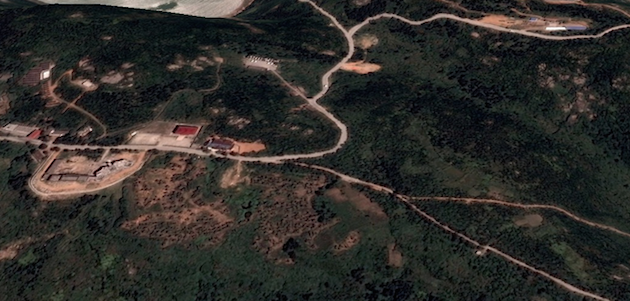
Construction of a helicopter base on Nanji Island was observed by a commercial spy satellite in October. The island is off the coast of Zhejiang province—some 186 miles northwest of the Senkakus, a group of resource-rich islets China calls the Diaoyu Islands.
The imagery, obtained from the Airbus Defense and Space-owned Pleaides satellite, reveals China is constructing an airfield with 10 landing pads for helicopters on Nanji Island.
Military analysts said the new military base appears to be preparation by the Chinese People’s Liberation Army for an attack or seizure of the Senkakus.
“China’s new heli-base on Nanji Island demonstrates that the PLA is preparing for an offensive military operation against the Senkaku/Daiyoutai Islands,” said Rick Fisher, a senior fellow with the International Assessment and Strategy Center.
“If you want to rate the level of tension, this is the PLA reaching for its holster. When forces start deploying to Nanji Island, that means the hammer is cocked.”
© CNES (2014), Distribution Airbus DS / Spot Image / IHS
The military buildup on Nanji was first disclosed by Japan’s Kyodo News Service last month. Kyodo, quoting Chinese sources, said a landing strip was being built.
However, the satellite photos, reported last week by IHS Jane’s Defence Weekly, a trade publication, did not indicate construction of an airstrip, only helicopter landing pads. The helicopter pads are an indication that China plans to use the base for transporting troops and forces by helicopter and not for longer-range air transports or fighter jets.
China has been engaged in a tense confrontation with Japan over the Senkakus since 2012, when Tokyo, in a bid to clarify the status of the uninhabited islands, purchased three of the islands from private owners in a bid to prevent Tokyo Gov. Shintaro Ishihara from buying them.
Since then, Chinese ships and warplanes, as well as unmanned surveillance drones, have been flying close to the islands, prompting numerous Japanese maritime and aerial intercepts.
Jane’s reported the helicopter base construction is new. The construction is not visible in photos taken earlier than October 2013.
Google Earth screenshot
Wind turbines also are visible additions to the island that are located on a ridge on the southeast part of the island. Radar and communications equipment also is visible.
China’s Defense Ministry did not dispute the military buildup on Nanji.
PLA Sr. Col. Yang Yujun told reporters in Beijing Dec. 25 that Japanese news reports of the construction were “irresponsible.”
“There is no doubt that China has the right to conduct activities and construction on its own territory,” he said. “Some media in Japan make irresponsible speculations on China’s legitimate activities and construction and play up tensions in the region. It is pure media hype.”
Questions were raised during the discussion with Yang as to whether the buildup is part of China’s declaration of an air defense identification zone over the East China Sea that covers the Senkakus.
The U.S. government has said it does not recognize the Chinese air defense zone as it covers large areas of international airspace and waters.
Jane’s said the Nanji construction appears to be part of a “quiet military buildup around the Senkaku/Daioyu islands by both sides.”
“For its part, Japan is putting aside funds to buy land for a coastal surveillance radar unit on Yonaguni island, which is the westernmost of its islands and only 150 kilometers from the Senkaku/Diaoyu islands, while it is also training up and kitting out a small marine corps-style force that will be based in Nagasaki,” the report said.
The lack of an airfield is a “gap” in Chinese plans for military operations against the Senkakus, Jane’s said. The closest PLA air base to the Senkakus currently is located at Luqiao, some 236 miles from the Senkakus, where J-10 fighters are based.
Fisher, however, said Nanji could be used by the PLA to base its large Zubr air-cushioned hovercraft that are capable of moving troops and tanks in a takeover of the Senkakus or an assault against Taiwan.
A Japanese Embassy spokesman declined to comment on the Chinese military construction.
“We are in the process of gathering information on this, and thus not able to comment,” the spokesman said.
A Pentagon spokesman did not respond to an email request for comment.
Retired PLA Maj. Gen. Xu Guangyu, a senior adviser at China Arms Control and Disarmament Association, a Beijing-based research group, told Singapore’s Today newspaper the Nanji military construction was “normal.”
“China has military bases in several strategically important coastal islands and the Nanji is one of them,” Xu was quoted as saying Dec. 23. “The Japanese media is only singling out the Nanji and making a big fuss, [and] this can be misleading.”