Friday, May 5, 2023

Chinese migrants have crossed the U.S.-Mexico border

Chinese migrants have crossed the U.S.-Mexico border 

May 3 2023


Most of the migrants who enter the United States through its southern border come from Mexico or somewhere in Central America. But not all of them. Recently, Chinese migrants have crossed the U.S.-Mexico border in record numbers.

Echo Wang, a reporter for Reuters who was part of a team that interviewed dozens of Chinese citizens in South Texas, spoke to the Texas Standard about what’s driving so many people to make the trip.

This transcript has been edited lightly for clarity:

Texas Standard: I think a lot of people might be surprised that so many people are actually able to get out of China in the first place to make a trek to the U.S. Typically, where do they go first? What is their first transit point?

Echo Wang: So most of the people – actually all of the people, with one exception – that I spoke to for this story, they flew first to Hong Kong. And then from Hong Kong they flew to Turkey, to Istanbul; from there they took a flight to the capital of Ecuador, because Ecuador is the only country in South America that is visa-free for Chinese visitors.

Wow. And so from Ecuador, moving north to the border between Mexico and the U.S.?

Yes. And people, a lot of them that I spoke to, spend over a month on the roads traveling from Hong Kong all the way to the border.

That is incredible. So what seems to be driving these relatively large numbers of Chinese citizens to the border with the U.S. and Mexico?

One of the things we’ve learned from the reporting is the economic aftershock of COVID. Because you might know this very well, China went through a very strict period of COVID lockdown. So a lot of people that we spoke to, a lot of the migrants, they had been small business owners. A lot of them had online stores selling from makeup to clothing to shoes to building supply. And a lot of their business got crushed during the COVID lockdown. So that’s what was described to me as a trigger for the trip.

So tell me about the role of social media in all of this. Are they actively going online and trying to search out ways to get out of China or ways to come to the U.S.?

A lot of people describe to me that they actually came across this by accident. A lot of people describe to me, for example, they just one day saw a video describing how to go to America on their Douyin feed; Douyin’s the Chinese counterpart of TikTok. And then some of the people didn’t understand what was that about, so they did some research – and because of the algorithm, you just keep getting more videos of a similar content. That’s how everything started for many of the people we spoke to.

I find that really surprising, given that we know that China has a lot of control over its Internet content there. And the fact that this would be even available in China, I guess it speaks to something about China’s efforts to try to keep a lock on what the Chinese people know about issues like this.

That’s a great point. One thing we actually found out watching all this Douyin videos is a lot of the daily users, they kind of package this not into like “how do we flee to America” or “how do we migrate to America” – they actually kind of use hashtags such as “international traveling” or like “trekking through the rainforest.” It’s almost like a vacation you’re taking instead of a very dangerous journey you’re taking.

Very interesting. And this prevents authorities from checking what it is that they’re searching for, that kind of thing?

We don’t know that for sure, but people we spoke to said this is kind of a clever way for them to supplement around censorship. One thing that we also found out about kind of the information that this migrant would learn from the Internet is a lot of kind of mixed information, a lot of false information. And a lot of them read this from platforms like Douyin or YouTube. And also just to your point, for example, one of the Internet Douyin influencers – his name is Baozai – his original account posting very detailed information about how to come to America in this way was blocked by Douyin and by other online social media platforms.

Growing Number of Migrants From China Arriving at US-Mexico Border


Li Xiaosan and his teenage son recently arrived in the United States from China. They are among a growing number of Chinese migrants arriving at the U.S.-Mexico border seeking asylum.

According to U.S. Customs and Border Protection, 4,366 migrants from China encountered Border Patrol officials after crossing the southern border without authorization from October 2022 to February 2023. That compares with the 421 migrants who were encountered during the same period in 2021 and 2022.

Xiaosan told VOA's Mandarin Service that he and his 16-year-old son traveled for more than 50 days from Hong Kong to Macau to Istanbul to Ecuador. From there, they traveled through six Latin American countries, including walking on their own through the Darien Gap, a dangerous mountainous jungle between Colombia and Panama where tens of thousands of migrants crossed in 2022 on their way to the U.S.-Mexico border.

On Tuesday, the U.S., Colombia and Panama announced a two-month operation to curb migrant smuggling in the Darien Gap using “new lawful and flexible pathways for tens of thousands of migrants and refugees as an alternative to irregular migration,” but without specific details on how the process will take place.

The announcement also included investments in job creation in the Colombian and Panamanian border communities with the goal of providing more economic opportunities to reduce human smuggling.

More migrants with stories similar to Xiaosan’s are likely to make the same dangerous journey to the U.S. border, according to Chen Zhong, an immigration lawyer living in Los Angeles, who asked VOA Mandarin to use a pseudonym for fear of retaliation from the Chinese community since he assists undocumented Chinese migrants who have recently arrived in the country.

Zhong has been working with Chinese migrants for more than 20 years. He told VOA that some people share their success stories on the app Telegram “and it spreads to 10 [people], and then [the information] spreads to a hundred. Many people know that this is a route that can be taken.”

Xiaosan and his son arrived on February 23 in Brownsville, Texas. They were detained by the U.S. Border Patrol and remained in U.S. government custody for five days.

After they were released, an immigrant advocacy group in Texas helped them continue to their destination —Albany, New York, where a Catholic organization helped them get settled.

They arrived in Albany on March 1 and have their first immigration court date in October.

The Migration Policy Institute estimates that about 4% of the 11 million unauthorized immigrants in the United States are from China.

Chinese migration experts say the increase in migrants from China at the U.S.-Mexico border is due to economic conditions, the Chinese government's aggressive COVID-19 lockdown policies, the deterioration of religious freedom, human rights issues and the rollback of U.S. border policies put in place under former President Donald Trump that banned travelers from mainland China because of the pandemic.

Data from the U.S. Department of Justice show that Chinese nationals are granted asylum at a rate of 58%, compared with 10% for Guatemala, 9% for Honduras and 11% for El Salvador, often because it’s easier for Chinese nationals to prove their asylum claims.

Protecting his oldest son

Xiaosan told VOA he has filed for asylum protection in the United States.

A rights activist from Henan province, Xiaosan participated in protests during Hong Kong’s Umbrella Revolution in 2014 and has continued to speak up against the Chinese government's authoritarianism. He left China after his last encounter with Chinese federal officials.
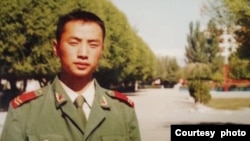
Li Xiaoshan in the Chinese army. (Courtesy Li Xiapshan)
Li Xiaoshan in the Chinese army.

“Last year, they came to my neighborhood posing as pandemic prevention officials,” he said. “They shoved me into a car and threatened me and my family.”

After that, Xiaosan decided it was time to leave China.

Xiaosan said his son is attending high school classes and is adapting well. Xiaosan said he hopes to set up a nonprofit organization to show Chinese people how to file U.S. immigration applications and how to find jobs. He is sharing his stories on Twitter and blogs about his experience with U.S. immigration law.

Xiaosan’s wife and 9-year-old son are still in China. He said it was “too dangerous” to bring everyone together.

“So far, [Chinese] police haven't bothered them,” he told VOA.

Before he left China, he visited the final resting place of some of his ancestors to say a final goodbye. But he has not shared his journey through the Darien Gap with his parents.

“I do not dare to tell them what happened. I only told them that we traveled for the Chinese New Year,” Xiaosan said.

Thursday, May 4, 2023

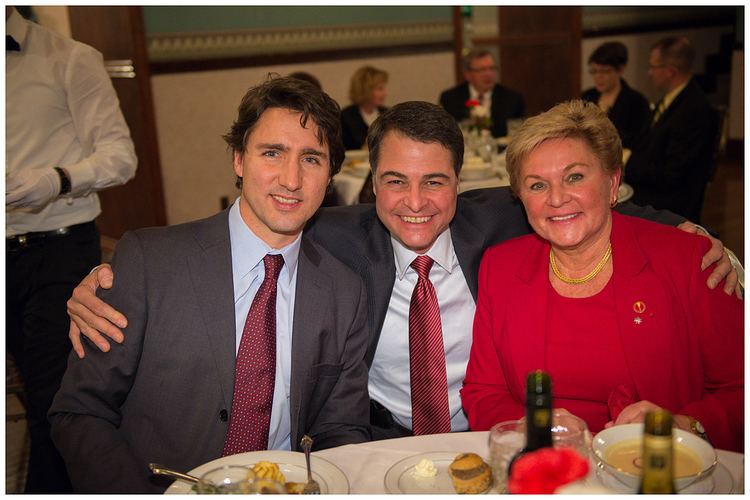
A Canadian MP and his whole family having been threatened by a Chinese diplomat...Anthony Rota [SOTH] is now seen as a Trudeau gatekeeper

A Canadian MP and his whole family having been threatened by a Chinese diplomat & Beijing operative [for 2 years], is being allowed to stay in Canada by Trudeau.

Immediately post haste remove Trudeau  w/this diplomat!

How can this be when this MP's life is at stake...The shame is on Trudeau's head!

Trudeau has a number of gatekeepers in parliament but one stands out amongst the rest and that person is Anthony Rota


The speaker of the house [Anthony Rota] a Liberal member, is seen on several occasions protecting Trudeau over Chinese interference issues..he must now step down now...


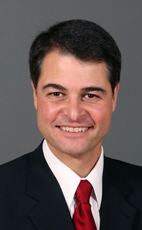
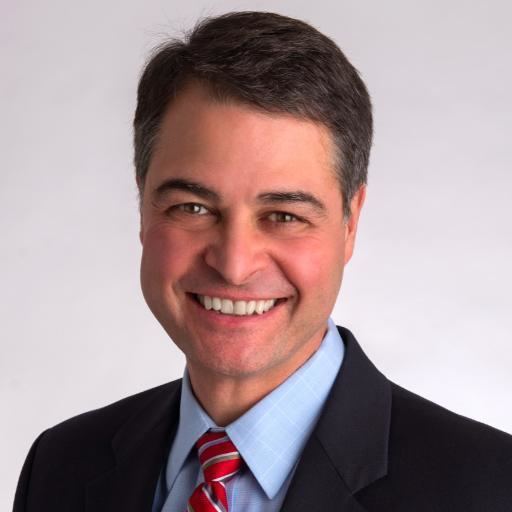
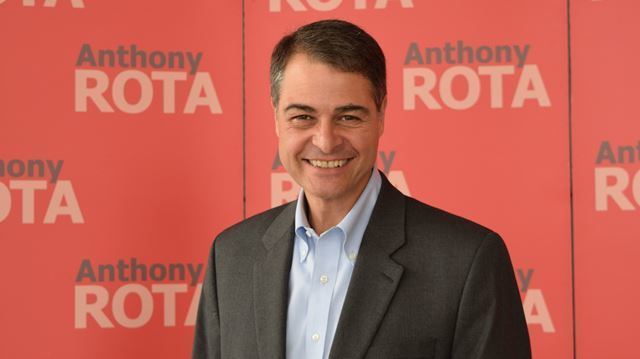
Anthony Rota

Updated on 
Preceded by  Jay Aspin
Name  Anthony Rota
Political party  Liberal Party of Canada
Succeeded by  Jay Aspin
Preceded by  Bob Wood
Spouse  Chantal Piche-Rota
Residence  North Bay, Canada
Anthony Rota httpspbstwimgcomprofileimages6252970751572
Born  May 15, 1961 (age 61) North Bay, Ontario, Canada (1961-05-15)
Profession  Administrator, Business advisor
Role  Former Member of the Canadian House of Commons
Previous office  Member of the Canadian House of Commons (2004–2011)
Education  University of Ottawa (1999), Wilfrid Laurier UniversityAlgonquin College
Similar  Geoff Regan, Pablo Rodríguez (Canadian politician), Al McDonald

Anthony rota be part of the change in nipissing timiskaming


Anthony Rota Rota ready to take back riding

Rota holds a Bachelor of Arts degree in political science from Wilfrid Laurier University, a diploma in finance from Algonquin College, and a Master of Business Administration degree from the University of Ottawa.

Anthony Rota Anthony Rota Get Involved

Prior to his election, Rota worked for the Industrial Research Assistance Program (IRAP) as regional manager for Ontario. He has also served with the Canadian Technology Network in Ottawa, and has worked in the private sector. Rota is fluent in French, Spanish, Italian and English.

Anthony Rota Anthony Rota The Temiskaming Speaker

Rota began his political career at the municipal level, serving as a councillor in North Bay and chairing the city's planning and economic development committee. He won the federal Liberal nomination for Nipissing—Timiskaming in early 2004, defeating rival candidates Susan Church, Hugh McLachlan and Joe Sinicrope with 52% on the second ballot. In the general election held in June of that year, he narrowly defeated Conservative candidate Al McDonald.

Anthony Rota RotaAnthonyLIBjpg

Rota was re-elected in the 2006 election, defeating the Conservative Party's Peter Chirico, the NDP's Dave Fluri, and the Green Party's Meg Purdy. In the 2008 election, he was again re-elected. He served as the Liberal Party caucus chair, and as critic for the Federal Economic Development Initiative for Northern Ontario.

Anthony Rota Anthony Rota Nomination Librale Franais YouTube

He ran again in the 2011 election, but lost by just 14 votes to Jay Aspin of the Conservative Party. Due to the narrow margin, however, an automatic judicial recount was required, confirming the margin at 18 votes. Since his 2011 loss, Rota has begun teaching at Nipissing University in North Bay, Ontario.

In the 2015 election, he was again the Liberal candidate, defeating Jay Aspin (who defeated him in 2011) and once again becoming the MP in the 42nd Canadian Parliament. On December 9, 2015, he was appointed Assistant Deputy Chair of Committees of the Whole.

Anthony rota liberal candidate for nipissing timiskaming


More Alchetron Topics


Alexandre Trudeau can't believe anyone cares about Chinese interference

Alexandre Trudeau can't believe anyone cares about Chinese interference

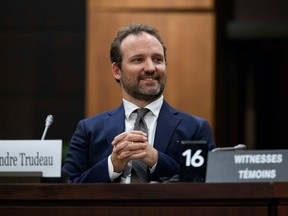
Alexandre Trudeau appears before the Standing Committee on Access to Information, Privacy and Ethics, studying foreign interference, on Parliament Hill in Ottawa, on Wednesday, May 3, 2023. THE CANADIAN PRESS/Justin Tang

The only donation agreement Alexandre Trudeau ever signed for the Pierre Elliot Trudeau Foundation in his 20 years there is now at the centre of an ethics probe. He doesn’t consider it suspicious. 

The real problem at the foundation, according to Alexandre Trudeau, was actually its previous president, Pascale Fournier — a former Trudeau scholar, now law professor at the University of Ottawa with a research background in human rights, critical legal theory and ethics. Fournier resigned last month after insisting the board use an independent process to audit the donation in 2016. The question of whether the foundation was a vehicle for Chinese subversion is now a case of he said, she said. 

Trudeau testified Wednesday at the House of Commons ethics committee studying foreign interference. He was asked to speak specifically about the 2016 donation, that came from Chinese billionaire Zhang Bin, which, the Globe and Mail reported in February, had been planned for years by the Chinese government in anticipation of the Liberals being elected to government.  

Advertisement 3

STORY CONTINUES BELOW

Article content

CSIS, according to the Globe, captured a conversation at a Chinese consulate in Canada wherein a diplomat instructed Zhang to donate $1 million to the foundation, the bulk of which ended up being donated to the University of Montreal instead, with $200,000 going to the charity. The diplomat promised Zhang that the funds would be reimbursed by the Chinese government — a straw donation, similar to straw purchasing to illegally buy guns or partake in mortgage fraud.  

At committee, Trudeau, who is a member of the foundation, defended the donation and accused the organization’s former president, Fournier, of lying and denounced reporting in the Globe and Mail about foreign interference as “poor journalism.” He did not contradict any of the facts that were reported in the paper. He didn’t believe interference was likely in 2016 when the donation contract was signed — even though warnings of Chinese interference have been made to governments by intelligence officials for the past 30 years. “Frankly this is a waste of time, because there is not a foreign interference issue here at the foundation and I know the documentary record will make that clear as it’s disseminated,” Trudeau told the committee.

Still, Trudeau admitted that the donation contract for the $200,000 was the only one he ever signed for the foundation in his time there. He said this was in part because then-CEO Morris Rosenberg asked him to sign it, and in part because it was an unusual four-way agreement (between the donor, the University of Montreal, the foundation and the family) that required his sign-off as a representative of the Trudeau family. It doesn’t seal the case, but it’s quite the coincidence.

Regarding the apparent straw donor, Trudeau assured the committee that he was legitimate (and seemed uninterested in having the Trudeau family involved in the donation). Later, Trudeau admitted to the committee that he hadn’t seen the donor much at all, meeting him once in 2014 and a second time in 2016 at the donation’s signing ceremony. Trudeau’s assessment was largely based on his own interactions with Zhang and the fact that Zhang’s company, a Canadian corporation, was in good standing with Canadian regulators. Which hardly proves he wasn’t a foreign influence agent.Fournier testified last week that the foundation’s record keeping on the donation was strange — she found it odd that for Zhang’s particular donation, the names on the donation contracts, receipts and on the annual reports didn’t match. Furthermore, she discovered, she said that the foundation’s staff had been emailing China for advice on how to fill out the forms.

Trudeau said it was false that there were any names falsely listed as the donor, and that he believed it was false that the annual reports contained contradicting information, even though he hadn’t seen the reports. “I think that’s false. I’d have to see the annual reports, but I think that’s false.” He dismissed Fournier’s concerns over different receipts for the donation, one with a Chinese address, and the other with a Quebec one. “She was using that information to cause tension,” Alexandre Trudeau said.He further insisted that Fournier falsely cited legal advice behind asking the board to set up an independent committee to review the donation — that advice being that board members who were present back when the donation was made were in a conflict of interest and needed to recuse themselves from any investigation. He said this was an unusual move because the foundation’s bylaws say that lawyers answer to the board as a whole. Furthermore, Trudeau said the lawyers told the board there was no conflict. “Trust evaporated when she lied to the board about legal advice,” he said.

Trudeau also implied that Fournier presided over a management crisis (he noted that this was over now) and unusually high staff turnover in recent years.  Incompetence and dishonesty are severe accusations to launch against Fournier, given her decorated background in law and her special interest in ethics. There wasn’t much evidence she mismanaged her position at the head of the organization or that she lied to her own board of directors (indeed, prior to the governance meltdown, she had been offered a two-year extension on her contract). Her caution regarding a suspicious donation — and desire to prevent a conflict of interest from tarnishing any internal investigation — makes entire sense considering the gravity of the situation. It would also make sense though, for Trudeau to accuse her of lying to sully her credibility.

Despite his defence of the foundation, Trudeau himself acknowledged that there were problems with academic diplomacy — the Zhang donation represented the first time it was tried, and the last. “In 2013, academic diplomacy was very interesting. (It was) interesting to have Chinese researchers come and participate in our events,” he said. He acknowledged that it became “problematic” to engage in academic diplomacy after his brother became the prime minister in 2015. It was problematic long before, though — Justin Trudeau was made Liberal leader in April 2013, meaning there was reason enough to donate for the purpose of gaining access and influence.

The Prime Minister maintains that he is completely separate from the foundation. He was directly involved with it until 2014 and now claims to have “absolutely no intersection.” Still, Justin Trudeau is listed as an inactive “succession member” of the foundation in its 2021-22 annual report, and some board seats are reserved for family members. His connection to the foundation is very real. The Trudeau Foundation, which was granted $125 million by a previous Liberal government, is also considered a government entity and must comply with the Access to Information Act and the Privacy Act like any other federal department or agency.  

Foundation involvement is limited to the non-political brother Alexandre Trudeau, who says he keeps foundation matters out of conversation. (Alexandre Trudeau didn’t confirm whether there was a written policy or procedure to maintain a firewall between the brothers in case a politically sensitive issue arose.) It should also be noted that Chinese foreign influence tactics include the targeting of family members. 

It’s messy to blend family elitism with our government institutions. Perhaps it’s not a good idea.