Tuesday, August 4, 2020

TikTok sale puts Canada between Trump and China, again, experts say

TikTok sale puts Canada between Trump and China, again, experts say


Published Tuesday, August 4, 2020

Volume 90%


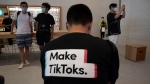
OTTAWA -- The potential sale of social-media platform TikTok to Microsoft is leaving Canada with a sense of deja vu.

Experts say the country is once again being pressured to take sides in a debate about digital technology that seems driven more by politics than by policy.

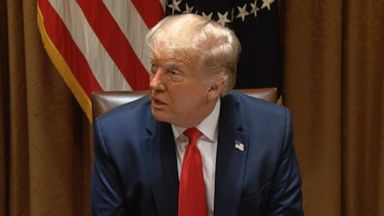
U.S. President Donald Trump is effectively forcing the sale of the Chinese-owned TikTok, citing national-security concerns over the user data and device access potentially available to China's government.

Microsoft has emerged as a potential buyer for the popular video-sharing app, seeking to acquire its presence in the United States, New Zealand, Australia and Canada.

Michael Geist, an expert in internet law at the University of Ottawa, says the issue feels like a replay of the debate over whether to allow Huawei technology into Canada's 5G wireless data networks.

The federal government still hasn't ended that debate with a decision, while Huawei executive Meng Wanzhou awaits possible extradition to the United States after being arrested in Vancouver and two Canadians, Michael Kovrig and Michael Spavor, have been detained in China for more than 600 days.

Geist says Canada is once again uncomfortably pressured to take sides in an emerging global digital tech battle and may try to not get too involved in the TikTok talks.

"At this stage, I'm not convinced that the Canadian government has clear policy on the area," Geist said, "meaning our likely response is to stay on the sidelines and let the issue unfold without much input or engagement."
TikTok sale puts Canada between Trump and China, again, experts ...

U.S. News | Latest National News, Videos & Photos - ABC News - ABC ...

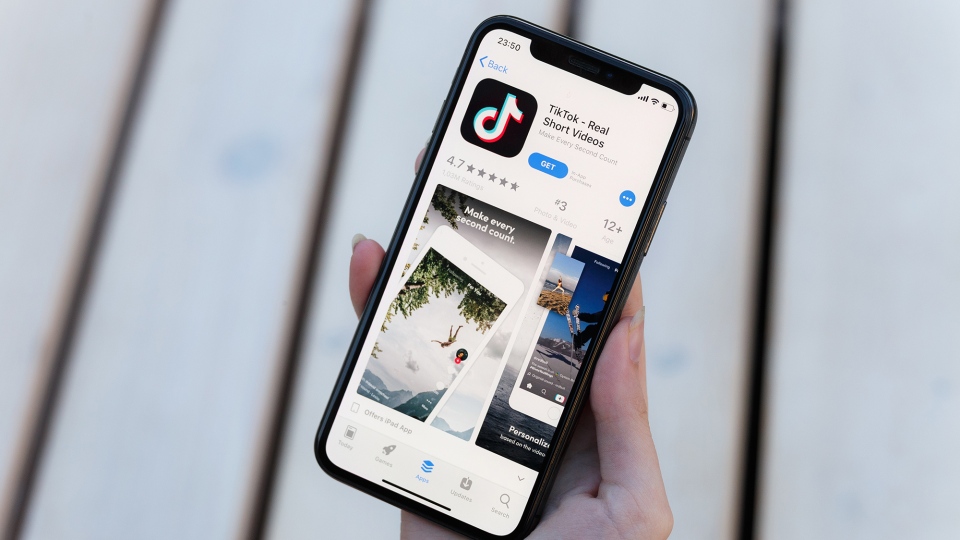
TikTok launched three years ago and now boasts 100 million users worldwide who upload short, catchy videos.

A report earlier this year from We Are Social, a global agency that tracks social-media use, found that TikTok was the sixth most-downloaded app in Canada in 2019, but used by only nine per cent of Canadian internet users aged 16 to 64.

Trump has framed his concerns around a Chinese company having access to Americans' personal data, echoing concerns that earlier this year led a Chinese gaming company to sell Grindr, a gay dating app, to an American company for over US$600 million.

Trump's push comes amid escalating rhetoric towards Beijing over trade and the novel coronavirus pandemic.

"The recent TikTok developments in the U.S. appear to be driven far more by politics than policy," Geist said. "There is little difference in the data collection practices of TikTok and the large U.S. social-media companies."

A decision late last month from the Court of Justice of the European Union highlighted what it saw as the inadequacy of U.S. privacy laws, saying the U.S. government could have unchecked access to user information through its own surveillance laws.

So while bringing TikTok's user data to U.S. servers might alleviate concerns about Chinese spying, it doesn't eliminate concerns of U.S. agencies doing the same to an American-owned platform.

"When Europe passed the strongest privacy regulation in the world, Microsoft decided to offer those protections and rights to everyone -- even though they weren't required to by law," said Lauren Reid, president of privacy consultancy The Privacy Pro.

"At the end of the day, Microsoft is a U.S. company and is subject to the U.S. government surveillance programs, which allow unchecked access to the personal information held by private companies."

On Monday, Trump told reporters he would ban TikTok in the U.S. unless Microsoft or another American company bought the app by Sept. 15, with a portion of the sale going to the U.S. treasury.

Christopher Parsons, a senior research associate at the University of Toronto's Citizen Lab, said Trump's actions to force a sale would be a fairly substantive break with the way governments ordinarily treat internet companies.

In effect, the president's actions suggest that each country should have its own branches of social media companies, Parsons said.

A question for Canadian policy-makers is what they would do if a country demanded part of a domestic tech darling -- Parsons used Ottawa-based Shopify as an example -- be hived off for similar reasons Trump has for TikTok.

"If Canada were to be involved, I think that it may be less around concerns about there being two TikToks ... and more around are these the kinds of norms we want to be propagated," he said.

This report by The Canadian Press was first published Aug. 4, 2020.

Even if there's a vaccine, pandemic may persist for years to come: Tam

Even if there's a vaccine, pandemic may persist for years to come: Tam

Rachel AielloOttawa News Bureau Online Producer

@rachaiello  Contact

Published Tuesday, August 4, 2020


Tam says feds, experts discussing COVID-19 vaccine orders amid ...

Looking inward is not the answer - Winnipeg Free Press

whats that under the chin...?


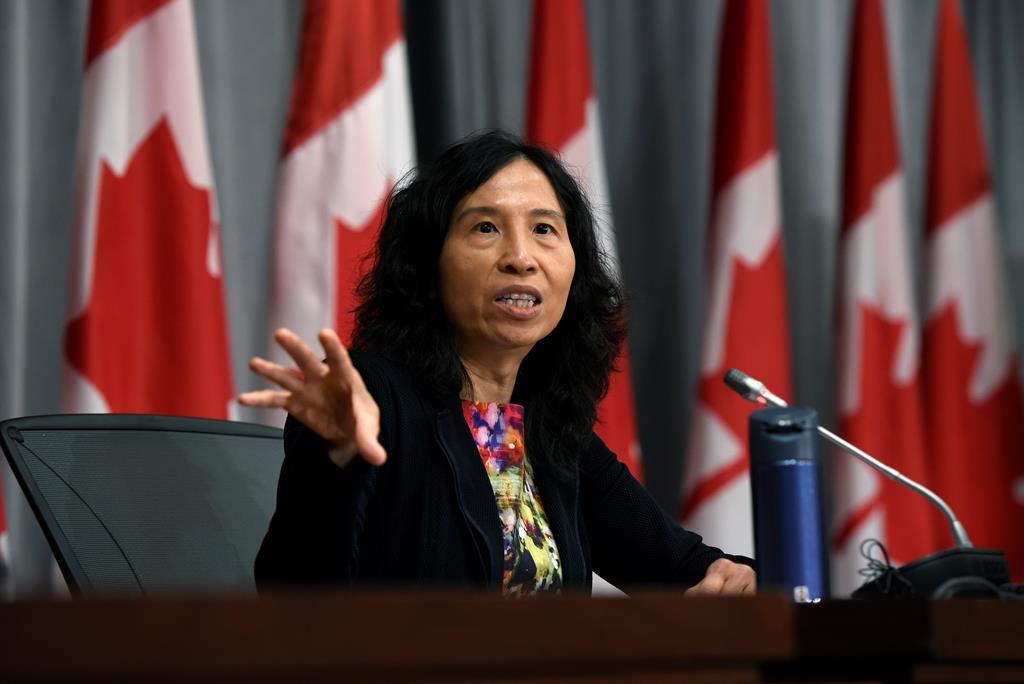
OTTAWA -- Shooting down some of the optimism around a COVID-19 vaccine being discovered spelling the end of the pandemic, Canada’s Chief Public Health Officer Dr. Theresa Tam says that vaccine or not, health officials are preparing to deal with the presence of the novel coronavirus and prevention of further spread for years to come.

While some heads of major pharmaceutical companies have said a vaccine could be ready before the end of the year, other experts have cautioned that even 2021 may be an unrealistic timetable.

Now, Canada’s leading health officials are saying even that estimate may be too optimistic.

“We're planning, as a public health community, that we're going to have to manage this pandemic certainly over the next year, but certainly it may be planning for the longer term on the next two to three years during which the vaccine may play a role. But we don't know yet,” Tam told reporters on Tuesday.

“People might think that if we get a vaccine then everything goes back to normal the way it was before. That's not the case… All of the measures we've put in place now will still have to continue with the new reality for quite some time,” Deputy Chief Public Health Officer Dr. Howard Njoo said.

“Certainly I think that we need to temper people's expectations, thinking that the vaccines can be that silver bullet that will take care of everything, and everything we've done up to now won't be necessary in the future,” said Njoo.

To be approved for use, any potential vaccine must move through a well-established testing process that involves three phases of human trials. The first and second phases focus on monitoring whether the drug produces the desired response from the human immune system. The third phase involves far more test subjects and aims to determine whether the vaccine candidate is actually able to stop the virus from infecting a body.

Several trials have already reached the third stage, and Tam said that while at that stage researchers will be able to characterize the vaccine's effects on the immune system and any potential adverse effects, there will be outstanding questions, including how long the vaccine lasts before a booster shot may be needed, and whether it actually prevents an infection or just mitigates the severity.

Tam said that while an effective vaccine would be a “very important aspect of the response,” it shouldn’t be seen as a way to end the pandemic. She said that regardless, some public health measures, such as hand-washing, will have to continue in the long-run.

There are currently 55 COVID-19 drugs, including vaccine candidates, that are currently being investigated in clinical trials authorized by Health Canada. 

The federal government is funding research and development for various options, as well as for immunity research. 

In a new Angus Reid survey, three in five Canadians who were asked said that they worry about the side effects of a potential COVID-19 vaccine, though half of respondents said they’d get a vaccine as soon as one becomes available. One in three said they would wait and see before going and getting vaccinated, citing side effects as a key concern. 

Those surveyed also acknowledged that life will not go back to normal until people are vaccinated, with the majority saying they don’t expect a vaccine to be available until 2021. One-quarter of respondents were skeptical about a vaccine being effective.

Tam said there is also the question of how quickly there will be enough of an effective vaccine to go around.

“It’s likely that there won't be enough vaccines for the population, as the vaccine rolls out. So there'll be prioritization,” she said.

In anticipation of a vaccine, the federal government has begun procuring the supplies that will be essential for “mass vaccinations”, starting with ordering enough syringes and bandages to vaccinate the majority of the Canadian population, twice.  

Sunday, August 2, 2020

China condemns Germany for suspending Hong Kong extradition agreement

China condemns Germany for suspending Hong Kong extradition agreement

China condemns Germany's Hong Kong extradition suspension - world ...

China has condemned Germany’s decision to suspend its extradition agreement with Hong Kong, accusing Berlin of a “serious breach of international law.”

Germany’s foreign minister announced the suspension Friday following the disqualification of 12 pro-democracy candidates from legislative elections and a subsequent decision to postpone the elections. Hong Kong leader Carrie Lam cited a worsening coronavirus outbreak in the semi-autonomous Chinese territory in postponing the vote.

READ MORE: 4 arrested in Hong Kong under new security law over social media posts

The Chinese Embassy in Berlin expressed “strong indignation and firm opposition to the wrong remarks of German Foreign Minister Heiko Maas” in a statement posted on its website and dated Friday.

Australia, Canada, New Zealand, the United Kingdom and the United States also have suspended their extradition treaties with Hong Kong last month after the central government in Beijing imposed a new national security law on the city. The move raised fears that Hong Kong’s freedoms and local autonomy are being taken away.

Hong Kong’s Carrie Lam delays election for 1 year, cites COVID-19 as reasoning

Germany’s Maas described the election decisions as “a further infringement of the rights of Hong Kong’s citizens.”

The Chinese Embassy said the actions were justified and consistent with the “one country, two systems” framework under which Hong Kong, a former British colony, was handed over to Chinese control in 1997.

“The German side’s erroneous remarks on Hong Kong and the suspension of the extradition treaty with Hong Kong are a serious breach of international law and basic norms governing international relations and gross violation of China’s internal affairs,” the embassy statement said. “We firmly oppose them and reserve the right to react further.”

Germany currently holds the European Union’s rotating presidency.

Pompeo says Trump to take broad action on Chinese software, including Tik Tok

Pompeo says Trump to take broad action on Chinese software, including Tik Tok


Published Sunday, August 2, 2020 
Donald Trump

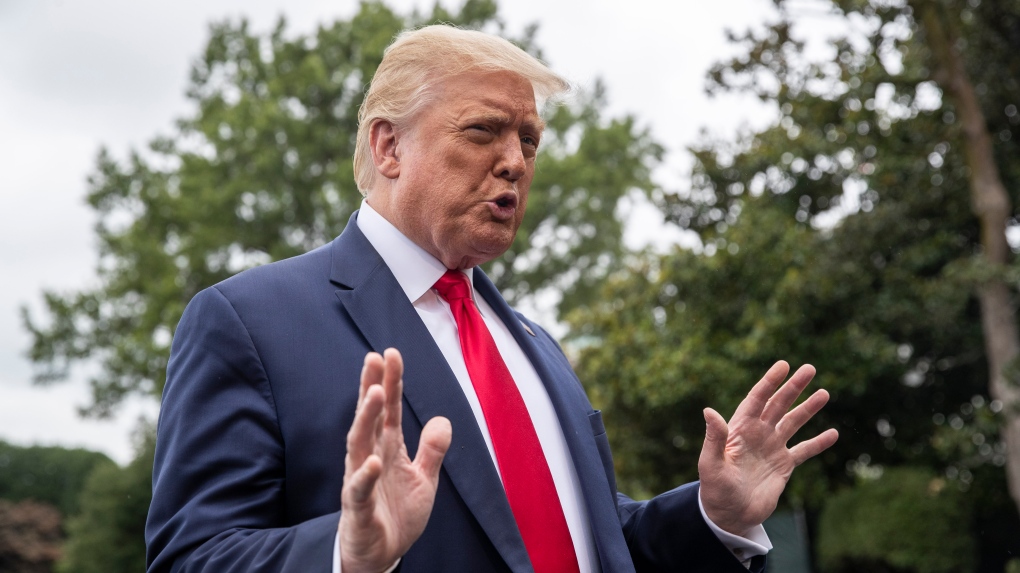
U.S. President Donald Trump speaks with reporters as he walks to Marine One on the South Lawn of the White House, Friday, July 31, 2020, in Washington. Trump is en route to Florida. (AP Photo/Alex Brandon)

NEW YORK -- U.S. President Donald Trump plans to take action on a what he sees as a broad array of national security risks presented by software connected to the Chinese Communist Party, Secretary of State Mike Pompeo said Sunday.

Pompeo's remarks followed reports that Microsoft is in advanced talks to buy the U.S. operations of TikTok, which has been a source of national security and censorship concerns for the Trump administration.

The deal would also see Microsoft own and operate the app in Canada, Australia, and New Zealand.

"These Chinese software companies doing business in the United States, whether it's TikTok or WeChat -- there are countless more ... are feeding data directly to the Chinese Communist Party, their national security apparatus," Pompeo said on Fox News Channel's "Sunday Morning Futures."

"Could be their facial recognition patterns. It could be information about their residence, their phone numbers, their friends, who they're connected to. Those -- those are the issues that President Trump has made clear we're going to take care of," he said.

TikTok's U.S. user data is stored in the U.S., with strict controls on employee access, and its biggest investors come from the U.S., the company said Sunday. "We are committed to protecting our users' privacy and safety as we continue working to bring joy to families and meaningful careers to those who create on our platform," a TikTok spokesperson said.

Trump had said on Friday that he would soon ban TikTok in the United States. A federal committee is reviewing whether that's possible, and its members agree that TikTok cannot remain in the U.S. in its current form, because it "risks sending back information on 100 million Americans," said Treasury Secretary Steven Mnuchin.

"We all agree there has to be a change ... everybody agrees it can't exist as it does," Mnuchin said Sunday on ABC's "This Week."

As speculation grew over a ban or sale of the social media's U.S. business, TikTok posted a video on Saturday saying: "We're not planning on going anywhere."

TikTok's catchy videos and ease of use has made it popular, and it says it has tens of millions of users in the U.S. and hundreds of millions globally. Its parent company, Bytedance Ltd., launched TikTok in 2017. It bought Musical.ly, a video service popular with teens in the U.S. and Europe, and combined the two. It has a similar service, Douyin, for users in China.

But TikTok's Chinese ownership has raised concern about the potential for sharing user data with Chinese officials as well as censorship of videos critical of the Chinese government. TikTok says it does not censor videos and it would not give the Chinese government access to U.S. user data.

"The President, when he makes his decision, will make sure that everything we have done drives us as close to zero risk for the American people," Pompeo said. "That's the mission set that he laid out for all of us when we get -- we began to evaluate this now several months back. We're closing in on a solution. And I think you will see the president's announcement shortly."

The debate over TikTok parallels a broader U.S. security crackdown on Chinese companies, including telecom providers Huawei and ZTE. The Trump administration has ordered that the U.S. stop buying equipment from those providers to be used in U.S. networks. Trump has also tried to steer allies away from Huawei over concerns that the Chinese government has access to its data, which Huawei denies.