Sunday, May 7, 2017

Chinese supercomputers threaten U.S. security

Chinese supercomputers threaten U.S. security


 - - Wednesday, May 3, 2017
Related image
China is eclipsing the United States in developing high-speed supercomputers used to build advanced weapons, and the loss of American leadership in the field poses a threat to U.S. national security.
That’s the conclusion of a recent joint National Security Agency-Energy Department study, based on an assessment of China’s new supercomputer called the TaihuLight.
“National security requires the best computing available, and loss of leadership in [high-performance computing] will severely compromise our national security,” the report warns.
Supercomputers play a “vital role” in the design, development and analysis of almost all modern weapons systems, including nuclear weapons, cyberwarfare capabilities, ships, aircraft, communications security, missile defense, precision-strike capabilities and hypersonic weapons, the report said.
China is rapidly developing hypersonic strike missiles that can deliver conventional and nuclear payloads by maneuvering past advanced missile defenses.
“Loss of leadership in [high-performance computing] could significantly reduce the U.S. nuclear deterrence and the sophistication of our future weapons systems,” the report says.
“Conversely, if China fields a weapons system with new capabilities based on superior [high-performance computing], and the U.S. cannot accurately estimate its true capabilities, there is a serious possibility of over- or underestimating the threat.
A copy of the 18-page report, “U.S. Leadership in High Performance Computing (HPC): A Report from the NSA-DOE Technical Meeting on High Performance Computing,” dated Dec. 1, has been obtained by Inside the Ring.
Chinese supremacy in computer capabilities also could produce distortions in allocating defense funds for U.S. research and development, and strategic policymaking and result in “incorrect responses to world events,” the report said.
Currently, the United States has a cost-effective supercomputer capability. But loss of U.S. leadership in the field would result in acquisition of supercomputers in ways similar to Pentagon acquisition of aircraft carriers — at vastly increased costs.
For industrial applications, if the United States were to become reliant on Chinese supercomputers, it “could threaten the loss of intellectual property and competitive edge.”
“Personal email and private information, social networks and the emerging Internet of Things are all subject to even greater privacy risks if offshore entities have superior HPC analytics or control the data/information markets,” the report said.
The report called for a surge in U.S. government investment and action in supercomputing, including the priorities outlined in the 2016 National Strategic Computing Initiative Plan.
Energy Department national laboratories and the Intelligence Advanced Research Projects Activity are working on cutting-edge supercomputers.
The study was based on a two-day conference in September of some 60 experts, including 40 from U.S. government agencies, 10 from the technology industry and 10 from academia and other organizations.
PENTAGON LATE WITH HYBRID WARFARE STUDY
The Pentagon is two years late in supplying Congress with a study on new strategies for countering unconventional warfare threats posed by Russia, China, Iran and North Korea.
Rep. Elise M. Stefanik, chairwoman of the House Armed Services subcommittee on emerging threats, pressed a senior Pentagon official on the subject during a hearing Tuesday. The study was required in 2015 legislation.
“This strategy, which is now almost two years late, ultimately can help provide a way to ensure that our ends, ways and means are aligned to help counter these unconventional threats,” said Ms. Stefanik, New York Republican.
Unconventional warfare is the use of nonkinetic warfare capabilities ranging from cyber and electronic attacks to “influence operations” using political, media and legal means.
In response, Theresa Whelan, assistant defense secretary for special operations and low-intensity conflict, said unconventional warfare is an emerging threat and the Pentagon is studying the issue. Ms. Whelan noted that the military’s counterterrorism mission has been the main focus of low-intensity conflict.
“We have, as a consequence, had to shift resources to focus on this and develop capabilities and knowledge bases that had, to certain extent, atrophied over the years,” she said.
“But also, because the nature of UW has fundamentally changed because of 21st-century technologies and techniques, we really in many ways have been starting from scratch. And that has been one of the challenges that we’ve faced as we dug into this over the last 18 to 24 months.”
Russia used hybrid warfare to take over Ukraine’s Crimean Peninsula in 2014 and its cyber-enabled influence operation targeting the 2016 U.S. presidential election. China has been using similar information operations in its bid to gradually take control of the South China Sea.
Examples of Iranian information operations have included cyberattacks on U.S. banks and a waterway control system in upstate New York.
North Korea has used extensive cyberattacks to achieve objectives — including the cyberattack on Sony Picture Entertainment and cyberattacks on banks in Asia that netted the regime in Pyongyang tens of million of dollars.
The Pentagon is working with other U.S. government agencies to deal with what Ms. Whalen called “multiple threats” from foreign information operations.
Georgetown University has conducted a study for the Pentagon that found that America’s adversaries are “focusing on the seams between our organizational entities and trying to exploit those seams and decision-making cycles in order to gain advantage on us in the space that essentially is below conventional war — the space that we now refer to as the gray zone or hybrid warfare,” Ms. Whalen said.
Two research projects are underway on the topic of unconventional warfare, one at Johns Hopkins University on Russian hybrid warfare, and a Pentagon research effort to develop predictive analytic technologies.
The technologies “will help us identify when countries are utilizing unconventional warfare techniques at levels essentially below our normal observation thresholds,” Ms. Whalen said.
After the Russia unconventional warfare strategy is completed, the Pentagon will look at Chinese and Iranian unconventional warfare threats, she added. “This continues to be an evolving threat.”
REPORT CALLS FOR DEFEATING JIHADIS ONLINE
The global Islamic terrorist movement could not function without the internet and defeating terrorism online is possible, according to a report by the Middle East Research Institute (MEMRI).
“Jihadi organizations used the web to recruit supporters and fighters, provide practical instruction and manuals for terror operations including car bomb and ramming attacks, make arch-terrorists into heroic models for emulation, and raise funds for their activity,” the report says. “The internet provided them with an ideal vehicle for spreading their ideas, even to young children.”
Recently, social media companies have begun to lose advertising revenue as a result of hateful content on their sites. Companies including Johnson & Johnson, Toyota, General Motors, Wal-Mart, AT&T and HSBC have pulled ads to protest terrorist videos, the report said.
Governments also are pressuring media to remove hateful speech, and families have begun to sue internet companies for carrying content that incited and radicalized terrorists who killed relatives.
The MEMRI report said the measures are good first steps but that more needs to be done. The internet should be purged of jihadi propaganda and incitement content through financial investments, and new technologies could identify and remove jihadi material.

“Purging the internet of jihadi content can deal with terrorism at its source, and can have an immediate impact on recruitment, indoctrination and training of terrorists,” the report said. “This will significantly reduce the threat which will, in turn, enable Western democracies to reduce the degree of infringement upon our liberties, freedoms and daily life.”

Saturday, May 6, 2017

Arizona woman finds note from ‘Chinese prisoner’ in Walmart purse

Arizona woman finds note from ‘Chinese prisoner’ in Walmart purse


An Arizona woman made a harrowing discovery when she opened the zipper pouch of a purse she purchased from Walmart — what appeared to be a note written by a stricken Chinese prison labourer.


Christel Wallace of Sierra Vista, Arizona found the note in the purse she bought for her daughter-in-law Laura Wallace, KVOA reports.
The note, which Laura shared on Facebook, claims to be a cry for help from an inmate languishing in Yingshan Prison in Guangxi, China, according to this translation provided by the Huffington Post:
 “Inmates in the Yingshan Prison in Guangxi, China are working 14 hours daily with no break/rest at noon, continue working overtime until 12 midnight, and whoever doesn’t finish his work will be beaten. Their meals are without oil and salt.

Every month, the boss pays the inmate 2000 yuan [about $290], any additional dishes will be finished by the police.
If the inmates are sick and need medicine, the cost will be deducted from the salary.
Being a prisoner in China is even worse than being a horse, cow, sheep, pig or dog in the U.S.”
The authenticity of the note hasn’t been verified.
Walmart’s supplier standards state that all labour involved in producing and supplying products for sale at its stores must be voluntary.
A spokesperson told KVOA that the retail giant is unable to comment on the note “because we have no way to verify the origin of the letter.”
Laura Wallace told KVOA that she hopes the note will help raise awareness about working conditions in penal labour camps.
“I don’t want this to be an attack on any store… That’s not the answer,” she said.
“This is happening at all kinds of places and people just probably don’t know.”

How the Courtship of China’s Princelings Made Vancouver> Canada’s Unhappiest City

How the Courtship of China’s Princelings Made Vancouver> Canada’s Unhappiest City

Terry Glavin, National PostOttawa Citizen, April 22, 2015.
Ian Young, Vancouver correspondent for the South China Morning Post, has been almost alone in chasing down the immigrant investor scandal.
If the Economist Intelligence Unit’s annual top-ten world cities rankings are what you’ve been relying on you probably weren’t surprised last month when the global human resources outfit Mercer tagged Vancouver on its Quality of Living index as the best city in North America. But you might have been surprised this week when Statistics Canada released a study showing that by a variety of indices, Vancouverites are the unhappiest people in Canada, falling dead last among 33 cities across the country on the happiness scale.
We like to think of Lotusland’s grand metropolis as a place where people ski, sail, ride their bikes, swim, and hike though lush rainforests, all in the same day. But StatsCan’s annual survey of median household income in Canadian cities routinely puts Vancouver close to the bottom of the heap on that same list of 33 cities, and in January the Demographia International research institute ranked Vancouver second to last in a global survey of 378 cities on its Housing Affordability Survey.
Vancouver’s median household income in 2014 was $66,400, while the city’s median home price was 10.6 times higher: $704,800. Only Hong Kong fared worse, and just barely. Hong Kong also tops Vancouver, again only barely, as the property investment bolt-hole most favoured by Mainland China’s loot-laden millionaires. For years, we’ve been instructed to pretend that this is somehow mere coincidence. You can’t get away with talking to Hong Kongers like that, but Vancouverites take it sitting down.
In happier places like Saguenay, Sudbury and Thunder Bay, there’s manufacturing, dairy farming, forestry and mining, and there’s a high degree of neighborliness and civility. But Vancouverites make most of their money from increases in the real estate value of whatever property they might be lucky to own. This tends to skew any real sense of hometown belonging, and nothing so rattles the cages as loose talk about the elaborate, federally-sanctioned swindle that has been keeping the bubble inflated all these years.
It began back in 1986. London and Beijing had just concluded terms for the 1997 handover of Hong Kong to Chinese rule, and in Ottawa Brian Mulroney’s Conservatives turned their thoughts to finding some Canadian advantage. The hustle that Canada settled on was a scheme to lure skittish Hong Kong capital to Canada. Under Mulroney’s Liberal successors, the Immigrant Investor Program degenerated into an outrageous passport-printing racket. By the time Stephen Harper’s Conservatives were settling into their majority in 2011, there were 300,000 Canadian passport holders in Hong Kong and another 20,000 or so in Mainland China.
During the 21st century’s first decade, more than 18,000 Chinese state-enterprise executives were busted for siphoning money out of China in fake joint ventures, underground money shops masquerading as overseas-study agencies, phony service gambits and dummy offshore subsidiary accounts. The People’s Bank of China reckons that $126 billion was pilfered in these ways during that decade, and Canadian real estate, especially property in Metro Vancouver, was one of the main places the money was ending up.
Thus the unhappiness, all occurring right under Parliament’s nose. To give you a sense of how absurdly the taboo had throttled Canadian debates it’s instructive to recall the rubbish that was uttered when Harper finally got around to shutting it all down last year with a resolve to start from scratch. Vancouver MP Don Davies, the New Democrats’ international trade critic, accused the government of “damaging Canada’s economy and trade relationships.” Then there was Liberal warhorse John McCallum (Markham—Unionville): “Are Conservatives inadvertently picking on Chinese people?”
China’s massive Operation Skynet fraud squad is now rummaging through Vancouver’s real estate industry. British Columbia’s police agencies won’t say whether they’re cooperating, but even if they were it wouldn’t be easy work. Over its final decade or so, the Immigrant Investor Program drew more than 30,000 Chinese millionaires to British Columbia.
Just one of the unseemly costs of Ottawa’s wheel-greasing for Beijing’s princelings is a sum that might well amount to billions of dollars in no-interest loans that should have gone to British Columbia’s provincial treasury. Instead, the money got spent on thousands of back-door keys the Canada-Quebec Accord made available with a wink and a nod to Chinese millionaires bound for Vancouver, in transit through Montreal.
Contrast that with the marquee billing given to the gluttonous wastrel Mike Duffy, a senator facing criminal charges that may or may not involve the prime minister’s former chief of staff having improperly repaid the federal treasury for travel and living expenses that Duffy may or may not have improperly billed the taxpayer, to the amount of $90,000. It’s a gripping yarn and dozens of journalists are on the story, but it says something unflattering all round that what we know now about Canada’s immigrant-investor courtship of Beijing’s princelings is mainly due to the courage and persistence of a single reporter.
Ian Young, Vancouver correspondent for the South China Morning Post, has been almost alone in chasing down the immigrant investor scandal. It was Young who recently ferreted out the data demonstrating that Canada’s investor class immigrants, about 80 per cent of whom are Chinese millionaires, appear to have contributed less to the federal treasury over the past quarter of a century in tax on earnings than the bedraggled refugees Canada admitted over that period.
Nobody seems to even know where all these bigshot investors have gone. Surveys by the China Merchants Bank show that nearly a quarter of Mainland China’s millionaires had already emigrated by 2013, but vacancy rates in Vancouver’s posh new condo districts are perhaps 30 per cent. The city doesn’t keep track, but University of British Columbia geography professor David Ley has been tracing the relationship between the rise in Vancouver residential property prices and the influx of immigrant investors over the years. The lines run in direct lockstep.
Last year, Macdonald Realty opened an office in Shanghai to directly market to Chinese buyers after finding that a third of its Vancouver house sales for the year had gone to buyers with “mainland Chinese names.” Ian Young reckons that in dollar terms, nearly half of Vancouver’s detached housing market in 2014 probably went to Mainland Chinese buyers.
But the debate about these things has been so “suppressed,” to borrow Professor Ley’s term, that the subject barely came up during last year’s Vancouver civic elections. Given Vancouver’s first-place finish this week in StatsCan’s Unhappy City sweepstakes, it now seems awkward to mention that Vancouver Mayor Gregor Robertson, before he got into politics, was most famous for having co-founded the Happy Planet Fruit Juice Company. In any case, Roberts was handily re-elected last November.
Among the accomplishments that put Robertson back in the mayor’s chair was his “green demolition bylaw.” Vancouver’s weirdly overheated property market has caused vulgar palaces to pop up in all the neighbourhoods where the city’s grand old houses used to be. The bylaw requires the recycling of up to 90 per cent of the demolition material from the city’ s old “character homes.”
I suppose Vancouverites can be happy at least about that.

Reaping the whirlwind of our unseemly intimacies in Beijing

Reaping the whirlwind of our unseemly intimacies in Beijing

Terry Glavin, National PostOttawa Citizen, April 30, 2015.
As China continues its rapid descent into police state repression and President Xi Jinping’s ruling Communist Party faction tightens its increasingly brutal grip on the country, the bill for all the unseemly intimacies that Ottawa has cultivated in Beijing since the days when the Liberal party ran the roost in Ottawa is coming due. It’s going to sting. The whirlwind is spinning suddenly, at a dizzying, nightmarish pace. The Canadian economy will take a hit, perhaps in the billions of dollars. The political fallout is going to be atrocious.
It’s not so complicated if you think of the catastrophe as a series of falling dominoes.
Image result for Bo Xilai
The first to fall was Communist Party kingpin Bo Xilai, whose last foreign-dignitary guest was Prime Minister Stephen Harper. Bo was sentenced to life in prison on bribery charges in 2013. He’d been Canada’s go-to guy in China’s ruling elite for more than a decade. Jean ChrĂ©tien, who championed Canada’s trade links to China while he was prime minister and took up the lucrative business himself immediately after leaving office in 2003, called Bo an “old friend.”
Image result for Michael Ching Mo Yeung
Michel Ching, far right
But the domino that fell just last week will have even more seismic reverberations: Michael Ching Mo Yeung, vice-president of the Canada Asia Pacific Business Association. The South China Morning Post identifies him as the person named as Cheng Muyang, a fugitive who appears on a “Most Wanted” list of 100 people Beijing’s dreaded Central Commission for Discipline Inspection published last week. Of the 100 fugitives, 26 are said to have absconded to Canada. They are now sought by Interpol on charges of money-laundering, embezzlement and other such crimes. The South China Morning Post noted in its piece about his identity that it does not have evidence of Ching’s guilt or innocence. (Ching could not be reached for an interview for this piece.)
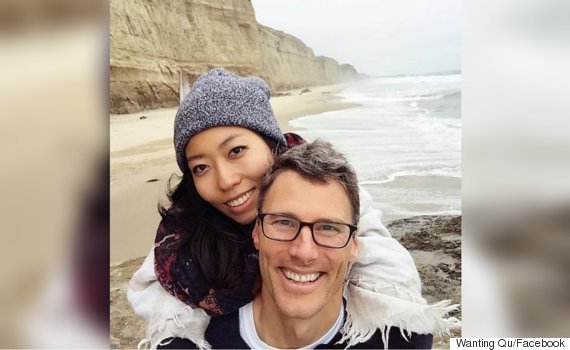
Beijing’s “Most Wanted 100″ is the most audacious move to date in its Operation Skynet effort, which is what you get when you combine a fraud squad with an old-style Stalinist purge and a cunning geopolitical muscle-flexing shakedown. Operation Skynet agents have been combing through Vancouver’s real estate transaction records in recent weeks. Within hours of Beijing’s Most Wanted list making the rounds, police in Harbin, the capital of China’s Heilongjiang province, arrested and jailed Qu Zhang Mingjie, a local Communist Party official. Qu is the mother of the woman Vancouver Mayor Gregor Robertson calls his sweetheart, the pop star Wanting Qu, formerly Tourism Vancouver’s “ambassador” to China.
Image result for Qu Zhang Mingjie
There are quite a few wobbly dominoes involved in all this. Last year, when Ottawa finally pulled the plug on the scandal-riddled Immigrant Investor Program, there were nearly 46,000 Chinese millionaires on the IIP waiting list, hoping to make their way to Canada. In the four years leading up to 2012, when Canada stopped taking IIP applications, permanent-residency certificates had been issued by Ottawa (and by Quebec under the Canada-Quebec Accord) to more than 50,000 investor-class immigrants, the overwhelming majority from China. To give you an idea of just how heavy the traffic was, the United States had admitted fewer than 9,000 investor immigrants over the same period.
Beijing says the IIP was one of the main conduits used by corrupt officials to abscond with an amount of loot that Washington’s Global Financial Integrity agency estimates at $1.25 trillion during the decade preceding the 2012 IIP hiatus. Beijing is finally tightening the noose around Canada’s neck, and it’s going to cost us all dearly, Christine Duhaime, a Bay Street specialist in international money laundering and counter-terrorist financing, told me this week.
“China is going to want to get it all back. This is not a casual exercise. This is an active recovery operation, and all that money is going to be removed back to China,” Duhaime said. “In Canada, it’s in the billions. I’m sure it’s in the tens of billions. This is a major monetary drain on the Canadian economy. The whole thing is being driven by China now. It should have been driven by us.
You won’t hear a lot of cabinet-level noise about this in Ottawa. Over the past three years, Canada has helpfully deported roughly 1,800 people to China, and the plan now is all about cutting Canada’s losses. Last December, Guy Saint-Jacques, Canada’s ambassador in Beijing, told the official China Daily that Canada was on the verge of ratifying a 2013 deal then Foreign Minister John Baird inked that would help Beijing recover the loot its officials have spirited out of the country, in exchange for a cut of the proceeds.
Image result for Guy Saint-Jacques, Canada’s ambassador in Beijing
Guy Saint-Jacques, far right
“I don’t know why we agreed to this,” Brock University professor Charles Burton, a China specialist and former diplomat in Beijing, told me. Dazzled by the promise of riches in China, Canada’s politicians have finally been backed into a corner. Even if Canada can secure a piece of the forfeited-assets pie, it’s China that’s setting the rules now, and there’s no telling a fugitive from justice from some hapless apparatchik from a faction on the outs with President Xi. “We have no means to ensure due process of law or even whether the information we’re getting is valid,” Burton said.
Image result for Brock University professor Charles Burton
It’s not like we didn’t know this was coming.
Four years ago, businessmen from Mainland China, almost all of them government officials, started arriving in Canada with bags of cash. Between April 2011 and June 2012, 592 Mainland Chinese passengers arriving at Vancouver International Airport were caught with undeclared cash amounting on average to $16,700 each. At Pearson International in Toronto over that same period, 79 Mainland Chinese and 10 Hong Kong arrivals were caught with $1.8 million in undeclared cash.
China restricts private citizens from taking out more than $50,000 per individual per year.
“We knew this was illegal,” Duhaime said. “We did nothing to stop it.” Canada has shut down the Immigrant Investor Program, but the small pilot project set up in its place – a test run of 50 spots available to applicants meeting tough new disclosure rules – is still full of holes, Duhaime said. “We need to stop it now. It doesn’t come close to meeting financial crime standards. If it were up to me, I’d be on this first thing tomorrow morning at 8 o’clock.”

The questions Ottawa doesn’t want us asking about rotten yuan in Canadian real estate

The questions Ottawa doesn’t want us asking about rotten yuan in Canadian real estate

National Post, Ottawa Citizen, May 6, 2015.
There are quite a few things that Foreign Affairs Minister Rob Nicholson and Public Safety Minister Steven Blaney would rather not discuss about their government’s role in the handling of tens of thousands of jet-setting Chinese multimillionaires and the dilemma of dealing with the Beijing regime’s increasingly long-armed, vindictive and ferocious police-state apparatus. There is an election coming up, after all. The opposition parties, too, have their own reasons for wishing it would all just go away.
Billions of dollars in rotten yuan got stashed away in Canadian real estate. Now, President Xi is determined to get as much of that money back as he can and to muscle Canada into handing over the culprits.
But it won’t, at least not for a growing number of wage-earning Canadians. The Canadian housing market is overvalued by 35 per cent compared to Canadian incomes, and 89 per cent compared to rents. Chinese money, of the hot and cold type as well as the clean and dirty variety, is no minor factor in the calamity. In Vancouver, as much as half the dollar value of detached housing sales went to Mainland Chinese buyers last year. Most of the $3 billion poured into the purchase of west-side Vancouver properties last year originated in China, a reflection of the spike in Chinese money that has entered Canada since China’s ruthless Xi Jinping took charge three years ago.
There is also the predicament of all those voters who have mortgaged themselves to the hilt on the bet that their houses are going to continue to rise in market value. “The Conservatives want all of this to go away and not be noticed, and not just the Conservatives, either. Nobody wants to say anything that might cause the property bubble to deflate a bit, certainly not before the election,” the veteran diplomat Martin Collacott told me the other day. A former Foreign Affairs director-general for security services and a Chinese-speaking negotiator in the lead-up to Canada’s diplomatic recognition of China in 1970, Collacott says Beijing has got us all over a barrel.
The case of Vancouver property developer Michael Ching isn’t helping to quieten things down. Ching is either some sort of embezzler and a fugitive from justice back in China, or an upstanding would-be Canadian citizen of nearly 20 unblemished years’ standing who deserves the asylum he’s seeking here. The latest developments in Ching’s story reveal him as a person of lavish generosity in his political contributions, especially to Liberal party accounts, and his daughter has turned out to be none other than Linda Ching, president of the Liberals’ youth wing in British Columbia.
Political hay is not easy to make of any of this.
A lot of it is bound up in the Immigrant Investor Program, a racket championed by the previous Liberal government but avoided by the New Democratic Party for reasons arising largely from twitchiness about insinuations of “Sinophobia” and a bias against foreign investment. Before the scheme was shut down last year, the Conservative government had issued permanent-residency certificates to more than 50,000 investor-class immigrants, mostly from China.
These people were by no means all crooks. But the IIP was a busy conduit that allowed Canada to become a robber’s roost for various kinds of swindlers and corrupt officials from China. Billions of dollars in rotten yuan got stashed away in Canadian real estate. Now, President Xi is determined to get as much of that money back as he can and to muscle Canada into handing over the culprits who have been absconding with all the loot.
Ottawa is unlikely to respond by giving Beijing any backchat. Three years ago, after Prime Minister Stephen Harper declared that CNOOC’s $15 billion Nexen purchase was going to be China’s last big oil-patch hurrah, Beijing put the screws to us. Within 12 months, Chinese investment in Canada dropped from $21.5 billion to roughly $220 million. So, this time around, Ottawa appears to be telling Beijing that Canada will play along. We’ll just want a cut of the proceeds, is all — and we’ll throw in any scoundrels that Beijing wants, too — but we just need to deal with this cultural pastime known as a federal election, first.
But how much money are we really talking about here? How much should be expected to drain out of the Canadian economy if we cut a deal with Beijing? How much of it is really stolen money?
We already know that President Xi’s own family amassed a fortune of about $400 million in tandem with his rise to power. His regime’s anti-corruption drive is intricately bound up in a purge of out-crowd party bigshots and a rapid retrenchment in Central Committee power consolidation and general repression. By what standards of evidence will Canada be sending President Xi’s enemies back to the farce of his regime’s judicial system?
Last December, Canada’s ambassador to China, Guy Saint-Jacques, told the China Daily that Beijing and Ottawa were enjoying “good collaboration,” and that Canada had returned more than 1,200 people to China during the previous three years, including more than 60 who were sought in China for criminal reasons. Really? So Canadian law-enforcement agencies are already collaborating with Beijing? We’ve already started sending these alleged looters back?
What Public Safety Minister Steve Blaney’s office has told me is that 1,838 Chinese nationals were returned to China in the four years leading up to December 2014. Almost all of them were found to be in non-compliance with Canada’s immigration laws — which can mean any number of things, including failed refugee claims, overstays and working without a proper permit. But 80 were sent back for “misrepresentation,” and 81 were sent back because they committed serious crimes or were involved in organized crime. Were these alleged crimes committed in Canada or in China? I got no answer.
What about safeguards to ensure that people wanted in China on criminal charges are guaranteed due process of law? “Pre-removal risk assessment is one of the safeguards in place to ensure people in need of protection are not removed,” I was told, but this is a cruel joke, human rights lawyer David Matas tells me.
“China tells the Canadian Border Services Agency that somebody is corrupt, and the CBSA takes it as 100 per cent gospel, as reasonable grounds to believe. The government in China concocts a theory, scoops up the target’s friends and relatives, then they torture, they fabricate evidence, and we take the allegations at face value,” says Matas, who also happens to be Ching’s counsel in his continuing refugee-status fight. Matas says he’s handled at least 20 such cases in recent years. “That’s what I see in case after case.”
Ottawa requires commitments that returned Chinese nationals won’t be executed for whatever crime they are supposed to have committed, but beyond that there is only the cockeyed and hollow 1994 Canada-China Mutual Legal Assistance in Criminal Matters treaty. China wants a formal extradition treaty with Canada, but that looks like a bridge too far, so President Xi is eager to clinch a deal with Ottawa through the Sharing of Forfeited Assets and the Return of Property deal that John Baird initialled when he was foreign minister in 2013.
“The government of Canada is committed to working as expeditiously as possible to sign this agreement,” Caitlin Workman, spokesperson for Foreign Affairs Minister Rob Nicholson, told me this week. “While Canada remains determined to sign the agreement, it is premature to set a precise date.”
Which is to say that Ottawa will want the federal election done and over with before ratifying the thing, and so long as neither the Liberals nor the NDP make a big deal of it, all the better, too.

Canadian citizen detained in Beijing locked in room as punishment

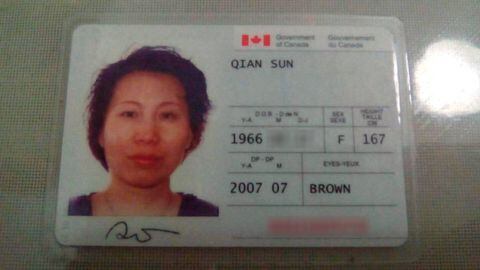
Sun Qian is a Canadian citizen who has been detained in Beijing for more than 2 1/2 months after being arrested in February.
A Canadian citizen being held against her will in a Beijing detention centre since February was from time to time locked in a small darkened room as punishment early in her incarceration, her lawyer says.
Sun Qian, 51, a follower of the Falun Gong spiritual movement, which is banned in mainland China, was taken from her Beijing residence on Feb. 19 by police. Officers searched her house. She is being held on suspicion of "sabotaging law enforcement … using cult organizations," a common charge the Chinese state levies against Falun Gong adherents.
Chinese authorities have persecuted the spiritual movement's members there since 1999.
Globe editorial: China must end its cruel detainment of government critics
During the first few weeks of her detention, Ms. Sun was shut in a small darkened room as punishment for repeating Falun Gong slogans, lawyer Guo Haiyue said. He said this practice stopped after the Canadian embassy became involved, but could not say precisely when that was.
Mr. Guo said authorities have tried to question Ms. Sun, but she has resisted, admitting only that she is a Falun Gong follower.
Li Xun, president of the Falun Dafa Association in Canada, said detainees are locked in darkened rooms to intimidate them and make them feel isolated. "Some people cannot sustain that psychologically," he said.
The Trudeau government told the House of Commons on Thursday it is "seized by this particular matter" after the Sun case was raised by Conservative foreign-affairs critic Peter Kent, who had questioned why the Liberals were not speaking out publicly against the detention.
Omar Alghabra, a parliamentary secretary to the Minister of Foreign Affairs, specializing in consular affairs, told the Commons the Liberal government has not shied away from defending Ms. Sun. "A Canadian is a Canadian is a Canadian," he said.
A department of Global Affairs spokeswoman added that Canadian consular officials "are in contact with local authorities to gather additional information and closely monitor this case."
Ms. Sun was born in China and obtained Canadian citizenship in 2007. Her mother said she established a biochemical firm based in Beijing called Beijing Leadman Biochemistry Co.
The Chinese embassy in Canada said it was not able to provide any information about Ms. Sun. Spokesman Yang Yundong insisted that "China is a nation with rule of law and China's judicial departments handle cases strictly according to law."
Falun Dafa's Mr. Li disputed that, calling the detention of Ms. Sun illegal.
Ms. Sun's mother, Li Yunxiu, in an open letter provided to The Globe by the detained woman's lawyer, said her daughter was drawn to Falun Gong in 2014 after she returned to her hometown for Chinese New Year.
Earlier this week, the Chinese embassy attacked Falun Gong in a statement when asked about the case, calling it an "evil cult" – a charge that Falun Dafa has likened to hate speech.
Amnesty International Canada spokesman Jacob Kuehn said the persecution of Falun Gong practitioners in China is of "tremendously grave concern" to human-rights advocates.
"The extraordinary levels of persecution and human-rights violations confronted by practitioners is extensive, including arbitrary detention, unfair trials, torture and execution," Mr. Kuehn said.
"Amnesty International has documented numerous deaths in custody, believed to have been caused by torture and other ill-treatment, as well as cases where practitioners have been afflicted with permanent disability following detention."
Falun Gong emerged in China in the early 1990s as an exercise discipline focusing on meditation. It was soon seen as a threat, prompting a crackdown by the Chinese government. In 1999, authorities harshly suppressed the popular movement when some 10,000 practitioners gathered to protest outside Beijing's elite leadership compound.
Another Chinese-Canadian, billionaire Xiao Jianhua, mysteriously disappeared Jan. 27 from Hong Kong's Four Seasons Hotel and has been detained on the Chinese mainland. Chinese political analysts think Mr. Xiao was wanted by President Xi Jinping and supporters because they believe he possesses incriminating evidence against political enemies of Mr. Xi.