China Uses Geoengineering to Pursue a Hybrid Warfare Strategy
China’s growing ability to alter and manipulate the physical environment will advance its geopolitical ambitions.

July 12 2021
Geography plays a critical role in shaping the politics of a region. The uneven distribution of natural resources at times influences the regional political landscape enormously. But to a greater extent than ever before, these natural resources can be tweaked as per a country’s requirements over the near to medium term through various techniques of geoengineering.
Geoengineering refers to the large-scale manipulation of a specific process central to controlling and channeling the earth’s resources, such as those of the oceans, rivers, atmosphere and earthquakes. These techniques are undergoing rapid development partly to achieve sustainable development in the fields of agriculture, water resource management, energy generation, navigation and connectivity. Unfortunately, the use of these geoengineering techniques is not limited to such noble objectives; they are also being harnessed to dominate and subjugate other nations.
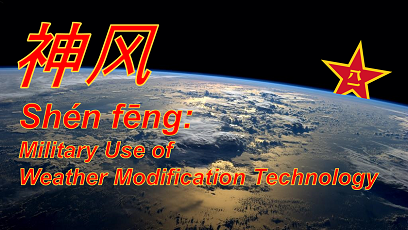
China has adopted a strategy of hybrid warfare against countries that it considers hostile or potentially hostile. Geoengineering has the potential to become a game-changing tool for Beijing’s implementation of a hybrid warfare strategy, especially in China’s neighborhood. Various geoengineering techniques could amplify China’s grey zone capabilities in a given theater and shape its future strategy in regional geopolitics. There are three main geoengineering techniques that have bolstered China’s or hybrid warfare capabilities.
Weather Modification
According to a statement from China’s State Council, the country is committed to bringing about 5.5 million square kilometers of its land area under its weather modification program by 2025. Much of this involves the process of “cloud seeding.” China claims to have developed this technology to increase agricultural productivity and prevent natural disasters such as droughts and floods. However, the impact of cloud seeding can be seen beyond China’s borders, as it may disrupt the normal monsoon in neighboring countries such as India, Myanmar, Vietnam, etc. This would have an adverse impact on the agriculture in these countries, rising potentially to a form of “rain stealing.”
Weather medication may also be used to sabotage troop movements and logistics operations by artificially altering the rainy conditions, which would slow down the tactical movement of the adversary on a real-time basis, flooding for example.
River Water Obstruction
China has the advantage of being an upper riparian state for two major transboundary rivers, the Brahmaputra and the Mekong. These rivers affect the livelihoods of millions of people in South Asia and Southeast Asia, respectively. They not only provide freshwater for fisheries and agriculture but also help to bolster navigation and tourism in countries such as India, Thailand, Laos, Cambodia, and Vietnam.
China has constructed many large-scale reservoirs on the upper reaches of both rivers, with large capacities for water storage and power generation. The ability to control the water flow gives China a strategic advantage over the lower riparian countries. The sudden flow of large amounts of stored river water has the potential to massively flood the lower riparian countries, destroying their livelihoods and food security.
Construction of Artificial Islands
The South China Sea has been a subject of tension for the past two decades, primarily because of China’s illegal claims over most of the important waterway. These claims are challenged by many countries in the region that share maritime boundaries with China, such as the Philippines, Vietnam, Brunei, Malaysia, Indonesia, and Taiwan. These countries cannot bear to lose access to their Exclusive Economic Zones, which hold large amounts of minerals and hydrocarbons. In addition, many nations are also reluctant to compromise the principle of freedom of navigation, as nearly 60 percent of the global maritime trade transits through the South China Sea.
The region’s geostrategic importance and military significance has prompted China to conduct offensive activities such as the construction of artificial islands on the reefs and other features that it controls. These artificially constructed islands are being developed as military bases for the People’s Liberation Army Navy (PLAN) under its anti-access/area denial strategy. This strategy aims at preventing any external military intervention in the disputed waters. The unhindered construction of these islands in recent years highlights Beijing’s blatant disregard for the 2016 ruling of the International Court of Justice (ICJ), which rejected China’s claims over the South China Sea. These islands undermine the autonomy of other countries to carry on legitimate maritime activities in the waterway, which today acts as a maritime buffer between the Indian and Pacific Oceans.
China’s current and potential use of geoengineering techniques to manipulate and jeopardize the rules relevant to maintaining the international order is an issue that cannot be overlooked.
Currently, there is no formal agreement or convention regarding geoengineering. Multilateral forums such as the United Nations Framework and Convention on Biological Diversity and global institutions such as the World Meteorological Organization should come up with a set of environmental standards to shape the development of geoengineering projects. A transparent mechanism for sharing data on the overall impact of geoengineering on the environment and ecology should also be institutionalized and made accessible to all the stakeholders, including governments, scientists, activists, the private sector, other nations and so on. This cannot be achieved without the unanimous support of the global community – and perhaps China’s neighbors should proactively lead the charge before war ensues.

No comments:
Post a Comment
Comments always welcome!