Keeping an eye on Communist, Totalitarian China, and its influence both globally, and we as Canadians. I have come to the opinion that we are rarely privy to truth regarding the real goal, the agenda of China, it's ambitions for Canada [including special focus on the UK, US & Australia]. No more can we trust the legacy media as there appears to be increasing censorship applied to the topic of communist China. I ask why. Here is what I find.
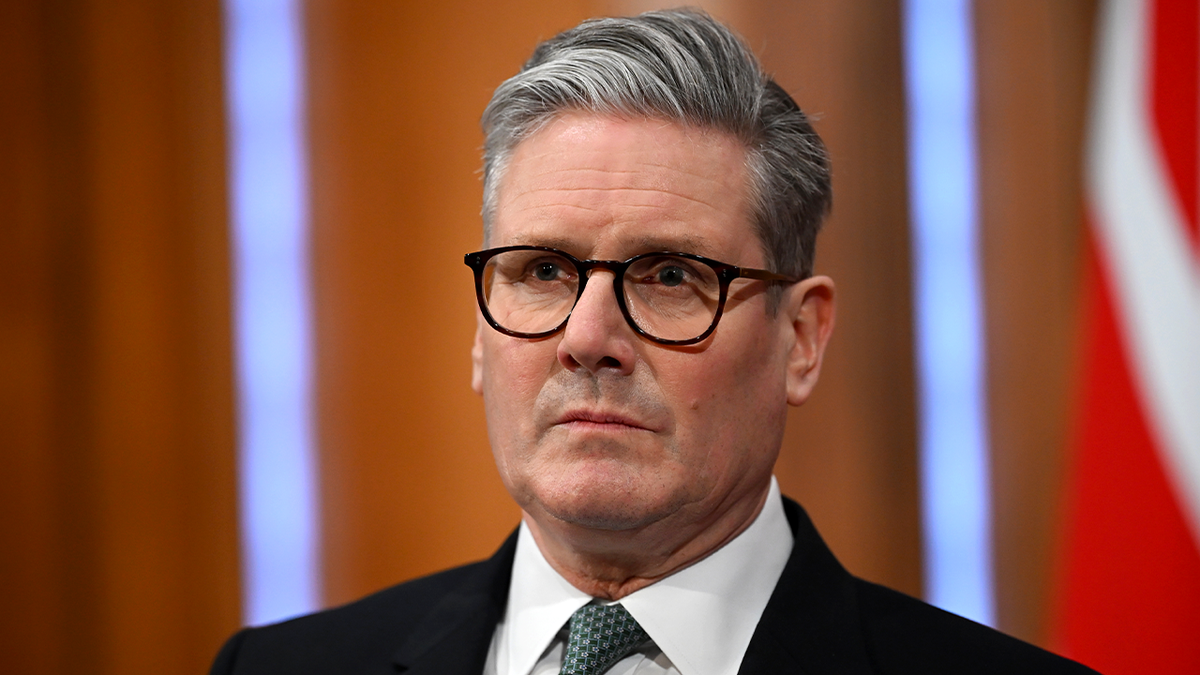
Phones Hacked For Years, British Parliamentary Figures[inc/Starmer] and #10 Downing Street
Spying operation targeted senior government members, including aides to Boris Johnson and Rishi Sunak
Jan 31 2026
China targeted the mobile phones of senior officials in Downing Street for years, it was reported on Monday night.
In a sophisticated global espionage campaign, Chinese spies are understood to have targeted the phones of close aides to Boris Johnson, Liz Truss and Rishi Sunak between 2021 and 2024.
It was suggested the spying operation may have compromised senior members of the government, exposing their private communications to Beijing.
It is unclear whether there was any attempt on the mobile phones of the prime ministers themselves, but sources claimed that China was intent on penetrating the heart of Downing Street.
On Monday night US intelligence sources said the operation, codenamed Salt Typhoon, was ongoing – raising concerns that Sir Keir and his staff may have been exposed.
In October, MI5 chief Sir Ken McCallum warned of 'escalating' state threats against Parliament, weeks before an espionage alert about Beijing's attempts to recruit officials.
Months earlier, the National Cyber Security Centre said China had been targeting critical sectors, including government, since 2021, warning 'the data stolen through this activity can ultimately provide the Chinese intelligence services the capability to identify and track targets' communications and movements worldwide'.
When the China spy case collapsed last year, it emerged that Beijing had specifically ordered reports about Boris Johnson, Rishi Sunak and Liz Truss.
Prosecutors believed sensitive information on MPs was passed on by parliamentary researcher Chris Cash, 30, to his teacher friend Chris Berry, 33. They both denied the accusations.
But the case against them collapsed when Government advisers refused to call Beijing a national security threat.
Alicia Kearns, shadow minister for national security, said: 'How much more evidence does this Government need before it ends its simpering to Xi?'
In 2024, the US revealed hacking groups linked to Beijing had gained access to telecommunications companies around the world, giving China access to the phone data of millions of people.
Anne Neuberger, who was a deputy US national security adviser at the time, said the hackers had the ability to 'record phone calls at will'.
The Telegraph claimed there were 'many' hacking attacks on the phones of Downing Street staff and across wider government, particularly during the tenure of Mr Sunak, who was prime minister from 2022 to 2024.
But it remains unclear whether the hackers were successful in obtaining any sensitive information.
A spokesman for the Chinese embassy said: 'We firmly oppose the practice of politicising cybersecurity issues or accusing other countries without evidence.'
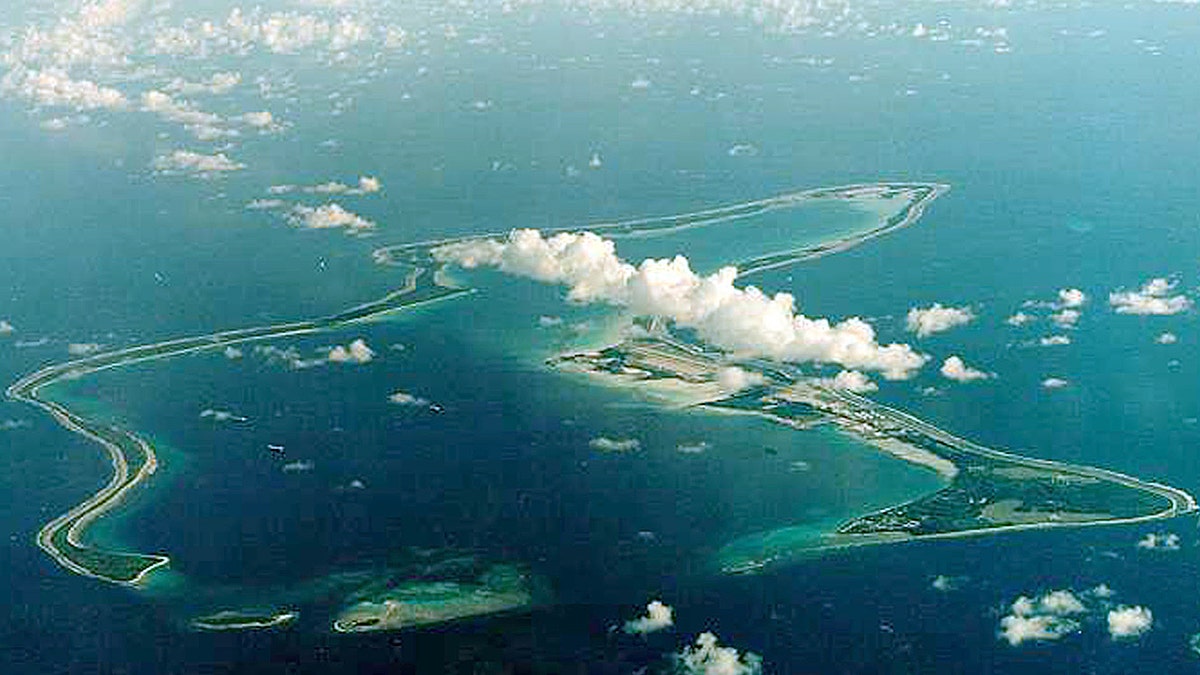
Let me be absolutely clear: the greatest strategic threat we face today is China. It is acting in open defiance of international law, militarising vital sea lanes, threatening its neighbours and preparing for blockades that would choke global trade. The Chagos Islands sit at the heart of those east–west trade routes. At a moment when China is rapidly building a navy that will soon rival the United States, this Labour Government has chosen to give up one of our most critical strategic assets. That is not realism, it is recklessness.
Handing Chagos to Mauritius, a country with close ties to Beijing, weakens our security and that of our allies. Worse still, Mauritius has made clear it will not allow nuclear weapons on the islands. Once sovereignty is transferred, that restriction applies in full. The Government’s ambiguity on this point is dangerous. The treaty is rushed, badly drafted and ignores the binding UK–US agreement that requires Chagos to remain under British sovereignty. You cannot quietly trade away a strategic base and hope no one notices.
Let me also be clear about the human cost. What was done to the Chagossians in the past was wrong, morally wrong, and we must own that. But this treaty does not put them first. I would rather do a direct deal with the Chagossians themselves: allow them to return, restore their rights, and compensate them properly under continued UK control. If we allow this surrender to go through, we will look back and know that we gave away control of one of the most critical places on earth at the very moment the free world could least afford it.
UK reopens Chagos Islands talks with US following Trump criticism of deal
Talks between the U.K. and the U.S. over the future of the Chagos Islands in the Indian Ocean have reportedly reopened after PresidentDonald Trump’s comments cast doubt over an agreement that would see Britain hand sovereignty of the strategically vital archipelago to Mauritius.
British Prime Minister Keir Starmer confirmed Wednesday that the U.K. had reopened discussions after the president had panned the deal and branded it an “act of great stupidity,” GB News reported.
“Shockingly, our ‘brilliant’ NATO Ally, the United Kingdom, is currently planning to give away the Island of Diego Garcia, the site of a vital U.S. Military Base, to Mauritius, and to do so FOR NO REASON WHATSOEVER,” Trump had posted on Truth Social. “There is no doubt that China and Russia have noticed this act of total weakness.”
He added: “The UK giving away extremely important land is an act of GREAT STUPIDITY, and is another in a very long line of National Security reasons why Greenland has to be acquired.”
The Chagos Islands were separated from Mauritius during Britain’s decolonization process, a move the International Court of Justice ruled unlawful in 2019.
The U.K. later agreed to transfer sovereignty while leasing Diego Garcia back for at least 99 years at a cost of at least $160 million annually.
Diego Garcia is a hub for long-range bombers, logistics and power projection across the Middle East, the Indo-Pacific and Africa.
Around 2,500 military and civilian personnel, mostly American, are stationed there. The base serves as a critical operation point for the U.S. and plays a central role in intelligence gathering and securing military communications.
Speaking aboard a flight to China, Starmer said he had “discussed Chagos with Donald Trump a number of times,” but declined to confirm whether the issue had been raised during a phone call between the two leaders on Sunday, The Financial Times reported.
Starmer also said the matter “has been raised with the White House at the tail end of last week, over the weekend and into the early part of this week.”
Starmer also added that when the Trump administration took office, the U.K. paused the agreement for three months to allow the U.S. time to assess the deal at the agency level.
“Once they’d done that, they were very clear in the pronouncements about the fact that they supported the deal, and there were announcements made,” he said.
A Downing Street spokesperson also confirmed London was working to “allay any concerns” in Washington, according to GB News.
“We will continue to engage with the U.S. on this important matter and the importance of the deal to secure U.S. and U.K. interests and allay any concerns, as we’ve done throughout the process,” the spokesperson said.
Trump’s comments on the Chagos deal had been welcomed by Reform UK leader Nigel Farage, who wrote on X: “Thank goodness Trump has vetoed the surrender of the Chagos islands.”
Fox News Digital has reached out to the White House and Downing Street for comment.
Labour movement ‘on the line’ because of Starmer’s catastrophic errors,the Great British Sell-Off/China
UK's weak PM walks into the Dragon, encourages firms to seize 'opportunities'
-meanwhile-
January 28, 2026
"They say that eight days is a long time in politics. Try eight years, because it's eight years since a British prime minister stepped on Chinese soil. So on this delegation you're making history," Starmer told more than 50 business leaders visting with him.
"You're part of the change that we're bringing about ... Because everything you're doing here, everything I'm doing here is focused on how do we benefit people at home," he said before meeting President Xi Jinping and Premier Li Qiang on Thursday.
The visit could mark a shift in ties between Britain and China after years of deep acrimony over Beijing's crackdown on political freedoms in Hong Kong, China's support for Russia in the Ukraine war and allegations by British security services that China regularly spies on politicians and officials.
For China, the visit offers the country a chance to portray itself as a stable and reliable partner at a time of global disorder.
TENSIONS WITH TRUMP SHADOW STARMER'S TRIP
"It doesn't make sense to stick our head in the ground and bury it in the sand when it comes to China, it's in our interests to engage," Starmer told reporters earlier.
European and other Western countries have engaged in a flurry of diplomacy with China as they hedge against unpredictability from the United States under President Donald Trump.
Britain's Prime Minister Keir Starmer receives a bouquet of flowers at an airport in Beijing, China, opens new tab
Starmer's trip follows tensions with Trump over his threats to seize Greenland, his criticism of Britain's deal to cede sovereignty of the Chagos Archipelago - including an island with a U.S.-UK air base - to Mauritius, and his comments that NATO allies avoided front-line combat during the war in Afghanistan.
On Saturday, Trump threatened to impose a 100% tariff on Canadian goods if that country's prime minister, Mark Carney, signed a trade deal with China.
The UK leader insisted Britain could continue to strengthen economic ties with China - without angering Trump - because of his country's long history of working closely with the United States.
"The relationship we have with the U.S. is one of the closest relationships we hold, on defence, security, intelligence and also on trade and lots of areas," he said.
Starmer was reluctant to be drawn on what he would discuss with Chinese leaders, or if he would bring up the fate of Jimmy Lai, the former Hong Kong media tycoon who was convicted in December of national security crimes.
He also declined to say whether he would ask China to pressure Russia to end its war against Ukraine.
Asked if Britain and China could strike a deal that would allow more visa-free travel, Starmer said he hoped to make some "progress" in that area.
He also distanced himself from comments made by Carney last week about middle countries working together to avoid being victimised by American hegemony.
"I'm a pragmatist, a British pragmatist applying common sense," Starmer said, rejecting the idea that his government must choose between the U.S. and Europe.
Serious concerns about sovereignty and security, reasons why Starmer must NOT visit China. These concerns were highlighted in Britain's parliament today, Jan 28 2026 The question remains, who does Starmer work for? For that matter who does Canada's Carney work for? We think Donald Trump knows.
Global Web of Chinese Propaganda andfunding Anarchist/ANTIFA rioters in Minnesota,Leads to U.S. Tech Mogul
The Times unraveled a financial network that stretches from Chicago to Shanghai and uses American nonprofits to push Chinese talking points worldwide.
Neville Roy Singham, right, in 2016 with the activist Jodie Evans. In 2017, they married and he sold his tech firm. Aug. 5, 2023 阅读简体中文版閱讀繁體中文版 The protest in London’s bustling Chinatown brought together a variety of activist groups to oppose a rise in anti-Asian hate crimes. So it was peculiar when a street brawl broke out among mostly ethnic Chinese demonstrators. Witnesses said the fight, in November 2021, started when men aligned with the event’s organizers, including a group called No Cold War, attacked activists supporting the democracy movement in Hong Kong. On the surface, No Cold War is a loose collective run mostly by American and British activists who say the West’s rhetoric against China has distracted from issues like climate change and racial injustice In fact, a New York Times investigation found, it is part of a lavishly funded influence campaign that defends China and pushes its propaganda. At the center is a charismatic American millionaire, Neville Roy Singham, who is known as a socialist benefactor of far-left causes. What is less known, and is hidden amid a tangle of nonprofit groups and shell companies, is that Mr. Singham works closely with the Chinese government media machine and is financing its propaganda worldwide. From a think tank in Massachusetts to an event space in Manhattan, from a political party in South Africa to news organizations in India and Brazil, The Times tracked hundreds of millions of dollars to groups linked to Mr. Singham that mix progressive advocacy with Chinese government talking points. Some, like No Cold War, popped up in recent years. Others, like the American antiwar group Code Pink, have morphed over time. Code Pink once criticized China’s rights record but now defends its internment of the predominantly Muslim Uyghurs, which human rights experts have labeled a crime against humanity. These groups are funded through American nonprofits flush with at least $275 million in donations.
But Mr. Singham, 69, himself sits in Shanghai, where one outlet in his network is co-producing a YouTube show financed in part by the city’s propaganda department. Two others areworking with a Chinese universityto “spread China’s voice to the world.” And last month, Mr. Singham joined a Communist Party workshop about promoting the party internationally.
Image
Protesters in Chinatown, London, in 2021. One of the groups that organized the protest, No Cold War, has links to Mr. Singham. Mr. Singham says he does not work at the direction of the Chinese government. But the line between him and the propaganda apparatus is so blurry that he shares office space — and his groups share staff members — with a company whose goal is to educate foreigners about “the miracles that China has created on the world stage.” Years of research have shown how disinformation, bothhomegrownandforeign-backed, influences mainstream conservative discourse. Mr. Singham’s network shows what that process looks like on the left. He and his allies are on the front line of what Communist Party officials call a “smokeless war.” Under the rule of Xi Jinping, China has expanded state media operations,teamed up with overseas outletsandcultivated foreign influencers. The goal is to disguise propaganda as independent content. Mr. Singham’s groups have produced YouTube videos that, together, racked up millions of views. They also seek to influence real-world politics by meeting with congressional aides, training politicians in Africa, running candidates in South African elections and organizing protests like the one in London that erupted into violence. The result is a seemingly organic bloom of far-left groups that echo Chinese government talking points, echo one another, and are echoed in turn by the Chinese state media. Because the network is built on the back of American nonprofit groups, tax experts said, Mr. Singham may have been eligible for tax deductions for his donations.
The Times untangled the web of charities and shell companies using nonprofit and corporate filings, internal documents and interviews with over two dozen former employees of groups linked to Mr. Singham. Some groups, including No Cold War, do not seem to exist as legal entities but are tied to the network through domain registration records and shared organizers. None of Mr. Singham’s nonprofits have registered under the Foreign Agents Registration Act, as is required of groups that seek to influence public opinion on behalf of foreign powers. That usually applies to groups taking money or orders from foreign governments. Legal experts said Mr. Singham’s network was an unusual case. Most of the groups in Mr. Singham’s network declined to answer questions from The Times. Three said they had never received money or instructions from a foreign government or political party. Speculation about Mr. Singham first emerged on Twitter among self-described anti-fascists. Reports followed in the publicationNew Linesand the South African investigative outletamaBhungane. The authorities in India raided a news organization tied to Mr. Singham during acrackdown on the press, accusing it of having ties to the Chinese government but offering no proof. The Times investigation is the first to unravel the funding and document Mr. Singham’s ties to Chinese propaganda interests. Mr. Singham did not offer substantive answers to questions about those ties. He said he abided by the tax laws in countries where he was active. “I categorically deny and repudiate any suggestion that I am a member of, work for, take orders from, or follow instructions of any political party or government or their representatives,” he wrote in an email. “I am solely guided by my beliefs, which are my long-held personal views.” Indeed, his associates say Mr. Singham has long admired Maoism, the Communist ideology that gave rise to modern China. HepraisedVenezuela under the leftist president Hugo Chávez as a “phenomenally democratic place.” And a decade before moving to China, he said the world could learn from its governing approach. The son of a leftist academic,Archibald Singham, Mr. Singham is a longtime activist who founded the Chicago-based software consultancy Thoughtworks. There, Mr. Singham came across as a charming showman who prided himself on creating an egalitarian corporate culture. He was unabashed about his politics. A former company technical director, Majdi Haroun, recalled Mr. Singham lecturing him on the Marxist revolutionary Che Guevara. Mr. Haroun said employees sometimes jokingly called each other “comrade.” In 2017, Mr. Singham married Jodie Evans, a former Democratic political adviser and the co-founder of Code Pink. The wedding, in Jamaica, was a “Who’s Who” of progressivism. Photos from the event show Amy Goodman, host of “Democracy Now!”; Ben Cohen, co-founder of Ben & Jerry’s ice cream; and V, the playwright formerly known as Eve Ensler, who wrote “The Vagina Monologues.” It was also a working event.The invitationdescribed a panel discussion called “The Future of the Left.”Bill O'Reilly is raising awareness the ICE riotsare being PAID FOR by a billionaire living in China
“Here's the most important part of this whole thing, unreported — This isn't some organic thing. This is a foreign power, Beijing, using this American citizen who lives openly in Shanghai in luxury, knowing that this man is funneling tens of millions, probably more, into this country to try to destroy the government.”
“There is a man in Shanghai, China, an American citizen. His name is Neville Roy Singham. He works with the Beijing government. He is funneling millions of dollars into the United States of America through 501s like Party for Socialism and Liberation, Democratic Socialists of America, Minnesota Immigration Rights Action Committee”
“He is funneling money here to these radical organizations who are then agitating professional people, communists mostly, because Singham is a communist — and foster rebellion”
OpEd: Carney’s plan to facilitate “two-way” media access with Beijing demands public safeguards—or it endangers sovereignty.
OTTAWA — Prime Minister Mark Carney’s January agreement to facilitate Chinese journalist access to Canada represents one of the most reckless national security decisions in recent Canadian history. The deal commits Canada to “provide mutual support and convenience for media to work in each other’s countries” through a formal agreement with China Media Group, the Communist Party’s state propaganda apparatus.
Canada is an open society. That is our strength—and, increasingly, our vulnerability.
In the current threat environment—where Canadian police have warned a federal candidate it was unsafe to campaign, where Chinese-language ecosystems have been tied to intimidation campaigns, and where Canadian intelligence reporting describes Chinese media as a central tool in Beijing’s election interference—the proposal is not merely naïve. By enlarging the very channels through which coercion, censorship, and Beijing’s vote-fixing schemes already operate, it may be recklessly dangerous.
What makes Carney’s Beijing deal indefensible is not speculation about future risks—it is what Carney already knew when he signed it.
As Prime Minister, Carney has access to classified intelligence including a June 2019 NSICOP report and a 2022 CSIS assessment that The Bureau has obtained. The Bureau has also reported on these documents during Justin Trudeau’s tenure, in reports that were not contested, and in some cases, filed as exhibits in the Hogue Inquiry into Chinese election interference.
The most dramatic illustration of the danger sits in recent parliamentary testimony and documented threats against Conservative candidate Joseph Tay. In December 2024, Hong Kong police issued a $184,000 bounty for Tay, a pro-democracy activist and Canadian citizen, under charges of “inciting secession” and “colluding with foreign forces.” What happened next should have stopped Carney’s China “reset” deal—particularly the state-level media agreements—dead in its tracks.
In January 2025, Liberal MP Paul Chiang stood before a Chinese-language media news conference and told attendees they could claim the bounty “if you bring him to Toronto’s Chinese consulate.” Chiang also warned that Tay’s election to Parliament would cause “great controversy” for Canada. When confronted, Chiang claimed he was joking and issued a perfunctory apology.
Tay rejected it, stating publicly: “Threats like these are the tradecraft of the Chinese Communist Party to interfere in Canada. They are not just aimed at me; they are intended to send a chilling signal to the entire community to force compliance with Beijing’s political goals. This situation has left me fearing for my safety.”
Carney’s response was to defend Chiang. The Prime Minister called the incident a “teachable moment,” praised Chiang’s “integrity,” and refused to remove him as the Liberal candidate in Markham-Unionville. Only after the RCMP announced it was reviewing the matter—and international Hong Kong diaspora groups mounted a pressure campaign—did Chiang resign.
But Chiang’s comments at a Chinese-language media event were not an isolated incident.
They occurred within a documented pattern of threats against Tay’s campaign that The Bureau has exclusively reported and that federal authorities have now corroborated. On April 21, 2025—one week before the election—the federal Security and Intelligence Threats to Elections (SITE) Task Force issued a public warning confirming a “transnational repression operation” targeting Tay’s campaign, featuring mock “wanted posters” and coordinated suppression efforts to curtail his online visibility across Chinese-language platforms.
But the endangerment of a Canadian election candidate via Chinese-language media channels is just the most high-profile and recent case of Beijing’s egregious abuses.
The Bureau reported in July 2023 on a high-level June 2019 NSICOP report, which can be read in its redacted form here. The unredacted and classified report, which cannot be read except in The Bureau’s reporting, states:
“PRC officials have used covert and unauthorized tactics, including unauthorized trips to Canada, threats, intimidation, harassment, arresting relatives in China as a form of leverage, paying Chinese-language journalists to locate and track individuals, and discouraging people from reporting their covert activities to Canadian police.”
Chinese police have paid Chinese-language journalists in Canada to locate and track targets. This is documented intelligence available to the Prime Minister in unredacted form. Mark Carney knows this.
The second critical piece makes the election interference dimension undeniable.
The Bureau has obtained and confirmed a CSIS intelligence assessment dated October 31, 2022, marked SECRET//CANADIAN EYES ONLY, providing devastating detail about Chinese control of media in Canada—a portion of which is posted in the headline photo for this opinion editorial.
The assessment states that “a PRC ‘takeover’ of Chinese-language media has transpired over decades.” It quotes a former editor-in-chief of a major Chinese-language newspaper: “Beijing has become the mainstream now in Chinese newspapers or magazine here in Canada. I cannot find a real independent and non-partisan newspaper here in Canada reporting Chinese affairs.”
CSIS reporting from July 2022 found that “almost all Chinese media outlets are controlled by local media associations.” Approximately 30 to 40 people in Greater Toronto Area “meet regularly to come to a consensus regarding what to publish.” CSIS assessed that “these individuals act as gatekeepers to ensure that whatever is reported in Chinese-language media adheres to pro-PRC narratives.”
Recall: Paul Chiang made his threatening comments about turning Joe Tay over to the Chinese consulate for a bounty at a gathering of Chinese-language journalists in Toronto—precisely the controlled media apparatus CSIS described.
The document itself reveals direct PRC Consulate control, in general: “The PRC Consulate contacted a journalist within half an hour of the article being published” about a piece casting a negative light on a Chinese company. “As a result, the journalist deleted the article so as not to offend the Consulate.”
Most critically, CSIS identifies media as “a target for foreign state Foreign Interference activities that seek to manipulate and influence key media entities, control narratives, and disseminate disinformation” during elections.
The document notes that during the 2021 federal election, “disinformation activities targeting the Conservative Party of Canada and a CPC candidate” were conducted through these channels.
Connect these dots: CSIS documented in 2022 that Chinese-language media in Canada are systematically controlled and used for election interference targeting the Conservative Party.
Paul Chiang made his threatening comments about Conservative candidate Joe Tay at a Chinese-language media event in January 2025.
That April, the Conservative candidate faced a coordinated transnational repression operation and lost after the RCMP advised him to suspend public campaigning.
Nine months later, in January 2026, Prime Minister Carney—a Liberal—signed an agreement facilitating Chinese journalist access to the very media apparatus that CSIS documented as targeting Conservatives and that enabled the threats against Tay.
The timing makes Carney’s judgment indefensible.
The government has known about these threats since 2015, when CSIS first alerted officials to escalating Fox Hunt operations. CSIS provided a “red alert” assessment in March 2018. The NSICOP report documenting Chinese police paying journalists came in June 2019. The CSIS assessment on media control came in October 2022. Bill C-70, the Countering Foreign Interference Act, passed in June 2024 but remains unimplemented—no foreign agent registry, no foreign interference commissioner.
Carney had all of this intelligence.
He signed the journalist access agreement anyway. He offered no public explanation of safeguards, no consultation with diaspora communities who face these threats, no security assessment to justify the decision.
Instead, he praised Xi Jinping’s “leadership” and called China a “more predictable” partner than the United States—even as Canadian federal authorities were confirming active Chinese interference operations targeting a Canadian election.
The questions Canadians should demand answers for are grim but fundamental to the nation’s sovereignty.
Did Mark Carney prioritize trade deals over the safety of diaspora communities and the integrity of Canadian elections? Or is his judgment so catastrophically flawed that he cannot be trusted to protect Canadian sovereignty?
What is certain is that Carney signed an agreement facilitating access for Chinese “media” operatives that Canadian intelligence has explicitly documented as threats to Canadian democracy and Canadian lives.