Tuesday, January 30, 2018

Airlines cancel more than 200 flights over tensions between China and Taiwan
Airlines cancel more than 200 flights over tensions between China and Taiwan


Image result for Airlines cancel more than 200 flights over tensions between China and Taiwan


January 30, 2018

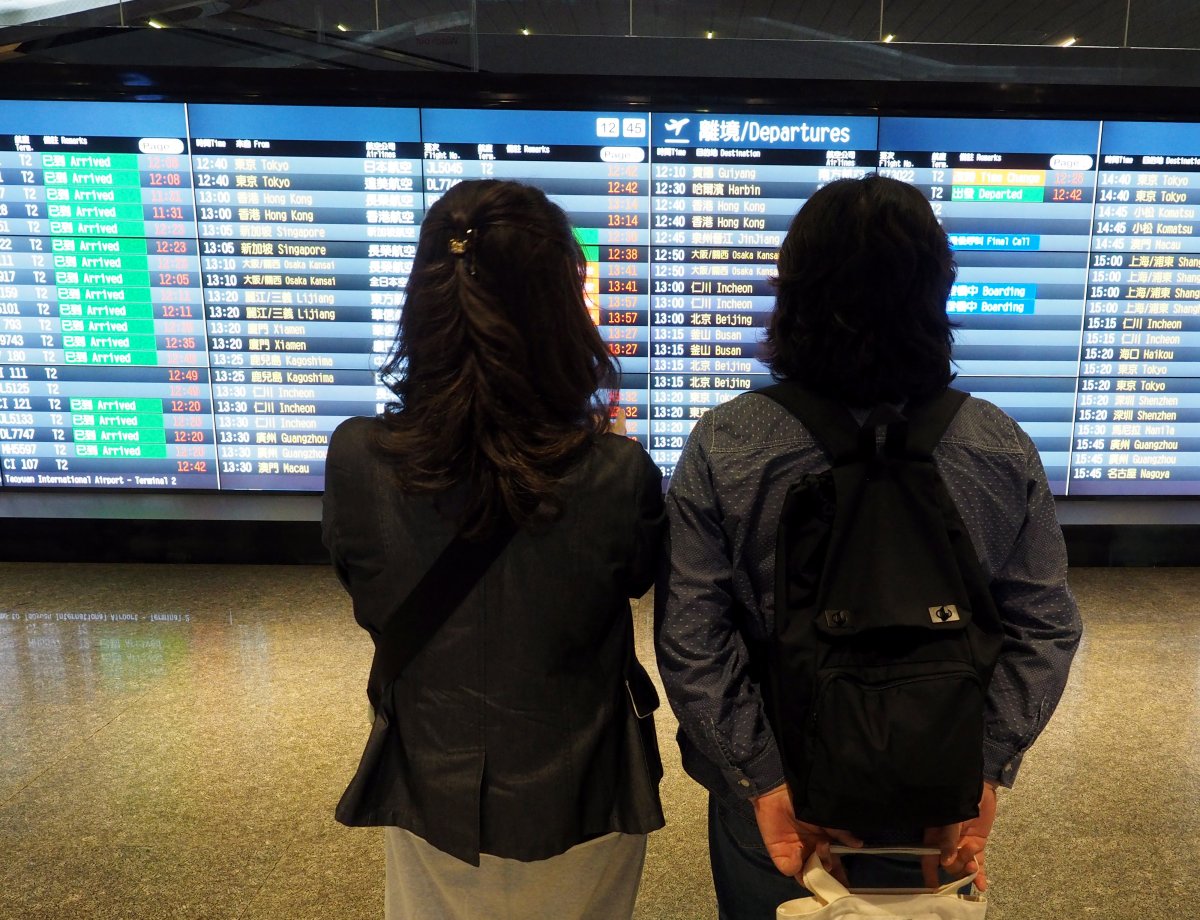
Chinese airlines have canceled hundreds of flights to and from Taiwan as a dispute over aviation routes intensifies.

The moves disrupt the plans of thousands of passengers ahead of the Lunar New Year holiday, a key travel period in the region.
Two major carriers, China Eastern Airlines (CEA) and Xiamen Airlines, said Tuesday that they had called off the flights because Taiwan refused to approve them. The flights had been scheduled in addition to the airlines' regular Taiwan services in order to cope with the high demand for travel around the Lunar New Year holiday, which starts next month.
But Taiwan said it hadn't been consulted over the routes the airlines were planning to use, accusing Beijing of "unilateral" action.
China Eastern Airlines said it had canceled 212 flights between mainland China and Taiwan that it had previously planned for the holiday period.
"The unreasonable obstruction ... has seriously infringed upon the common interests of our company and customers, and severely violated the humanitarian needs of thousands of passengers and their families," the airline said in a statement.
Xiamen Airlines said it had canceled at least 70 of its additional flights, accusing Taiwan of being "heartless."
The Civil Aviation Administration of China announced earlier this month that it was opening four routes to ease air traffic in its airspace over the Taiwan Strait, which separates the island from mainland China. The Chinese airlines planned to use them for their extra Lunar New Year flights.
Taiwan's Civil Aeronautics Administration said it hadn't been consulted over the routes. One of them, known as M503, prompted a previous dispute between Taipei and Beijing in 2015. 
Taiwan officials say the routes pose a safety risk as they pass near airports on islands that are under Taiwan's control but lie close to mainland China.
Taiwan's president, Tsai Ing-wen, has warned that the issue is endangering the fragile relationship between Taipei and Beijing. 
"Recent unilateral actions by #China -- including M503 flight route & increased military exercises -- are destabilizing & should be avoided," she tweeted earlier this month. "#Taiwan will continue to safeguard the status quo. We call on all parties to do the same."
China Air Transport Association, a Chinese government-affiliated trade group, on Tuesday voiced its support for the two airlines, saying that the M503 route "has been approved by the International Civil Aviation Organization after thorough safety demonstration and verification by experts. So-called safety issues are pure imaginations."
China and Taiwan split in 1949 after a bloody civil war. Beijing continues to claim the island as part of its territory and has threatened to invade if Taiwan moves to make its de facto independence official.
Tsai, who was elected in 2016, has refused to endorse the "One China" principle, which states that Taiwan and the mainland are part of China. But she has said she wants to preserve the status quo. 
Both sides have reduced communications since she came to power, and Beijing has stepped up military exercises in the Taiwan Strait.
Taiwan has said its military will challenge any planes that threaten the island's security.

Air Pollution Damages Neurons, Leads to Infertility and Birth Defects

Air Pollution Damages Neurons, Leads to Infertility and Birth Defects


Image result for Chinese Air Pollution Damages Neurons, Leads to Infertility and Birth Defects

Related image

Image result for Chinese Air Pollution Damages Neurons, Leads to Infertility and Birth Defects

Story at-a-glance

  • Air pollution doesn’t respect state or country borders and is responsible for 6.4 million deaths worldwide and $21 billion in costs
  • Very small particulate pollution is now linked to poor sperm quality that affects fertility, low birth weight births and birth defects, as well leads to antisocial behavior, including theft, truancy, arson and substance abuse, in teens
  • Global burden associated with air pollution is immense; however, dietary strategies may help protect your health, such as consuming animal-based omega-3 fats, antioxidant-rich vegetables and vitamins C, E, B6, B9 and B12

By Dr. Mercola

Air pollution is a traveling, insidious health problem. In other words, air pollution created in China affects those in Canada, and pollution that enters the air in Asia also affects people living on the California coast. Air pollution is a worldwide problem that must be addressed with worldwide solutions. The Commission on Pollution and Health1 is an initiative of The Lancet, the Global Alliance on Health and Pollution and the Icahn School of Medicine at Mount Sinai. A report from the Commission found:2,3
"[T]he largest contributor to pollution-related deaths is air pollution ... linked to an estimated 6.5 million deaths in 2015 as a result of diseases such as heart disease, stroke, lung cancer and COPD [chronic obstructive pulmonary disease]."
Fine particulate matter (PM 2.5) is the most studied type of air pollution and refers to dust, dirt, soot, smoke or particles that are smaller than 2.5 micrometers in diameter. These particles of air pollution are so fine they are able to enter your system through your lung tissue and trigger chronic inflammation, which in turn increases your risk of health problems. A recent study has found exposure to these fine particles may be a factor affecting the quality of men's sperm and fertility.4

Air Pollution Linked to Poor Sperm Quality

In this study, researchers evaluated the quality of sperm from nearly 6,500 men ages 15 to 49 between 2001 and 2014. The men willingly participated in a standard medical examination program in Taiwan. The quality of the semen was evaluated based on 1999 standards developed by the World Health Organization (WHO) that included concentration, motility and morphology.5 The researchers estimated the particle concentration at the participant's home using a spatiotemporal model and satellite optical depth data.
Data was evaluated using three-month and two-year averages of exposure to particulate matter. They found a robust association between altered morphology and level of exposure to PM 2.5 particulate pollution. In fact, with every incremental increase in exposure to particulate matter, sperm morphology degraded by 1.29 percent.
This was the largest study evaluating the effect particulate pollution has on semen quality to date. The negative association between air pollution and sperm morphology was found in studies6 done in China [which had the most cases],7 the Czech Republic8 and Poland.9 The lead author of the featured study commented on the results, saying:10
"Particulate matter contains many toxic chemicals such as heavy metals and polycyclic aromatic hydrocarbons, which have demonstrated harm to semen quality in laboratory and animal studies."
These results are concerning as sperm morphology has a critical long-term effect on fertility and on the health of babies born from men whose sperm is affected by pollution. Research has demonstrated the health of a man's sperm11 is affected by lifestyle choices and consequently has an effect on his children.12

Next Generation's Health Affected Before Birth

The effect air pollution has on the health of your family extends to your baby before they are born. In a study from Greater London, researchers found a link between exposure to air pollution and birth defects.13 The researchers looked at air pollution and noise pollution between 2006 and 2010.14 They amassed data from just over 540,000 babies born in those years and whose mothers lived in the prescribed geographical area.
The data indicated the average exposure to pollution was 14 micrograms per cubic meter of PM 2.5-sized particulates. For every 5 microgram-per-cubic meter increase of particulates, the researchers discovered a 15 percent increase in low birth weight births.
Children born at a low birth weight are at higher risk for Type 2 diabetes, heart disease, obesity and high blood pressure as well as have a greater risk for birth defects.15 At birth, these babies are also at risk for respiratory distress syndrome, bleeding in the brain and necrotizing enterocolitis.
There are several standards for what is considered "safe" exposure to particulate matter. The U.S. Environmental Protection Agency (EPA) standard for exposure was 15 micrograms per cubic meter in 1997. In 2009, the standard was remanded by the U.S. Court of Appeals and revised in 2012 to 12 micrograms per cubic meter averaged over three years.16 The WHO standards suggest that 10 micrograms per cubic meter should be the safe limit.
However, one author of this study, Mireille B. Toledano, an epidemiologist at Imperial College London, stated there really is no safe level of pollution and went on to comment on the results of the study, saying:17
"For every 10 percent reduction in PM 2.4, we can prevent 90 babies being born with low birth weight in London. The current limits are not protecting pregnant women, and they are not protecting unborn babies."
A study performed by researchers from the Cincinnati Children's Hospital found similar results. The study, published in the journal Environmental Health,18 demonstrated increased exposure to small particulate pollution increased the risk of preterm birth. A 19 percent increased risk for preterm birth was identified, especially when pregnant women's exposure was greatest in the third trimester.19
Another study from the University of Cincinnati found women exposed to high levels of small particulate pollution in the month before and after conception had a higher risk of delivering a baby with birth defects such as cleft lip and palate or heart abnormalities.20

Pollution-Related Neuron Damage Affects Teen Behavior

Scientists believe that air pollution may also be fueling bad behavior in teenagers. Evidence from a large study shows a strong link between small particulate air pollution, underlying changes to the brain and resulting behavioral traits. The study involved teens living in the Los Angeles area and found nearly 75 percent were exposed to unhealthy levels of PM 2.5.
The researchers believe these particulates make their way into the teens' developing brain tissue and trigger an inflammatory response that ultimately leads to antisocial behavior. Diana Younan, lead author and preventive medicine research associate at the University of Southern California's Keck School of Medicine commented:21
"These tiny, toxic particles creep into your body, affecting your lungs and your heart. Studies are beginning to show exposure to various air pollutants also causes inflammation in the brain. PM2.5 is particularly harmful to developing brains because it can damage brain structure and neural networks and, as our study suggests, influence adolescent behaviors."
The researchers studied the behavior of nearly 700 teens and found those who were exposed to more traffic fumes were also more likely to exhibit antisocial behavior, such as lying, cheating, truancy, stealing, arson or substance abuse.22 The researchers found air pollution was higher close to highways and in neighborhoods with limited amounts of foliage. They also found the teens who lived in these areas were more likely to demonstrate delinquent behavior.
Air quality was measured daily using 25 air quality monitors in Southern California between 2000 and 2014 and computer analysis was used to compare the address of the participant with the PM2.5 levels measured. Nearly 75 percent of the teens were breathing air that exceeded the U.S. government's recommended 12 micrograms per cubic meter, and in some areas the levels were nearly double that amount. Younan points out:23
"Many affordable housing developments are built near freeways. Living so close to freeways causes health problems such as asthma and, perhaps, alters teenagers' brain structures so they are more likely to engage in delinquent behavior."
And:24
"If you live in an area with high air pollution, like near a freeway or in a neighborhood with little greenery, try to avoid being outside so much and keep windows closed as much as possible when the ambient PM2.5 levels are high. Try to compensate for air pollution by having a good indoor environment and healthy family dynamics.
A bad parent-child relationship causes a stressful family environment, and if this goes on for too long, the teenager could be in a chronic state of stress. This could wreak havoc on the body, making teens more vulnerable to the effects of exposure to small particles. Many scientists suspect PM2.5 causes inflammation in the brain or somehow travels directly into the brain and messes with neural network connections, resulting in the observed bad behaviors."

Global Burden of Air Pollution Is Immense

PM 2.5 particulate pollution is found in smog, car exhaust and emissions from burning wood and industry manufacturing plants. This type of air pollution is found both inside your home and outdoors. Air pollution is not only strongly associated with the issues discussed but was responsible for 6.4 million deaths worldwide in 2015.25 In that same year tobacco was responsible for 7 million deaths, AIDs for 1.2 million deaths and tuberculosis for 1.1 million deaths.
The nature of air pollution worldwide has been changing as indoor pollution sources have moved from burning biomass fuels for heating and cooking to renewable energy. On the other hand, outdoor air pollution is growing with an increasing population, growth of cities worldwide, proliferation of toxic pesticides and globalization of industrial production.
The growth in air pollution has global economic repercussions, as it was responsible for $21 billion in economic losses that include medical expenses, lost productivity and premature death.26 Diseases that were caused by air, water and soil pollution accounted for 16 percent of all deaths worldwide in 2015.27
Unfortunately, many of those deaths occur in low- to mid-income countries and a disproportionate number of children suffer the results as early exposure to pollutants can result in disease, lifelong disability and premature death.28 Co-leader of the Commission, Philip Landrigan from Icahn School of Medicine at Mount Sinai, commented on the newest report:29
"Pollution is much more than an environmental challenge — it is a profound and pervasive threat that affects many aspects of human health and well-being. It deserves the full attention of international leaders, civil society, health professionals and people around the world.
Despite its far-reaching effects on health, the economy and the environment, pollution has been neglected in the international assistance and the global health agendas, and some control strategies have been deeply underfunded."

Lifestyle Choices May Buffer the Effects of Air Pollution

While the problem of air pollution is a global one, there are strategies to consider that may buffer some of the effects of air pollution on your health. You'll find strategies to help reduce your exposure in your home, in your car and at your workplace in my previous articles:
Specific dietary measures may also have a protective effect. Overall, seek to include mostly whole foods in your diet, including anti-inflammatory vegetables and healthy fats. Other dietary interventions you may consider include:
Omega-3 fats
These are anti-inflammatory in nature and may help mitigate some of the adverse effects to your heart health and triglycerides caused by exposure to air pollutants. The omega-3 fats that are most effective are animal-based, such as found in wild-caught Alaskan salmon, mackerel and sardines.30
Broccoli Sprouts
Broccoli sprout extract was shown to prevent the allergic nasal response that occurs upon exposure to particles in diesel exhaust, such that the researchers suggested broccoli or broccoli sprouts could have a protective effect on air pollution's role in allergic disease and asthma.31
Vitamins C and E
Among children with asthma, antioxidant supplementation including vitamins C and E helped to buffer the impact of ozone exposure on their small airway.32
B Vitamins
In a small-scale human trial, researchers used high doses of vitamins B6, B9 and B12 to offset damage caused by very fine particulate matter in air pollution.33 Four weeks of high-dose supplementation reduced genetic damage in 10 gene locations by 28 percent to 76 percent, protecting mitochondrial DNA from the effects of air pollution.
In addition, purifying your home's air is important. Photocatalytic oxidation (PCO) is one of the best technologies available. Rather than filtering the air, PCO actually acts as an air purifier, cleaning the air using ultraviolet (UV) light. Unlike filters, which simply trap pollutants, PCO transforms the pollutants into nontoxic substances.
Typically, this occurs when the UV light reacts with a titanium dioxide film and water, creating hydroxyl radicals that essentially oxidize the pollutants, rendering them harmless. Research has shown that, in the presence of air pollutants from building materials and furniture, PCO improves indoor air quality based on both sensory assessments made by study participants as well as measurements such as Proton-Transfer-Reaction Mass Spectrometry (PTR-MS).34

North Korea Cancels Joint Performance With South Korea, Blames South Media: Seoul

North Korea Cancels Joint Performance With South Korea, Blames South Media: Seoul

Reuters
North and South Korea women's ice hockey athletes stand in a line at a dining hall at the Jincheon National Training Centre in Jincheon, South Korea January 25, 2018. The Ministry of Culture, Sports and Tourism/Yonhap via REUTERS Reuters
Image result for North Korea cancels joint performance with South Korea, blames South media: Seoul
Related image

SEOUL (Reuters) - North Korea has canceled a joint cultural performance with South Korea scheduled for Feb. 4 blaming South Korean media for encouraging "insulting" public sentiment regarding the North, South Korea's unification ministry said on Monday.
The North said it had no choice but to call off the performance, which was to be held in the North Korean territory of Mount Kumgang, as South Korean media continued to insult what Pyongyang called "sincere" measures regarding the Winter Olympics Seoul will host next month, the ministry said.
Early in January, North and South Korea launched rare talks to bring North Koreans to the Pyeongchang Winter Olympics after the North's leader Kim Jong Un said he was willing to open up discussions with Seoul.
The two Koreas had been in discussions regarding final details over the joint performance. They were also talking about a different concert in South Korea by a North Korean orchestra and sending South Korean athletes to train at a North Korean ski resort.
The North added that the agreement on the Mount Kumgang joint performance had come despite conflict with its internal celebrations, the unification ministry said. North Korea has at least two major holidays coming up next month - Kim Jong Il's birthday and a military founding anniversary.
Seoul said North Korea's decision to cancel the joint performance was "very regrettable" and stressed Pyongyang should uphold all agreements made between North and South Korea.
President Moon Jae-in's administration has faced criticism for its response to North Korea's participation in the Games, especially after it decided to form a combined women's ice hockey team with athletes from the two Koreas for the Winter Olympics.
Many South Koreans have complained the unified women's hockey team - the only such joint team to be formed - was unfair to the South Korean players, going so far as creating over a hundred petitions against the unified team on the presidential Blue House's website.
The controversy has sent South Korean President Moon Jae-in's overall approval rating below 60 percent for the first time since he took office in May last year, according to a survey released last week by South Korean pollster Realmeter, dropping more than 6 percentage points since the previous week.Jan. 29, 2018, at 9:42 a.m.

Vatican asks legitimate Chinese bishops to step down in favor of communist-picked bishops: report

Vatican asks legitimate Chinese bishops to step down in favor of communist-picked bishops: report

Image result for Vatican asks legitimate Chinese bishops to step down in favor of communist-picked bishops: report
CHINA, January 24, 2018 (LifeSiteNews) – In what appears to be a capitulation to China’s communist regime, the Vatican has allegedly asked legitimate bishops to step down from their post in order to make way for the installation of new, illegitimate bishops, hand-picked by the government.
The Vatican has asked Bishop Peter Zhuang Jianjian to retire in order to allow a state-sanctioned and excommunicated bishop to take his place while “another Vatican-appointed bishop was asked to downgrade himself as the assistant of an illicit bishop,” according to a report in AsiaNews.  
Bishop Zhuang was secretly ordained with Vatican approval in 2006.  The Chinese government wants to replace Zhuang with excommunicated Bishop Huang Bingzhang, who is a member of the National People’s Congress.  Huang was previously excommunicated because he was ordained without Vatican approval.
“A letter dated 26 October demanded the 88-year-old bishop to resign to give way to the excommunicated bishop, whom the Holy See is going to recognize,” the AsiaNews report continued.  “Bishop Zhuang at that time refused to obey and rather ‘carry His Cross’ for being disobedience [sic].” 
The news comes six months after Cardinal Joseph Zen, the first Cardinal from China and a key adviser to Pope Benedict XVI regarding China-Vatican relations, denounced a Vatican agreement with the Chinese atheistic Communist government. The Cardinal indirectly accused Pope Francis of backing a “fake” church in China. 
Image
Cardinal Joseph ZenEWTN World Over
“But the whole thing is fake. They [the Vatican] are giving decisive power to the government … how can the initiative of choosing bishops be given to an atheistic government? Incredible. Incredible,” he said at that time. 
Regarding the surprising demands of the Vatican as it acquiesces to the communist Chinese government, one underground priest told AsiaNews, “We of course feel hard to accept but do we have the rights to oppose the Vatican?” He added that if things actually go this way, “I may consider to quit and leave my priesthood.”
For the most part, the genuine Catholic Church in China operates underground while the government runs the Chinese Patriotic Catholic Association, a counterfeit church of communist-approved and monitored clerics. Bishops and priests of the underground church, which have been loyal to the pope and not the communist government, have faced imprisonment for their loyalty to the successor of Peter. 
Last year, Cardinal Zen, the Bishop Emeritus of Hong Kong and China's highest-ranking prelate, pleaded with the Vatican not to “sell out” China's Catholics by striking a deal with the Communist government, which seeks nothing less than “total surrender.” 
In an exclusive interview with LifeSiteNews, Zen said he had been urged to speak out by Catholics who lack the freedom to speak for themselves. 
Zen said that a Vatican deal with the Chinese government would damage the Church's credibility. After all, if the Chinese government can appoint bishops, other governments could expect to do so as well. 
“We are very much worried because it seems that the Vatican is going to make a very bad agreement with China,” Zen told LifeSiteNews. “And I can understand that the pope is really naive … He doesn’t know the Chinese communists. But unfortunately the people around him are not good at all. They have very wrong ideas. And I’m afraid that they may sell out our underground Church. That would be very sad.”
“They don’t have much public voice, the underground,” Zen explained. “People who come from China to see me, they all say, ‘please, you must raise your voice. We cannot say anything’ because they have no freedom to talk. So I keep talking, but it seems that they [the Holy See] don’t listen. They don’t like to listen.”
Some Holy See officials “consider the underground, the faithful,” to be “troublemakers,” he said. And the pope has a strong desire for unity and peace but is "rather naive" about the nature of the Chinese government.
The news also comes amid reports of Christian churches being demolished in China while clerics and other faithful are being jailed for their associations with churches not sanctioned by the state. 
In what amounts to a crackdown on “Western” religions UCANews reports“Authorities in China demolished a large church in the city of Linfen, Shanxi province on Jan. 9, despite efforts by worshippers to halt the demolition and who were then pressured to remain silent, according to witnesses.” This was the third Christian church to be demolished or closed in China in two weeks.
More than 1,500 Catholic and Protestant churches in China’s Zhejiang province “have been targeted for demolition or cross removals in recent years, sources have said in a campaign against churches not coming under state control,” according to the UCANews report.  “Chinese authorities are increasingly using property regulations to remove crosses and demolish churches.”
Beginning last year, religious freedom and public worship became severely restricted in China, where the government has “physically abused, detained, arrested, tortured, sentenced to prison, or harassed adherents of both registered and unregistered religious groups,” according to a 2017 U.S. State Department report.  
The only priest of the Lishui Diocese, also in Zhejiang province, went missing shortly after Christmas when government officials abruptly took him away.   
Father Lu Danhua, ordained a priest of the underground church in 2016, was taken away by officials of the State Administration for Religious Affairs (SARA) for “‘re-educating’ on new religious regulations coming into effect Feb. 1 and that he would return after obtaining a permit to be a priest,” according to another UCANews report.  
The Catholic cleric “remains missing and calls to his mobile phone have not been answered.”

China's Sinovel Convicted in U.S. of Stealing Trade Secrets

China's Sinovel Convicted in U.S. of Stealing Trade Secrets

 Updated on 
  • Conviction threatens to ratchet tensions between countries
  • Software code theft sunk U.S. technology company AMSC
Image result for Chinese wind turbine maker’s conviction in Wisconsin over the theft of software code
A Chinese wind turbine maker’s conviction in Wisconsin over the theft of software code is threatening to ratchet up already tense trade negotiations between the U.S. and China. It also sent the shares of U.S. software maker American Superconductor Corp.surging.
Sinovel Wind Group Co. was found guilty of orchestrating the theft in a rare criminal trade-secrets trial that’s raised doubts over China’s commitment to fighting infringement of intellectual property and corporate espionage.
Image result for American Superconductor
Shares of American Superconductor, the company targeted by the theft, jumped as much as 24 percent on hopes that it might be able to seek restitution for $800 million in losses blamed on the theft.
"Collection of any restitution is incredibly unclear given Sinovel’s financial status and the overall state of Chinese and U.S. trade relations,” said Jeffrey Osborne, an analyst at Cowen & Co. "This award, when and if it is collected, will be a welcome relief to investors.”
Image result for Jeffrey Osborne, an analyst at Cowen & Co.
The verdict could embolden U.S. efforts to take a tougher stand against China in international trade matters, possibly leading to a thornier relationship between the superpowers.
Although the charges against Sinovel were brought by the administration of Barack Obama, trade tensions have been rising since the election of President Donald Trump last year. Earlier this week, Trump slapped solar-equipment makers, many of which are state-subsidized Chinese companies, with duties of as much as 30 percent.
 "What happened in China was a crime," said Daniel McGahn, chief executive officer of American Superconductor. "This is fuel for the Trump Administration on trade talks."
David Bohrer, a Silicon Valley-based intellectual property attorney who’s not involved in the case, said the verdict "can’t be good for U.S.-China relations." Wind energy development is an important industry in China, and "ultimately there will be checks on their ability to compete in this area," he said.
AMSC partnered with Sinovel on wind power projects after China passed a clean energy law in 2005, launching the development of major wind farms throughout the country. The Chinese firm built turbines and the U.S. company developed software and technology to control them.

No Free Lunch

"The free lunch on American intellectual property is over," said Assistant U.S. Attorney Timothy O’Shea. "The U.S. Department of Justice and the FBI are going to stand behind American innovators and American workers whose ideas are stolen."
A Sinovel spokesman didn’t immediately respond to an email seeking comment on Wednesday. A call to the company’s headquarters outside regular business hours in Beijing wasn’t answered.
Prosecutors said Sinovel, now China’s largest wind turbine manufacturer, contracted with a former AMSC employee in Austria to steal the code in 2011, and then refused to pay the U.S. firm for $800 million in products and services it had promised to buy. The software system, called Low Voltage Ride Through, or LVRT, was designed to help regulate the flow of electricity into a power grid.
It was like a villainous plot from a James Bond movie, prosecutor Brian Levine told jurors during closing arguments earlier this week. Within two weeks of Sinovel accepting AMSC’s contract, it backed out of the deal, secret technology in hand, and the American company’s stock "takes a nose dive," Levine told the jury.

‘Ha Ha Ha’

The former AMSC employee who betrayed his company, Dejan Karabasevic, was "absolutely delighting in AMSC’s suffering," Levine said. In an email to his girlfriend regarding the company’s plummeting stock price, Karabasevic wrote "ha ha ha."
AMSC, based in Devens, Massachusetts had sought more than $1.2 billion in damages from Sinovel in Chinese courts, accusing Beijing-based Sinovel of putting the stolen source code in more than 1,000 turbines.
Sinovel alleged during the three-week trial that Karabasevic, and two Sinovel employees, Zhao Haichun and Su Liying, acted on their own without the company’s approval. All are overseas, and none has appeared in a U.S. court to face charges of participating in the scheme. Like many companies in China, Sinovel is partly state-owned.
Defense attorney Jeffrey Tsai argued in his closing that the LVRT software couldn’t have been stolen because it was well-known in the industry long before the events in 2011. The government built its case based on AMSC’s side of the story, he said, remarking that witnesses who testified on behalf of the government "have their fortunes tied to what happens in this case." 
“This really is about a business dispute,” Tsai said. “These were not kids in the 10th grade who went to the dance together and then broke up.” 

Task Force

The case was initially brought under the Obama administration in 2013 by a special intellectual property task force. At the time the Justice Department described corporate espionage by Chinese agents as a threat to U.S. economic security. In August, Trump notched up pressure by encouraging the U.S. Trade Representative to investigate intellectual property theft by Chinese entities.
The Sinovel case is particularly striking as "an example of the tremendous harm that can be done to a U.S. company by virtue of the theft of its trade secrets overseas," Bohrer said in a phone interview. "It’s a big deal for the U.S. Justice Department to make the decision to bring criminal prosecution against a Chinese company, given all the politics."
The case is U.S. v. Sinovel Wind Group Co. Ltd., 13-cr-00084, U.S. District Court, Western District of Wisconsin (Madison).